Most running shoe problems linked to knee discomfort are not only about cushioning or stability. A shoe that slips at the heel, crowds the toes, or feels loose through the middle can make even a good shoe feel wrong.
This guide gives you a simple fit-first way to check running shoes before comparing shoe types. You will learn what a good fit should feel like, which fit problems are easiest to miss, and when a small adjustment is worth trying before you buy another pair. Shoes cannot diagnose or cure knee pain, but a better fit can remove one avoidable source of discomfort.
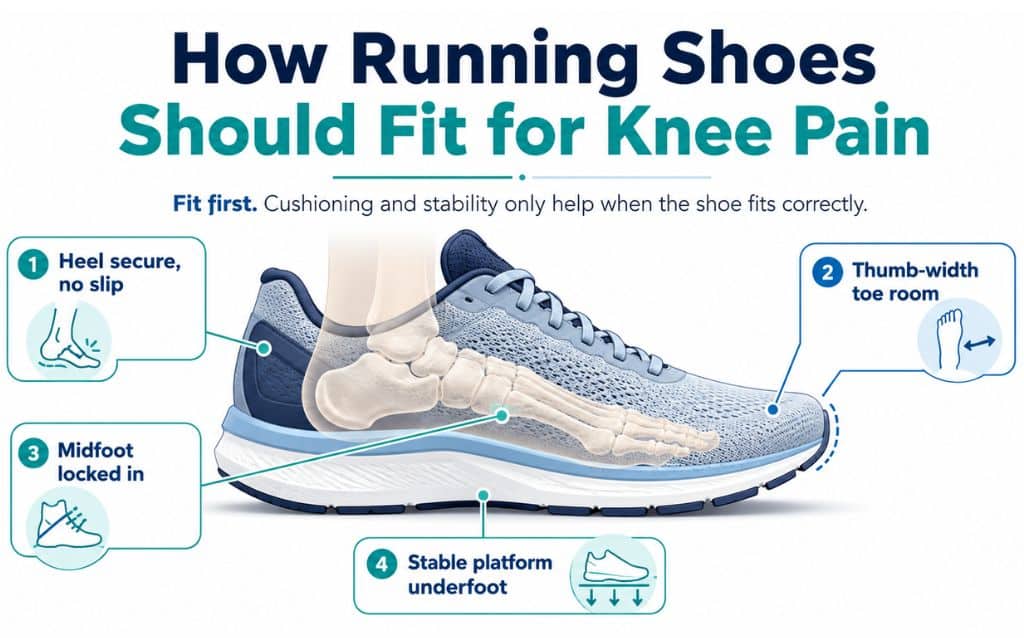
- Heel security
- Toe room
- Midfoot lockdown
- Stable underfoot feel
A Good Fit Should Feel Secure, Roomy, and Boringly Stable
A simple way to think about fit: secure where your foot needs control, roomy where your foot needs space. Once that feels right, cushioning and stability choices become easier to judge.
Why Fit Problems Can Feel Like Knee Pain Shoe Problems
Sometimes the shoe type is not the first problem. A shoe that slips, squeezes, or lets your foot move around can make cushioning and stability feel less helpful than they should.
Fit is the connection between your foot and the shoe. If that connection is poor, your landing can feel less smooth, your stride can feel less controlled, and a shoe that looks right on paper may still feel wrong during easy runs.
Even a stable shoe can feel unstable if your heel lifts, your midfoot slides, or your toes are crowded enough to change how you move.
This is why fit should be checked before judging whether you need cushioning, stability, budget options, or a more durable shoe. The shoe features only help when your foot is actually held in the right places.
Small fit problems can become more noticeable once your feet warm up and your legs get tired. Pain, repeated rubbing, or ongoing slip should not be treated as a normal break-in phase.
A better approach is to test fit early: heel security, toe room, midfoot lockdown, and whether the shoe still feels predictable after a few minutes of walking or light jogging.
The Fastest Signs Your Running Shoes Fit Wrong
-
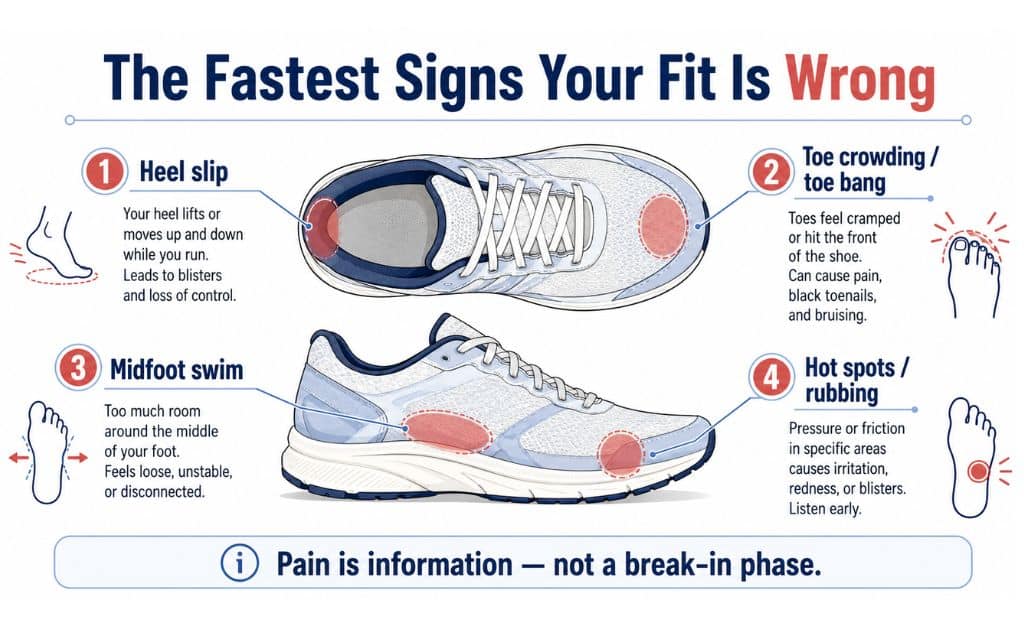
Heel slip means your foot is not staying connected
Your heel lifts, rubs, or moves up and down when you walk briskly or jog lightly.
Look forA heel that stays held without needing the laces pulled painfully tight.AvoidIgnoring repeated heel movement or assuming it will always disappear after break-in. -
Toe crowding can change how you land
Your toes feel cramped, press into the front, or hit the end of the shoe on small downhill or faster steps.
Look forEnough space for your toes to wiggle, with about a thumb’s width in front of your longest toe.AvoidKeeping a shoe that already feels tight while standing, because it often feels worse after your feet warm up. -
Midfoot swim makes even stable shoes feel unstable
The middle of your foot slides side to side inside the shoe, especially when you shift weight, turn, or get tired.
Look forA secure midfoot hold that keeps your foot connected to the platform.AvoidCrushing the laces to force lockdown if that creates pressure, numbness, or hot spots. -
Hot spots are fit feedback, not a break-in phase
You notice rubbing at the heel, arch, pinky toe, or top of the foot in the same place again and again.
Look forA shape that feels comfortable without repeated friction in one exact area.AvoidTreating repeated rubbing as something you should simply tolerate.
The 60-Second Running Shoe Fit Check
-
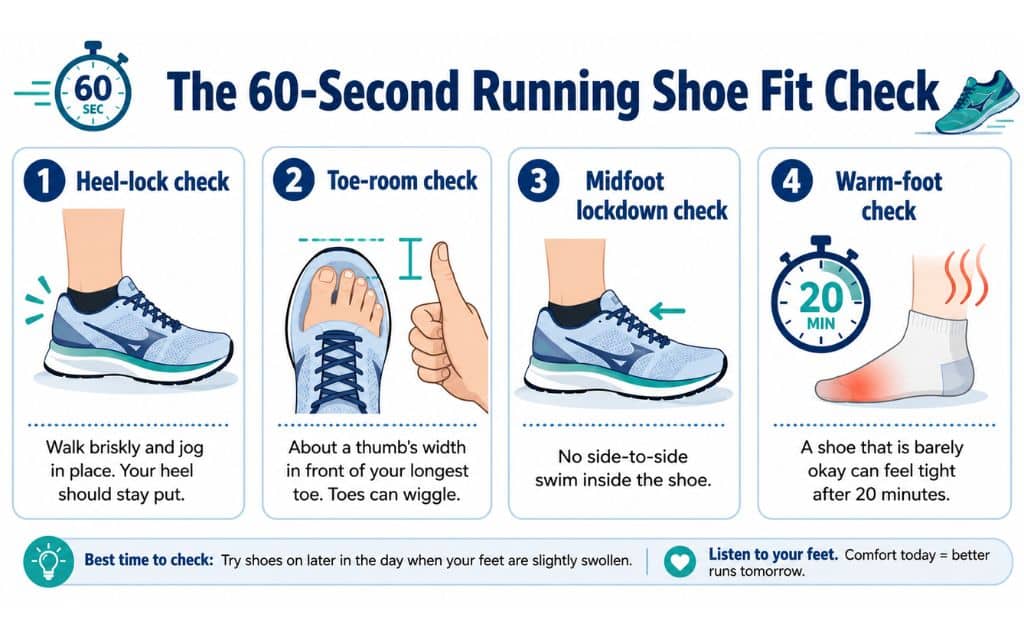
Check whether your heel stays put
Lace the shoe normally, then walk briskly and do a few gentle jog steps in place. Your heel should feel held, not lifting up and down with every step.
-
Check for thumb-width toe room
Stand up with your weight in the shoe and check the space in front of your longest toe. About a thumb’s width is a simple starting point, with enough room to wiggle your toes without the shoe feeling sloppy.
-
Check midfoot lockdown without over-tightening
Shift your weight side to side. The middle of your foot should stay connected to the shoe without needing to crush the laces or create pressure on the top of your foot.
-
Check fit again after your feet warm up
Walk around for a few minutes before deciding. A shoe that feels barely okay at first can feel tight, crowded, or irritating once your feet warm up.
Do these checks in the socks you actually run in. If fit feels secure after these checks but you still need help choosing the right shoe type, use Best running shoes for knee pain beginners as the broader starting point.
Fit Fixes Worth Trying Before You Buy Another Pair
Try runner’s loop for mild heel slip
-
Start with normal lacing first
Walk briskly or jog in place and notice whether your heel lifts slightly while the rest of the shoe still feels comfortable.
-
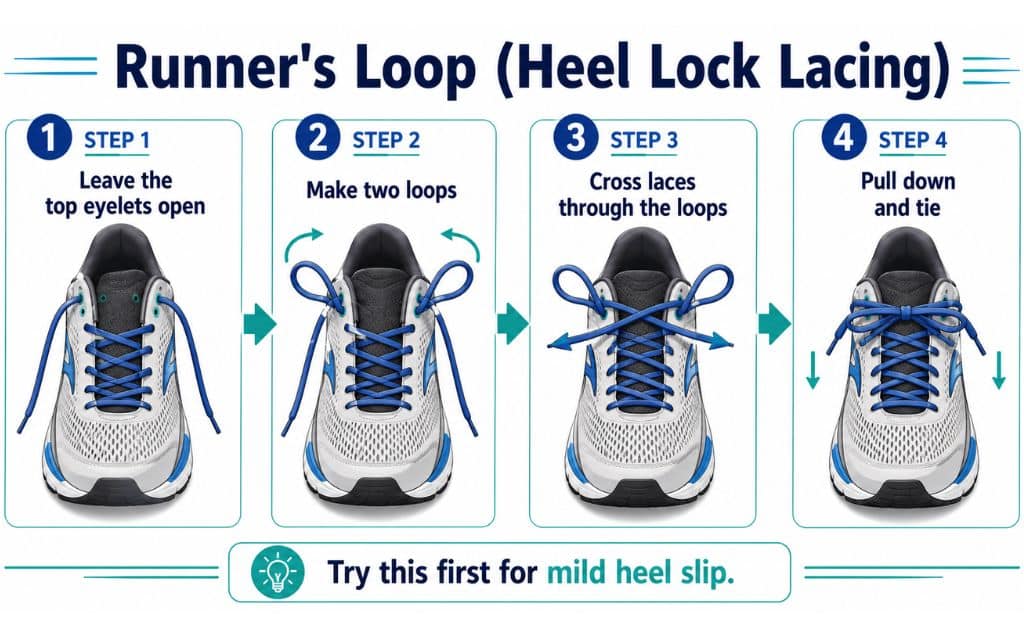
Use runner’s loop to secure the collar
Runner’s loop can help hold the heel area more firmly without needing to tighten the whole shoe.
-
Stop if the heel still moves
If your heel keeps slipping after a proper runner’s loop, the heel shape or shoe volume may not match your foot.
This fix is for mild heel slip, not for forcing a loose shoe to work. Place the runner’s loop lacing image directly after this block.
Adjust lace tension before changing shoe size
- When it helps If shoe length feels right but the midfoot feels loose, a small lace adjustment can improve lockdown.
- What not to do Do not size down only to fix midfoot looseness if that creates toe crowding or pressure at the front.
- When to stop If the shoe only feels secure when the laces are painfully tight, the shape or volume may not be right for your foot.
Good lacing should make the fit feel more balanced, not turn the shoe into something you have to tolerate.
Choose width or shape before forcing toe room
-
Pressure across the forefoot
If the shoe presses across the forefoot, sizing up may give space in front but still leave the shape wrong.
Look forA width or toe box shape that lets your forefoot sit naturally.AvoidGoing longer if the real problem is width. -
Pinky toe or big-toe joint pressure
Pressure on the sides of the foot often points to width or shape, not just length.
Look forA shoe shape that gives side-to-side room without making the heel loose.AvoidHoping a narrow shoe will stretch enough after a few runs. -
Toe room without slop
The goal is space in front and around the toes while still keeping the heel and midfoot secure.
Look forToe wiggle room with a connected heel and midfoot.AvoidFixing toe crowding by choosing a shoe that becomes unstable elsewhere.
Small lace changes are worth trying. But if the shoe still slips, rubs, crowds your toes, or needs painful tightening after a few tries, treat that as fit feedback. A different size, width, or model shape may be smarter than forcing the same pair to work.
After Fit Feels Right, Choose the Right Shoe Type
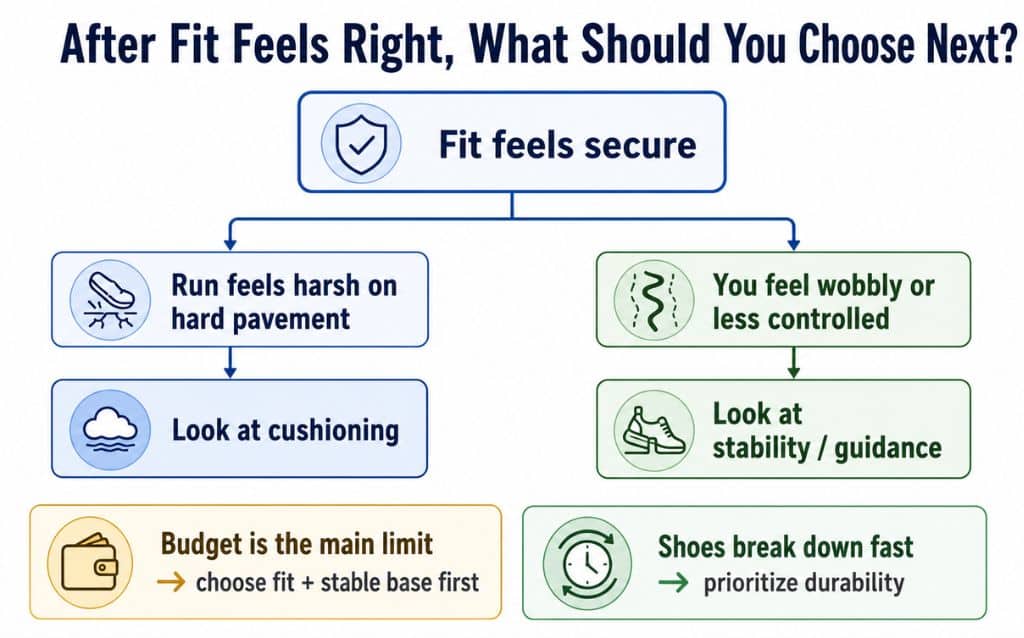
Choose cushioning if hard pavement feels harsh
- Impact feels louder than wobble Cushioning makes the most sense when the ground feels harsh but your landing still feels reasonably controlled.
- Your current shoe feels flat or hard If the shoe feels dead underfoot even at an easy pace, more cushioning may make short road runs feel less jarring.
- Soft still needs steady More cushion should not make the shoe feel unstable. If softness creates wobble, structure may matter more than extra foam.
If hard pavement is the main thing you notice after fit feels secure, compare the Best cushioned running shoes for knee pain guide next.
Choose stability if your stride feels wobbly or less controlled
If your stride feels wobbly, tippy, or less controlled as you get tired, a more stable or guided ride may matter more than extra softness.
This is especially true when softer shoes make you feel less steady instead of more comfortable. For that path, use the Best stability running shoes for knee pain guide.
Many beginners only need a steadier platform or moderate guidance, not the most corrective shoe available.
The goal is not to force your stride. The goal is to choose a shoe that still feels predictable when your form gets tired.
Use budget and durability as secondary filters
-
Use budget after fit and feel are clear
A cheaper shoe can still be useful if it fits well and feels stable enough. When price is the main limit, use the Budget running shoes for knee pain guide after you know whether you need cushion, stability, or a simple daily trainer.
-
Use durability when shoes break down fast
If your shoes start feeling flat, tilted, or less supportive quickly, durability becomes part of comfort. The Running shoes for heavier beginners with knee pain guide goes deeper on that situation.
-
Do not let either filter override fit
Price and durability matter, but they should not come before heel security, toe room, and midfoot lockdown.
Budget and durability are useful filters after fit is handled. A bargain shoe that slips or a durable shoe that crowds your toes is still the wrong direction.
When Shoes Are Not the Main Fix
- Pain is sharp, worsening, or changing how you walk Do not treat a new pair of shoes as the main solution if discomfort is sharp, increasing, or affecting normal walking.
- Swelling or clear pain needs more than shoe shopping If the problem feels obvious, persistent, or different from normal post-run soreness, reduce the running load instead of trying to buy around it.
- The problem started after a training jump If knee discomfort appeared after adding distance, speed, hills, or extra running days, the recent load change may matter more than the shoe.
- A better shoe should support easier running, not excuse pushing through Shoes can make running feel more comfortable, but they should not become permission to keep increasing mileage while pain gets worse.
If the pain pattern is clear, increasing, or affecting normal walking, read Why do my knees hurt after running? before treating shoes as the main fix. If the discomfort started after adding distance, speed, hills, or extra running days, use How to start running without getting injured to rethink the training-load side first.
Final takeaway: Fit First, Then Let the Shoe Features Work
- Secure the heel before judging the shoe type
- Leave enough toe room without creating slop
- Use lacing fixes only when the shoe is already close
- Choose cushion or stability after fit feels settled
A running shoe can be cushioned, stable, durable, or expensive, but those features only help if the shoe fits your foot well. Start by checking heel security, toe room, midfoot lockdown, and whether the shoe still feels predictable after your feet warm up. Once fit feels right, choosing between cushioning, stability, budget, or durability becomes a much simpler decision. Beyond shoes, a beginner running setup can remain small until another item has a clear comfort, safety, or weather-related job.