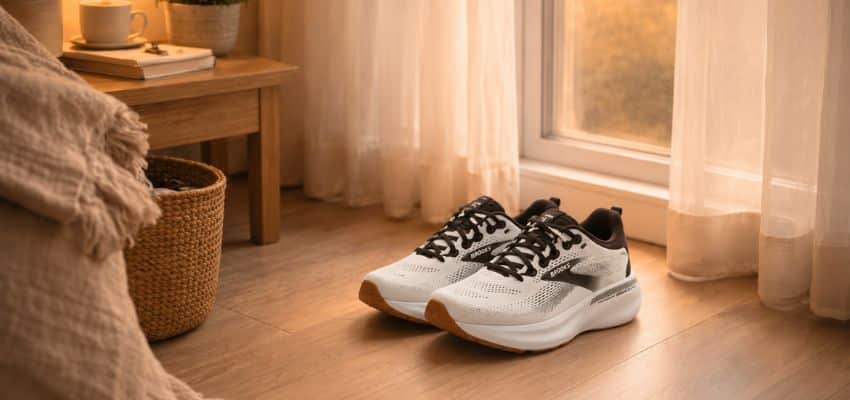
When your knees hurt, buying a more supportive shoe can feel like a practical next step. But knee pain alone does not tell you whether you need stability, more cushioning, or a change in training. A shoe that feels steadier may improve your comfort without explaining what caused the pain.
This guide compares stability shoes for beginners who prefer a more supported feel underfoot. Use the suggestions to narrow down pairs to try, rather than as treatments for knee pain. Persistent or worsening symptoms deserve assessment before another footwear purchase.
- Whether stability is really the problem
- When cushioning may make more sense than support
- Which type of stability shoe fits your situation
- When you should skip buying new shoes for now
First, Check Whether Stability Is Really the Problem
-
Unstable landing
If your current shoes feel unsteady, compare a stability shoe with a neutral shoe that also feels secure. Choose by fit and comfort rather than assuming inward foot movement needs correction.
Look forA secure fit and a comfortable platform, without pressure under the arch or a feeling that the shoe forces your movement.AvoidAssuming every beginner with knee pain automatically needs the most supportive shoe. -
Pain pattern
Record where the pain occurs, when it starts, and what makes it worse. These details can help a clinician assess the problem; they do not identify the right shoe category on their own.
Look forPain during running, stairs, or normal walking, along with any swelling, locking, or giving way.AvoidTreating sharp, worsening, lasting, or daily-life knee pain as a simple shoe-shopping problem. -
Training load
Sometimes the shoe is not the main issue. Knee pain can also show up when a beginner increases distance, speed, or weekly runs faster than the body is ready for.
Look forA recent jump in mileage, pace, hill running, or running frequency before blaming the shoe.AvoidChanging shoes while continuing to push through too much running at the same time.
A Cochrane review of running shoes and injury prevention found that the evidence comparing stability shoes with neutral or cushioned shoes was too uncertain to establish whether stability shoes reduce lower-limb injuries. The review did not assess treatment of existing knee pain. Use these shoe comparisons to explore fit and comfort, without treating the stability label as a medical recommendation.
Match the Shoe to the Support Problem
The product suggestions later in this guide are examples of different support styles, not a rule that every beginner needs to buy new shoes.
The American Academy of Orthopaedic Surgeons identifies sudden increases in exercise frequency, duration, or intensity as possible contributors to patellofemoral pain, which affects the front of the knee and the area around the kneecap. Its guidance includes stopping activities that provoke this pain and seeking assessment if symptoms persist. This is one possible knee condition, not a diagnosis based on how your shoes feel.
Stability or Cushioning: Which Should You Try First?
Compare stability when your current shoes feel unsteady
-
Your landing feels hard to control
A stability shoe is one option to compare if your current pair feels unsteady. A comfortable neutral shoe may also suit you; knee pain or visible inward foot movement alone does not decide between them.
Look forGentle guidance, a steady heel, and a base that helps your foot move forward without feeling forced.AvoidChoosing the most supportive shoe only because it sounds safer. -
Soft shoes feel comfortable but unstable
Some beginners feel fine standing in very soft shoes but less controlled once they start jogging. In that case, more cushioning is not always the better fix.
Look forA shoe that still feels comfortable but gives your foot a clearer path through each step.AvoidAssuming that a softer shoe or a stability label will resolve knee pain without checking fit, comfort, and the symptoms themselves.
Choose cushioning when impact comfort is the bigger issue
- Your landing feels jarring, not wobbly If the main problem feels like impact, firmness, or lack of underfoot protection, a cushioned shoe may be a better first comparison than a stronger stability shoe.
- Your foot does not roll inward much If your stride feels fairly straight and controlled, adding stability may not solve the real issue. More support can even feel distracting if you do not need it.
- You are new and still adapting For some beginners, the first fix is not a new support system. It is shorter runs, easier pacing, and a shoe that feels comfortable enough to help you stay consistent.
If this sounds more like your situation, compare this guide with cushioned running shoes for knee pain before deciding.
What to Look for in a Beginner-Friendly Stability Shoe
Guidance that supports your foot without forcing it
-
Gentle guidance
The shoe should help your foot move in a steadier path when it starts to roll inward, but it should not feel like it is pushing your arch or changing your stride aggressively.
Look forSupport that feels noticeable but natural during walking and easy jogging.AvoidA shoe that feels like it is correcting every step or forcing your foot outward. -
Comfortable alignment
You should feel more controlled, not trapped. For beginners, the right support usually feels like a quiet guide rather than a hard brace.
Look forA smoother landing and less side-to-side wobble.AvoidChoosing the strongest stability shoe only because your knees hurt.
Cushioning that feels protective without becoming unstable
- Protective, not mushy The cushioning should soften the landing without making your foot sink, tilt, or feel harder to control.
- Comfort that still feels steady A shoe can be soft and supportive at the same time, but too much softness may feel unstable for some beginners.
- Good for easy running For this type of shoe, comfort matters most during slow runs, short beginner sessions, and walking breaks, not speed workouts.
A base that feels steady during slow, easy runs
-
Stand and notice the platform
Your foot should feel centered on the shoe, not like it is spilling inward or outward.
-
Walk before you jog
The heel and midfoot should feel secure without pressure points around the arch.
-
Jog slowly for a few minutes
At an easy pace, the shoe should feel steady through repeated steps, not only when you are running faster.
For beginners, a stable base is useful only if it helps you run more comfortably and consistently. It does not need to feel stiff to be supportive.
Three Support Problems Beginners Commonly Run Into
You want support, but not a stiff or controlling shoe

This shoe fits the beginner who wants stability without feeling locked into a rigid ride. It is a useful example of support that guides the foot while still feeling approachable for easy runs, walk breaks, and steady weekly mileage.
- Support feels moderate, not aggressive
- Easy to use for run-walk beginners
- Good everyday stability without a harsh ride
- Not the softest option in this guide
- May still feel structured if you prefer neutral shoes
- Not aimed at fast workouts
You want more guidance, but still need a soft landing

This shoe is a better example for beginners who want a more guided stability feel with softer protection underfoot. It makes the most sense when you want support to feel clear, but still want an easy-run shoe that does not feel harsh.
- More noticeable guidance than lighter stability shoes
- Soft cushioning for relaxed runs
- Good example of support plus comfort
- Can feel bulky for some beginners
- More shoe than some runners need
- Not the most flexible ride
You want a secure base because soft shoes feel too unstable

This shoe is a good example of a steadier, more traditional stability feel. It suits beginners who want the shoe to feel secure underfoot instead of soft, bouncy, or hard to control.
- Stable base for slow daily running
- Secure feel under the foot
- Good option if soft shoes feel wobbly
- Less plush than the Kayano
- Less natural-feeling than lighter support shoes
- Traditional ride may not suit everyone
How to Test Stability Shoes Before You Rely on Them
Compare the new shoe with your current shoe first
-
Use the same route or surface
Test the new pair on familiar ground so hills, uneven pavement, or a different route do not confuse the result.
-
Focus on control, not just softness
Ask whether the new shoe feels steadier than your current pair. A softer landing is not enough if your foot still feels wobbly.
-
Write one clear note after the run
Record whether the new shoe felt more stable, less stable, or simply different. This keeps the comparison based on what you actually noticed.
Avoid increasing mileage while testing a new pair
- Keep the trial brief Do not use your usual distance as a target if that distance causes knee pain. A new shoe is not a reason to continue an activity that hurts.
- Keep effort unchanged Stay at your usual easy effort. A harder run can irritate your knees for reasons that have nothing to do with the shoe.
- Keep weekly frequency unchanged Do not add extra running days during the first test period. If your knees feel worse, you need a clean comparison instead of several new variables at once.
Who Should Skip Stability Shoes for Now?
You do not need to buy new shoes immediately if what you already have lets you run short, easy sessions safely and consistently.
The NHS’s knee pain advice recommends urgent medical advice if your knee is very painful, you cannot move it or bear weight, it is badly swollen or has changed shape, or it locks or gives way. Fever with redness or heat around the knee also needs urgent attention. Arrange an assessment if knee pain does not improve within a few weeks.
Choose the Shoe That Solves the Right Problem
- Match the shoe to the problem, not the fear
- Do not use support to push through clear pain
- Start with short, easy runs before judging any shoe
- You can skip buying if your current setup still works
The best stability running shoe is not the most supportive shoe. It is the shoe that matches the problem you are actually trying to solve: unstable landing, too much softness, or a need for a steadier base. If the problem is not stability, buying more support may not help. For a broader look at beginner knee discomfort, see why knees hurt after running and how to choose the right footwear.