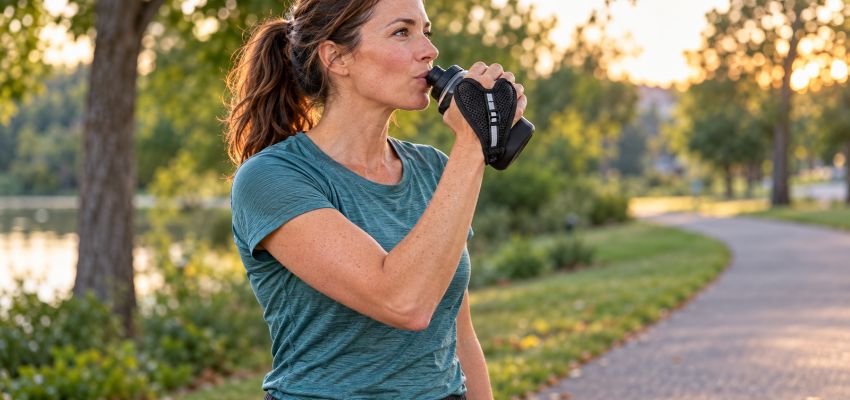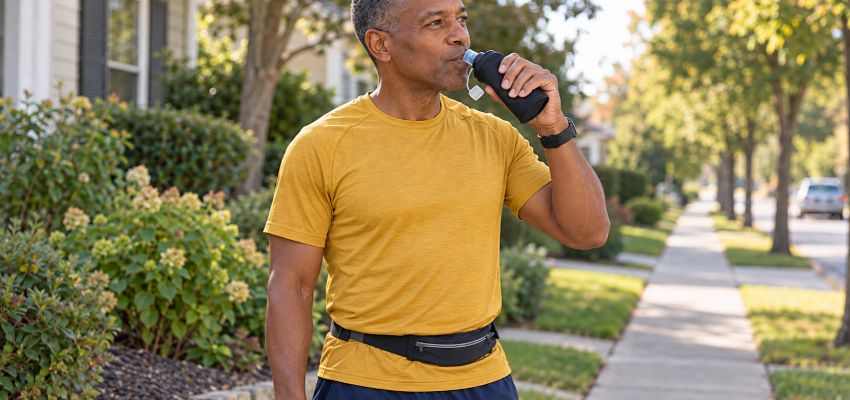
If you are unsure whether you will want water, take a small bottle you can carry comfortably.
Do you need to carry water for a 30-minute run? Not necessarily on every easy outing in cool weather. But if you are still working out your needs – or cannot count on water along the route – bringing a small bottle is a sensible backup. You can take a few sips if you want them without turning the run into a test of how long you can go without a drink.
As you get familiar with your route and how you feel in different conditions, you may find some outings comfortable without carrying anything. The useful decision is how you will have access to water, not whether you can earn the right to leave it behind.
A half-hour jog does not automatically need a hydration vest or a drinking schedule. It also does not come with a rule that water must stay at home. Carrying some is an ordinary practical choice, especially when you have not yet learned what feels comfortable.
The NHS Couch to 5K plan advises taking water, particularly on warmer days or when running for longer, and taking small sips when needed. That advice is directed at beginners building toward 30 minutes of running. It supports having water available without asking you to finish a set amount.
There are three reasonable arrangements:
- Carry your own: a small bottle gives you a drink without depending on a stop.
- Use a reliable water point: a familiar working fountain or a loop past home can give you access without carrying a bottle throughout.
- Drink around the outing: some people are comfortable on an easy, short run in cool conditions without a drink midway, provided they start appropriately hydrated and can drink afterward.
The third option is a possibility, not something to work toward at the expense of comfort. If you regularly want water halfway through, that is useful information. Bring it or arrange a stop rather than trying to persuade yourself that 30 minutes should be too short to get thirsty.
Choosing your route and bottle is one small part of running nutrition and hydration. It need not become the most complicated part of getting out the door.
Carry water when the weather, route, or your own comfort calls for it
The same distance can call for a different arrangement on another day. Check these details before relying on what worked last week.
Heat and humidity can change a short run
A cool evening loop and a sunny lunchtime outing are different situations. A short duration does not remove the effects of heat, humidity, or an exposed route. If today is warmer or sweatier than the conditions you know, lean toward having water available.
Also consider whether to change the outing itself. A cooler time, shade, a shorter route, or an indoor session may be more appropriate. Carrying water is useful preparation; it does not make dangerous heat safe or mean you should continue when you feel unwell.
Count the whole outing, not just the running minutes
Thirty minutes on your running timer may involve more time away from home. Add the warm-up walk, cool-down, breaks, and the walk back. The NHS plan, for example, places a five-minute walk before and after the running portion. Those minutes count when you are deciding how long you will be outside.
A 5K is not automatically a 30-minute outing either. Your pace and walking intervals determine how long it takes. If you are joining an organized event, check the actual water provision rather than assuming every 5K has a conveniently placed station. Think about getting to the start and home afterward as well.
Wanting a few sips is a valid reason to bring a bottle
Some runners enjoy having water close at hand; others find carrying it distracting. You do not need to be extremely thirsty to justify a small bottle, and you do not need to match a friend who never carries one. Choose a setup you can use comfortably.
There is a difference between preparing for a possible drink and making yourself drink. You can carry water and use very little. You can also change your mind about a route when you want water sooner than expected. Neither means you planned badly; you are learning what the outing asks of you.
If you dislike carrying a bottle, change the route instead
Before buying equipment, look at the map. Water access can sometimes be solved by changing where you run rather than adding something to your hand or waist.
| Option | When it is useful | What to check |
|---|---|---|
| Loop past home | You prefer familiar streets and an easy way to shorten the outing | You can actually get your water without a long detour. |
| Pass a drinking fountain | A park or local route has a convenient stop | The fountain works, the water is suitable for drinking, and the area is open at your running time. |
| Return past your starting point | You run short loops from home or a parked vehicle | Your bottle is accessible and stored appropriately; you have the key if needed. |
| Carry a small bottle | There is no dependable stop, or you want water whenever you choose | You can hold or secure it comfortably and open it easily. |
A fountain shown on a map is not the same as a fountain you have checked. It may be switched off, inaccessible after a gate closes, or out of order. On an unfamiliar route, your own water removes that uncertainty.
Do not rely on finding a shop or someone willing to provide a drink unless that is a realistic, confirmed option.
Keep a short way back in mind too. An out-and-back route can leave you farther from water than a local loop if you need to slow down or walk. For a beginner, an easy return is often more useful than squeezing in a slightly more interesting final mile.
If you bring water, choose a setup that stays comfortable
Start with the simplest arrangement that works for you. A short outing usually does not call for a large carrying system, though equipment you already own may be perfectly comfortable. You do not have to buy a smaller item just to fit someone else’s idea of a short run.
- A small handheld bottle: easy to reach and straightforward to use. Check that you are not clenching your hand or holding your shoulder awkwardly. A suitable strap can help keep it secure.
- A soft flask in a suitable pocket or belt: an option if you prefer your hands free. Check that the pocket holds it securely and that you can remove and replace it without struggling.
- A bottle belt: keeps water off your hands, but fit matters. An arrangement that bounces, rubs, or slips needs adjusting or replacing.
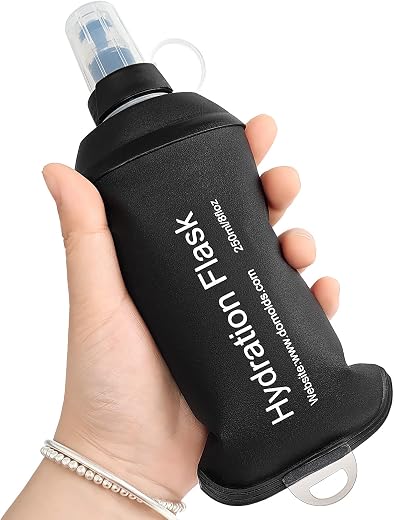
Try the setup on a familiar route before depending on it somewhere more isolated. Walk, jog, and check whether you can take a drink without wrestling with the cap. If it leaks, presses uncomfortably, or distracts you every few steps, solve that before adding distance.
You can slow to a walk or stop somewhere safe to drink. There is no need to gulp while breathing hard or keep running simply to avoid interrupting the timer. A brief pause is part of managing the outing, not a failure to complete it.
How much to bring depends on the conditions, your expected needs, and refill options. Avoid treating the capacity printed on a bottle as an amount you must consume.
If you repeatedly run out or return uncomfortably thirsty, revisit both your access plan and the conditions rather than automatically accepting it as normal.
Drink for the outing, not to empty the bottle
For everyday exercise, Mayo Clinic’s hydration advice emphasizes that needs differ between people and that thirst can guide drinking. It also warns against too little and too much fluid. This supports a practical middle course: prepare normally, keep water accessible, and avoid forcing it.
Before leaving, consider how you feel and whether you have been drinking normally through the day. If you are already thirsty, have some water rather than saving the drink for the finish.
Do not gulp a large amount to compensate for leaving your bottle behind. Water before running should fit the outing and your circumstances, not become a last-minute loading exercise.
-
Before you leave
Check the conditions and choose where your water will be. If you are unsure, bring a small, easy-to-use bottle.
-
While you are out
Take a drink when you need one. Slow down or walk if that makes drinking easier; do not force yourself to finish the bottle.
-
When you return
Have water available and respond to thirst. Notice whether you would choose the same route and carrying arrangement next time.
For an ordinary short, easy outing, plain water is generally a suitable drink. Whether you need electrolytes is a separate decision from whether to carry a bottle. A handheld filled with plain water is still a useful way to make a drink available.
Food is another separate consideration. A normal 30-minute outing should not become a reason to pack a full fueling kit. As runs grow longer, when to eat during a run deserves its own planning rather than being inferred from the bottle you use.
Carrying water is not what creates an overdrinking problem; forcing more fluid than you need is the concern. NATA’s fluid-replacement guidance warns that excessive intake, including sports drinks, can cause dangerous low blood sodium during exercise.
Keeping too much water while running in perspective means avoiding compulsory drinking, not refusing a drink when you want one.
If you feel unwell, stop – the 30-minute target can wait
Simply wanting water is different from feeling faint or struggling to move safely. If you are thirsty, ease off and drink if you have water. If you do not, head toward a known safe water source or home rather than extending the run to hit the planned time.
If you feel dizzy, faint, or otherwise unwell, stop exercising and get somewhere safe, preferably cool if heat is involved. Do not assume you just need to keep going until the next water stop. Ask for help when needed.
A headache after running does not establish its cause. Dehydration, heat illness, and excessive fluid intake can have overlapping symptoms.
Recurrent or concerning symptoms need appropriate medical advice rather than repeated experiments with more water or drink mix.
Confusion, fainting or collapse, a severe headache, or repeated vomiting during or after exercise needs urgent medical assessment. Do not keep running or assume another drink will solve the problem. For someone confused or unconscious, call emergency services and do not force fluids. Mayo Clinic’s guidance on low blood sodium explains why serious symptoms need emergency care.
If you have a prescribed fluid restriction, a condition affecting fluid balance, or relevant medication, follow advice from your healthcare team. A general short-run recommendation cannot set your individual fluid limits.
For your next 30-minute run, decide where water will be before you leave. If the answer is uncertain, a small bottle is a sensible choice. With experience, you may leave it behind on some cool, familiar outings. There is no need to make that the goal. The goal is a comfortable run with a way to drink when you need to.