
Good running form usually feels less like a pose and more like a rhythm that can be repeated comfortably.
At the park, a new runner may glance at every passing stride: one person lands on the heel, another seems to float on the forefoot, and an online tip insists that the arms, hips, head, and breathing all need fixing at once. It is easy to turn a gentle run into a moving self-assessment.
There is no single perfect form. Bodies differ, routes differ, and a relaxed five-kilometre effort need not resemble a track athlete’s stride. For now, observation is enough: notice whether the shoulders are creeping upward, whether the arms swing easily, or whether a step feels forced. Let the rest be background noise. If one small adjustment feels comfortable, it can be explored gradually on later runs; if it feels awkward, it can wait.
- Look for one repeatable feeling – easy shoulders, quiet feet, or a smooth arm swing – rather than a list of faults.
A Useful Form Is One That Can Be Repeated
A beginner often sees a fast runner glide past and starts assembling a new body position piece by piece: shoulders back, knees higher, feet quieter. Within a minute, the run feels like a test. Useful form is less like holding a pose and more like finding an easy rhythm that remains available when attention drifts.
There is no single perfect running form. Bodies, speeds, terrain, footwear, and fatigue all change how a stride looks. A relaxed head and jaw, loose shoulders, arms that swing without crossing wildly, and feet landing close to the body are helpful starting observations, not rules to force.
Because running form is movement rather than a frozen pose, seeing the main ideas in motion can make them easier to understand. The following demonstration covers cadence, posture, and foot placement; treat each point as something to observe, not a checklist that must be corrected in one run.
The practical beginner rule is one change at a time:
- Pick one gentle cue, such as “soft shoulders” or “small forward lean from the ankles.”
- Try it for 30 to 60 seconds at an easy pace.
- Notice whether breathing and movement still feel comfortable.
- Then let the body return to its natural run.
A cue that creates tension is not earning its place. Save the next experiment for another outing; changing stride, cadence, arm swing, and foot strike together makes it hard to tell what helped. Persistent pain, numbness, dizziness, chest pain, unusual breathlessness, or recurring injury calls for appropriate professional advice.
Start with the upper body
At the start of an easy run, the upper body often tells the story first. A runner who began with clenched hands and ears creeping toward the shoulders may feel strangely calmer after simply letting the arms hang for a few steps, then resuming an easy swing.
Aim for naturally tall rather than rigid: eyes looking comfortably ahead, jaw unclenched, and shoulders allowed to settle away from the ears. This is not a command to thrust the chest upward or pull the shoulder blades back. For a more careful look at adjusting posture without forcing the chest up, start with what feels sustainable at an easy pace.
Let the elbows stay softly bent and the arms travel mostly forward and back, as if carrying two small, unimportant objects. Hands can be loose enough that the fingers almost rest against the palms. An occasional crossover or one arm swinging a little differently is common; bodies are not perfectly symmetrical.
It is worth noticing patterns that feel effortful instead:
- fists that stay clenched
- shoulders that repeatedly shrug
- elbows flung far outward
- arms sweeping dramatically across the torso
A brief arm crossover may be nothing. But if the arms repeatedly cut across the body or the shoulders stay tense through easy running, explore one small change at a time. Persistent pain, numbness, dizziness, chest pain, unusual breathlessness, or recurring injury deserves advice from an appropriate health professional.



Let the body move forward
A beginner may notice a faint braking sensation: the foot seems to search for the ground well ahead of the body, and each landing interrupts the next step. The answer is not to take artificially tiny steps or to chase a particular landing style. A heel-first landing is not automatically a problem; what matters more than the foot’s first contact is whether the stride feels controlled and repeatable.
That restraint is supported by the available research. A systematic review examining foot-strike technique and running injuries found that the evidence was not strong enough to establish one landing pattern as the universally safer choice. A beginner therefore does not need to force a heel, midfoot, or forefoot landing simply because one style looks more “correct.”

One optional experiment is a very small whole-body inclination from the ankles. On an easy, flat stretch, the runner can stand tall in a relaxed way – rather than lifting the chest – then allow the entire body to tip forward slightly, as though it were a single piece. The hips and shoulders travel together. Folding at the waist usually feels like peering down the road; the difference between an ankle-led lean and a waist bend becomes clearer with a closer look.
The useful sensation is often that the ground arrives under the body rather than being reached for. It need not look dramatic, and it should not make the runner feel hurried. After 20–30 seconds, returning to a natural gait offers a simple comparison.
If the reaching feeling remains, change one thing only: soften the forward reach, ease the pace, or briefly try that mild ankle lean. Small ways to shorten an overreaching stride without rebuilding everything can help keep the experiment calm. Persistent pain, numbness, dizziness, chest pain, unusual breathlessness, or recurring injury deserves advice from an appropriate health professional.



Find an easy rhythm
On an easy run, rhythm often announces itself before any watch does: feet land with a quiet, even tap-tap, and the body seems to travel forward rather than bob in place. That is a useful starting point for cadence – the number of steps taken in a minute – not a score to chase.
Notice what interrupts that feeling. Very long reaching steps can make the landing feel like a small brake; quick, choppy steps can feel hurried; repeated upward bounce can make the route feel taller than it is. A little extra bounce at an easy pace is common, especially when tired, and it does not call for an instant overhaul.
Instead, pick one short stretch of a relaxed run and aim for slightly more even, lighter-sounding steps. Then let the natural stride return. The fuller guide to finding a beginner-friendly rhythm can help make sense of what changes – and what does not need changing.
Small changes in step rate can alter how running loads the body, but that does not make one cadence number correct for everyone. In a controlled biomechanics study, modest increases in step rate reduced loading at the hip and knee. That supports experimenting gently; it does not support forcing the feet to match an arbitrary beat.
Counting steps for 30 seconds, or trying a beat for a minute, can be a curious experiment rather than a command. If a beat creates tension or hurry, abandon it. For those who enjoy testing one, metronome options for simple experiments offer different ways to listen without staring at a number.



Let breathing reflect the effort
A beginner may notice breathing only when a hill arrives or a pace quietly drifts too high. That is useful information, not a cue to force an inhale for three steps and an exhale for two. Breathing rhythms often change with terrain, weather, and fatigue.
At an easy effort, speech is a practical check. The CDC talk test describes moderate effort as a level at which a person can generally talk but not sing; during vigorous activity, only a few words may be possible before pausing for breath. For a beginner trying to keep the run comfortable, difficulty speaking is a useful reason to ease the pace or take a walk break rather than forcing a particular breathing count.
For a gentler introduction to letting breath find its own rhythm, start with comfort rather than counting.
A loose jaw, unclenched hands, and shoulders that have not crept upward can make breathing feel less restricted. Still, this is not a test to pass. Some days simply feel heavier, and a relaxed slower run remains a valid run.
Self-observation has limits. Persistent pain, numbness, dizziness, chest pain, unusual breathlessness, or a recurring injury deserves advice from an appropriate healthcare or running professional rather than repeated form experiments.
A small adjustment can be explored when it feels comfortable. Persistent pain or numbness calls for professional assessment rather than another mechanical experiment. The American Heart Association advises stopping physical activity when warning signs such as chest discomfort, dizziness, unusual shortness of breath, or a fast or uneven heartbeat appear. Those symptoms are not form feedback and should not be tested with a tougher breathing pattern or a bigger stride correction.
Rehearse, then run easy
A drill need not look like a workout. It is simply a short rehearsal – often in a hallway, driveway, or quiet patch of pavement – of the one sensation currently worth noticing. A runner who has been clenching the shoulders might spend 20 seconds marching with soft hands and low shoulders, then set off for an easy run.
Keep the dose deliberately small:
- March or walk tall and relaxed for 20–30 seconds.
- Try a few light, quick steps in place, noticing whether the feet land beneath the body rather than reaching far ahead.
- Add one or two short, unhurried skips only if they feel natural.
The aim is not to perform beautifully or collect a long drill routine. It is to carry a single calm cue into the first few minutes, then let normal running take over. These simple pre-run drill ideas offer more options when a little variety is welcome.
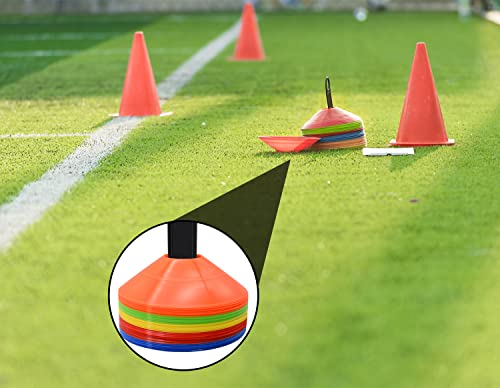
Nothing special is required: ordinary running shoes and a small clear space are enough. For runners who enjoy a visual target, cones suited to compact practice areas are optional, not a form fix. If a drill feels awkward, causes discomfort, or turns the warm-up into a test, skipping it is sensible.


Use the camera as a gentle check-in
A runner may feel wonderfully upright while actually stiffening the neck, or worry about a harmless heel touch that barely changes the overall motion. A 10–15 second phone clip can settle those guesses more kindly than a mirror or a dozen mid-run corrections.
Film an easy, familiar pace from the side and from behind, then watch it once at normal speed. The useful question is not “What is wrong?” but “Does this look as easy as it felt?” Notice broad patterns: relaxed shoulders, arms moving without strain, feet landing roughly beneath the moving body, and whether one new cue makes the stride look more forced.
For a clearer experiment, record a few seconds naturally, try one cue for another few seconds, then return to normal. A simple setup for filming a run alone makes this comparison easier. There is no need to pause on every frame or chase symmetry; most recreational runners have small quirks that do not need fixing.

A posture strap or corrector can seem like a shortcut when shoulders drift forward. It may create a temporary sensation, but it can also encourage bracing instead of comfortable movement. Before treating gear as an answer, consider what a posture corrector can and cannot do on a run. If filming reveals pain, numbness, or recurring trouble, professional guidance matters more than another cue.


Keep the experiment small
-
Choose one cue
Before an easy run, pick a single quiet reminder: soften the shoulders, let the arms swing, or place the feet without reaching.
-
Try it briefly
Use the cue for a minute or two after warming up. If it creates strain, stiffness, or too much thinking, let it go.
-
Return to the run
Attention can move back to breathing, pace, conversation, and the passing streets. Form does not need constant supervision.
-
Notice what repeats easily
Afterward, recall whether the movement felt comfortable enough to revisit – not whether it resembled a runner in a highlight reel.
- Comfortable habits tend to be more useful than dramatic corrections.
- One cue at a time makes it easier to tell what actually changed.
The next easy run can be a low-stakes test, not a form exam. There is no single pose or foot strike to copy; the worthwhile pattern is the one that feels relaxed and can return again on another ordinary day.