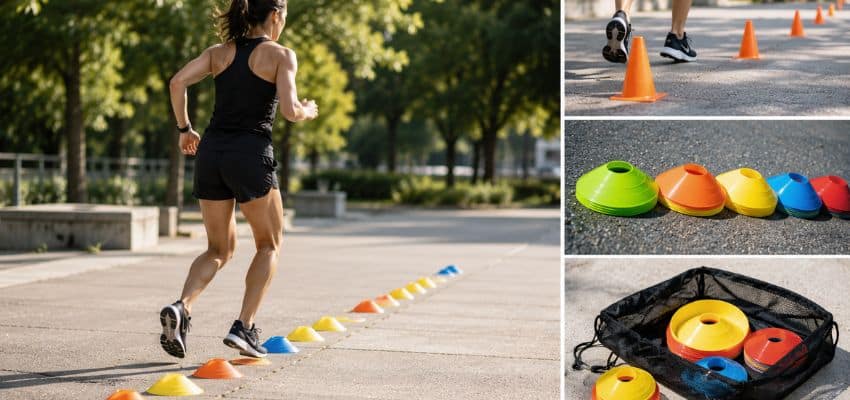
Five quiet minutes can help the first running minutes feel less like an argument between arms, legs, and pavement.
Running drills for beginners do not need cones in six colors, a whistle, or knees flying toward the clouds. A useful drill is simply a short movement that gives one part of the running rhythm a little attention before an easy outing: marching with opposite arms and legs, loosening the arm swing, making a low heel flick, taking quick quiet steps, or blending everything into a gentle shuffle.
These are not a replacement for warming up and not a promise of speed, perfect form, or freedom from injury. Walk or jog easily first, keep each practice short, and finish with more energy than you started. The best beginner running form drills feel like rehearsal rather than punishment – the body gets a suggestion, not a performance review.
- Warm up with 5–10 minutes of easy walking or jogging first
- Choose three drills when five would feel like another workout
- Stop for pain, dizziness, loss of control, or symptoms that make ordinary movement feel unsafe
Prepare the body and space before practising
Warm up before adding coordination
Begin with 5–10 minutes of relaxed walking or very easy jogging. Wait until the body feels warmer, breathing has found an ordinary rhythm, and the joints no longer feel as though they have just been removed from storage. That gentle movement is the warm-up; the drills come afterward.
Research on dynamic warm-up routines has found possible performance benefits in recreational runners, but those findings concern specific protocols and outcomes – not a promise that these five movements will repair form or prevent injury. A recent study of dynamic stretching in recreational distance runners supports keeping the discussion about preparation measured rather than magical.
Choose a forgiving practice lane
Find 15–20 metres of flat, dry, uncluttered pavement, track, or firm path. The lane should be wide enough to turn around without stepping into traffic or another path user. Avoid steep slopes, loose gravel, busy crossings, and anywhere a slightly awkward step would become a public negotiation.
- Look ahead for cracks, roots, wet paint, toys, dogs, and people moving across the space.
- Keep bags, bottles, and loose clothing out of the practice lane.
- Use shoes and clothing already comfortable for easy running.
- Mark the ends only when it helps; two ordinary objects or landmarks are enough.
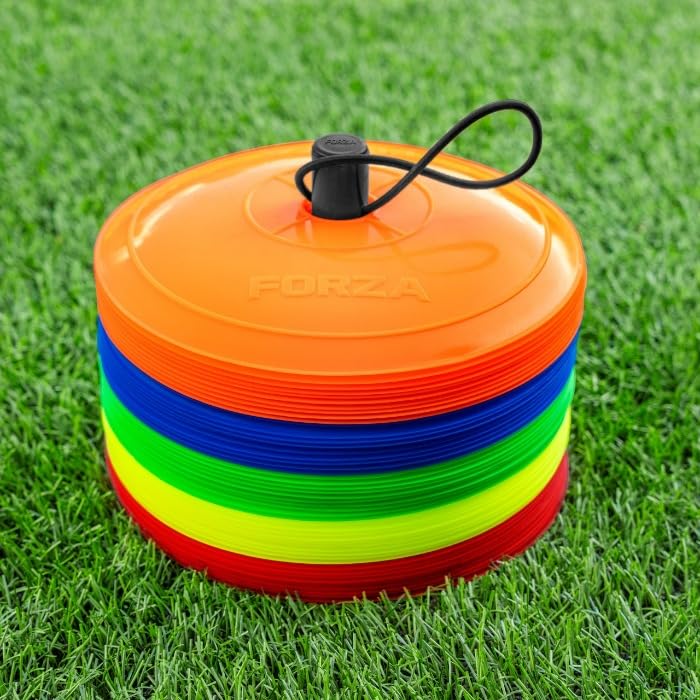
Markers are optional. Anyone who prefers a visible lane can see how to use cones for running drills without turning the setup into a miniature athletics stadium.
Decide what a successful drill feels like
The useful signals are simple: breathing remains easy, the movement stays controlled, and the runner could begin the planned outing immediately afterward. Awkwardness is allowed. A beginner is coordinating a new pattern, not auditioning for the slow-motion section of a shoe advertisement.
Do not use drills to force one foot strike, one cadence, one knee height, or one picture-perfect posture. Beginner running-form basics are better understood as adaptable relationships between effort, posture, arms, and stride. A drill offers one brief sensation; the run decides whether that sensation remains useful.
Skip the routine when ordinary walking already feels painful, dizzy, unstable, or unusually breathless. Stop any drill that brings sharp or worsening pain, numbness, weakness, loss of balance, or a feeling of losing control. Walking is a complete substitute; individual medical or rehabilitation advice outranks a generic drill list.
Try five running drills for beginners
Tall, easy marching
Purpose: notice how the opposite arm and leg naturally work together while the head and ribcage remain comfortably supported. This is a coordination drill, not a high-knee exercise.
Look ahead and walk forward with deliberate, unhurried marches. Lift one knee only to a comfortable height, place the foot quietly beneath the body, and let the opposite arm come forward. Keep the jaw and hands soft. Cover 15–20 metres, walk back normally, and repeat once.
Make it smaller: use purposeful walking with a slightly clearer arm swing, or hold a rail while alternating low knee lifts in place. The drill is too ambitious when the runner leans backward, arches the lower back, lifts the knee for display, or has to hold the breath to balance.
Relaxed arm-swing walking
Purpose: let the arms find a reciprocal rhythm without the extra decisions created by running speed. The legs keep walking while attention briefly moves to hands, elbows, and shoulders.
Walk 15–20 metres at an ordinary pace. Let the elbows remain comfortably bent and allow each arm to travel generally forward and back as the opposite leg steps. The hands may move on a slight diagonal; do not push them outward to create two imaginary rails. Walk back and repeat once.
Soften clenched fingers and let the shoulders settle without dragging them down. A large crossover paired with torso twisting deserves a closer look at why arms cross the body while running, but a small inward path can be entirely ordinary.
Make it smaller: stand still and swing one arm at a time for 15 seconds, then resume normal walking. Stop before the movement becomes a shoulder workout; the aim is to remove effort, not demonstrate arm power.
Low heel-flick walks
Purpose: rehearse a small recovery movement behind the body while keeping steps quiet and the torso calm. This is not a butt-kick sprint drill wearing beginner-friendly clothes.
- Walk forward easily with the gaze ahead and arms moving naturally.
- As one foot leaves the ground, allow the heel to lift gently behind.
- Keep the knee pointing mostly downward instead of driving it forward or outward.
- Place the foot softly, alternate sides, and continue for 15–20 metres.
- Walk back normally and make one more short pass.
The movement has become too large when the heel kicks high, the body bobs upward, or the foot slaps down on return. Lower the flick until it looks almost unimpressive. For extra support, alternate tiny heel lifts in place while holding a rail; a slow controlled version still counts.
Quick, quiet steps in place
Purpose: feel a brief, light rhythm without chasing a cadence number or travelling forward. The drill asks whether both feet can meet the ground calmly while the head and shoulders remain relatively quiet.
Stand comfortably tall and take tiny alternating steps for 10–15 seconds. Keep the knees low, the gaze level, and the arms loose. Walk normally for 20–30 seconds, then repeat twice. The sound should resemble a soft shuffle rather than popcorn attempting an escape.
Bouncing upward, stamping, or letting the feet run faster than the body can organize means the tempo is too ambitious. Slow down or alternate four quick steps with four marching steps. Runners who notice the head rising and falling sharply can explore drills for reducing excessive bouncing separately rather than forcing this one faster.
Gentle shuffle into easy running
Purpose: carry the tall march, loose arms, low recovery, and quiet rhythm into something that resembles the beginning of the actual run. It should feel like a bridge, not a final examination.
Jog or shuffle along the same 15–20-metre lane at a pace that leaves room for a full sentence. Let the feet meet the ground wherever they naturally do beneath a comfortable stride; “quiet” does not mean tiptoeing or forcing a forefoot landing. Walk back, then repeat two or three times.
The common mistake is speeding up to make the drill look like real running. Another is reaching far ahead with the foot or adding a springy bounce. Make the steps smaller and slower. When jogging feels awkward that day, use a brisk tall walk with relaxed arms and move into the planned outing from there.
One or two short passes are enough. Longer and faster do not automatically mean more useful. If breathing becomes hard, legs feel heavy, or coordination worsens, walk until settled and shorten the routine next time.
Build one short pre-run routine
Use the three-drill version on an ordinary day
After 5–10 easy minutes, try one 15–20-metre pass of tall marching, one pass of arm-swing walking, and two gentle shuffles. Walk back between passes. This sequence takes only a few minutes and touches posture, arm rhythm, and the transition into running without asking the feet to move quickly in place.
This compact option is enough for most easy outings. It also prevents pre-run running drills from quietly becoming a separate workout that steals energy from the run they were meant to precede.
Use all five only when the body remains calm
A full sequence can be one pass each of marching, arm-swing walking, low heel flicks, and quick quiet steps, followed by two gentle shuffles. Keep normal walking between drills and allow the entire routine to remain conversational.
- Do not add repetitions merely because the first pass felt easy.
- Drop the quickest drill when balance, coordination, or footing feels uncertain.
- Begin the run slower than excitement suggests, even when the drills felt smooth.
- Judge the routine by whether the first running minutes feel settled, not faster.

Keep only the drill that answers a real need
Some days the arms feel guarded, so arm-swing walking earns its place. On another day, a march and shuffle may be enough. Running drills to improve form are most useful when “improve” means making the next easy run feel less forced – not reshaping every stride to match someone else.
The short routine can fit into a beginner running week before an easy outing without becoming another obligation. For a broader health-first approach, the older article on starting to run without getting injured places warm-up, gradual progression, recovery, and symptom awareness ahead of any single drill.
Clear answers about beginner running drills
What are the best running drills for beginners?
Start with low-pressure movements that are easy to control: tall marching, relaxed arm-swing walking, low heel-flick walks, quick quiet steps in place, and a gentle shuffle. The best selection is the one that leaves breathing easy and makes the first running minutes feel more settled.
How long should beginner running form drills take?
A few minutes after an easy 5–10-minute warm-up is enough. One short pass of three drills, followed by two gentle shuffles, can be a complete routine. Stop before the movements become tiring or begin to reduce coordination.
Should I do pre-run running drills before every run?
No. They are optional practice, not an entry fee for running. Use them when a short rehearsal helps you feel less stiff or scattered. Walking or very easy jogging alone may be enough on many days.
Can running drills improve my form?
They can help a runner notice timing, posture, arm movement, rhythm, or foot contact in a low-pressure setting. They cannot promise one correct form, faster running, or injury prevention. Keep only changes that make the whole easy stride feel less forced.
Should running drills make me tired?
No. Breathing should remain conversational and the body should feel ready for the planned run. Shorten the passes, choose fewer drills, or return to walking when the legs become heavy, breathing becomes hard, or coordination gets worse.
When should I skip running drills?
Skip them when ordinary walking is painful, dizzy, unstable, unusually breathless, or otherwise concerning. Stop for sharp or worsening pain, numbness, weakness, loss of balance, or loss of control, and seek individual advice when symptoms persist or affect daily movement.
Take one useful feeling into the run
Running drills for beginners work best as short rehearsals after the body is already warm. March tall without lifting the knees for display, let the arms swing during an ordinary walk, keep heel flicks low, make quick steps genuinely quiet, and finish with a shuffle slow enough for conversation.
The next run does not need all five. Choose three, make one relaxed pass of each, and keep only the sensations that reduce effort once running begins. A drill has done enough when the body feels more organized and the mind has stopped supervising every limb.
On the next easy outing, warm up first and try tall marching, arm-swing walking, and two gentle shuffles. If the first minutes feel calmer, the routine has earned another visit. If not, ordinary walking remains an excellent opening act.