
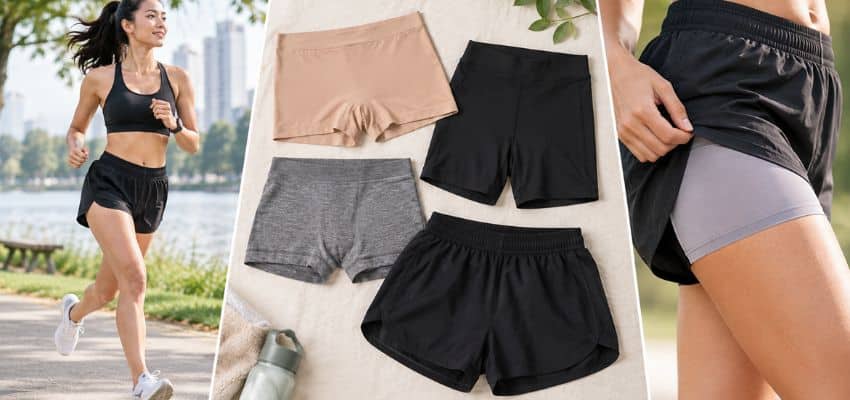
The right answer is usually simpler than the underwear drawer makes it look.
If you are wondering what to wear under running shorts, begin with the shorts themselves. A comfortable built-in liner is normally meant to be the layer against your skin, so adding underwear is optional rather than automatic. When shorts have no liner – or the liner lacks the coverage, support, or fit you need – one close-fitting, moisture-managing layer is usually the better choice.
Chafing is less about whether a garment is called briefs, boxer briefs, or compression shorts than about what happens after thousands of repeated steps. Fabric that bunches, seams that meet moving skin, trapped sweat, and a waistband that shifts can turn a harmless wrinkle into a very memorable shower afterward. Underwear is only one part of a complete running outfit; here, the job is simply to choose the least complicated layer that stays comfortable.
The underlying problem is repeated contact, not the name printed on the garment. MedlinePlus defines chafing as skin irritation caused by skin rubbing against skin, clothing, or another material. Sweat, shifting fabric, and poorly placed seams can make that repeated contact harder for the skin to tolerate.
For the outer layer – from fabric and fit to dressing for changing weather – the broader overview of running clothes for beginners helps complete the outfit without turning this underwear decision into a wardrobe catalogue.
- Wear nothing extra under a liner that already feels secure and smooth.
- Use one fitted layer under unlined shorts or an unsuitable liner.
- Judge fabric, seams, support, coverage, and movement together – not by the label alone.
Which layer belongs under your running shorts?
-
Nothing extra under a comfortable liner
Many running shorts liners are designed to replace ordinary underwear. This is the simplest option when the liner stays smooth, offers enough coverage and support, and does not create pressure at the leg openings. Fewer layers also mean fewer seams and less fabric holding sweat against the skin.
Works best whenA liner that remains in place during squats, walking, and a short jogReconsider whenThe liner feels scratchy, loose, narrow, restrictive, or exposed -
Moisture-wicking briefs
Briefs add support and coverage without extending fabric down the thigh. They can work well beneath unlined shorts, especially for runners who dislike the warmth of longer underwear. The elastic around the groin must remain flat because a firm edge in the wrong place can rub long before the fabric itself causes trouble.
Works best whenSmooth elastic, a stable waistband, and enough room to move without pinchingReconsider whenThick seams, tight leg openings, tags, lace, or fabric that shifts when damp -
Longer boxer briefs or boyshorts
A longer leg can place fabric between the upper thighs and reduce skin-to-skin contact. The useful length is the one that remains below the usual rubbing point. A loose leg rides upward; a very tight one may grip or leave pressure marks. Men and women can apply the same test even though the preferred support and cut will differ.
Works best whenFlat seams and leg openings that stay down without grippingReconsider whenLoose fabric, short legs that roll into the crease, or a waistband that folds -
Compression shorts
Compression shorts provide the broadest, most stable coverage and may suit longer runs or runners whose thighs rub over a larger area. They should feel supportive rather than restrictive. Worn beneath loose unlined shorts, they can serve as the only base layer; placing briefs underneath them usually adds another seam system without solving the original fit problem.
Works best whenSmooth stretch, flatlock seams, a stable waistband, and comfortable thigh coverageReconsider whenNumbness, deep marks, restricted stride, trapped heat, or repeated waistband adjustment

Start with the liner already in your shorts
A well-fitting built-in liner can serve as the only layer against the skin.
Adding ordinary underwear by habit may introduce extra elastic, seams, and fabric where the liner was already doing the job.
More fabric does not automatically mean less friction.
A liner and underwear can slide against each other, trap more moisture, or place two sets of seams near the same moving area.
Movement, sweat, and duration reveal fit problems that a mirror cannot.
A leg opening may creep upward, a brief liner may pull sideways, or a waistband may fold only after repeated strides.

What makes underwear chafe during a run?
- Moisture changes how fabric behaves Sweat can make fabric cling, stretch, or slide differently. A garment that stays put when dry may begin folding or moving once it is wet.
- A small seam repeats the same contact One harmless brush becomes hundreds or thousands of contacts. Flat seams help, but placement matters just as much as thickness.
- Loose fabric gathers into a rubbing point Extra material can bunch at the groin or upper thigh. Buying larger does not necessarily create comfort when the cut is wrong.
- Tight edges concentrate pressure A narrow leg opening or firm waistband may stay in place yet still irritate the skin. Stable should not mean cutting, pinching, or leaving deep marks.
- Layering multiplies possible trouble spots Liner, underwear, and compression shorts can create three moving waistbands and several overlapping seams. Each layer should solve a specific problem or leave the run.
To prevent underwear chafing, find the first part that moves, folds, or presses instead of changing every item at once. The problem is often one edge or seam – not a verdict on your entire running wardrobe.
Longer underwear can reduce skin-to-skin contact, but chafing can also come from shorts hems, sweat, body shape, distance, or a product applied to the skin. Use the separate article on stopping thigh chafing when the irritation extends beyond the underwear line.

Match the layer to your body and the run
Support and coverage are personal
- Notice where support is missing. A liner may fit the waist but still feel loose at the groin, or provide support while offering too little rear or thigh coverage.
- Choose coverage by the rubbing point. Briefs stop at the groin; boxer briefs, boyshorts, and compression shorts extend protection onto the thigh.
- Do not let a gender label end the decision. Cut, anatomy, support, and comfort matter more than whether a product page calls the garment men’s or women’s underwear for running.
Heat and sweat may change the answer
- Short and cool: a comfortable brief liner or light briefs may be enough.
- Hot and humid: fewer layers and fabric that does not remain heavy with sweat become more important.
- Wet weather: test whether leg openings and waistbands stay flat after the fabric is soaked, not merely damp.

Run duration exposes small fit problems
- Early warmth is information. A spot that feels unusually warm after ten minutes may become painful later.
- A moving waistband rarely settles itself. Repeated pulling is a fit signal, not part of proper running form.
- Longer is not always better. More thigh coverage helps only when the added fabric remains smooth and breathable enough for the conditions.
When underwear, compression shorts, or a liner keeps sliding, compare the waistband with the garment’s hip fit instead of tightening the drawcord harder. The same proportion problem matters when choosing leggings that stay up on runs.
What not to wear under running shorts
- Loose everyday underwear: excess fabric can gather at the groin or climb into the crease.
- Thick seams and raised tags: small edges become more noticeable as the run continues.
- Rolled waistbands or leg openings: a rolled edge concentrates fabric and pressure in one narrow strip.
- Cotton that stays wet during your run: Cotton is not automatically uncomfortable, especially during a short and relatively dry outing. The concern begins when it absorbs sweat and remains damp against moving skin; the American Academy of Dermatology recommends moisture-wicking clothing for physical activity because sweat-soaked cotton can contribute to friction and chafing.
- An unnecessary third layer: briefs beneath compression shorts beneath a liner should have a clear purpose, not simply feel safer because there is more fabric.
Test the combination before it earns a longer run
-
Move at home first
Put on the complete combination, including the outer shorts. Squat, lift each knee, walk upstairs, and take several long strides. Watch for a liner pulling sideways, fabric gathering at the groin, or a waistband beginning to fold.
-
Run for 10 to 15 minutes
Use a short route close to home. A product return policy cannot tell you what happens when your stride, sweat, and body shape meet; a brief real run can.
-
Notice the first change
Pay attention to warmth, pressure, dampness, riding up, or repeated adjustment. Do not wait for sharp discomfort before treating the signal as useful.
-
Check the garment and skin afterward
Look for rolled edges, twisted seams, deep elastic marks, or one irritated strip. Also notice whether the fabric stayed wet against the skin after the rest of your clothing began to dry.
-
Change only one variable
Try a different size, cut, liner, or underwear—not all four together. One controlled change makes it easier to identify whether coverage, support, seam placement, or moisture was the real problem.
Clothing should solve most fit-related rubbing on its own. When a well-tested combination still leaves one predictable friction point, compare suitable anti-chafing products for runners rather than adding another garment layer.

FAQ about what to wear under running shorts
Do you wear underwear under running shorts with a liner?
Usually, you do not need additional underwear when the liner fits comfortably, stays in place, provides enough support, and covers the areas you want covered. The liner is designed to serve as the base layer. Add underwear only when it solves a specific problem the liner does not.
What underwear is best under unlined running shorts?
Choose one close-fitting option that remains smooth when damp. Moisture-wicking briefs use less fabric; longer boxer briefs or boyshorts add upper-thigh coverage; compression shorts offer the broadest stable layer. The best choice depends on where rubbing occurs and how much support and coverage feel comfortable.
Are boxer briefs or compression shorts better for running?
Boxer briefs may feel lighter and provide enough coverage for everyday runs. Compression shorts usually cover more of the thigh and move less, but can feel warmer or too restrictive when the fit is wrong. Test both by movement and duration rather than assuming tighter is always better.
Can cotton underwear cause chafing while running?
Cotton does not automatically cause chafing, and some runners find it comfortable on short, dry outings. The problem is that cotton can stay wet and heavy during a sweaty run. Damp fabric, repeated movement, and an unsuitable fit together make irritation more likely.
Why does underwear ride up under running shorts?
Common causes include loose leg openings, an inseam that ends above the rubbing point, insufficient room through the hips or groin, stretched elastic, or friction between the underwear and outer shorts. A longer leg will not help when the opening is too loose to remain flat.
Should women wear underwear under lined running shorts?
There is no requirement to do so. A comfortable liner can be worn without an additional layer. Separate briefs or boyshorts may feel better when the liner lacks coverage, shifts, or does not suit personal hygiene and comfort preferences. The practical answer is the combination that stays dry enough, smooth, and secure.
Can wearing two layers make chafing worse?
Yes. Two layers may trap more heat and moisture or allow fabric surfaces to move against each other. They can also place several seams and waistbands near the same area. Keep the second layer only when it clearly improves support, coverage, or separation between rubbing skin.
Wear the combination you stop noticing
- Let a comfortable built-in liner work alone.
- Choose one fitted layer when the shorts are unlined or the liner is unsuitable.
- Test seams, waistbands, leg openings, moisture, and coverage on a short run first.
The simplest answer to what to wear under running shorts is not one universal garment. It is one comfortable layer doing a clear job. That may be the liner already inside the shorts, moisture-wicking briefs, longer boxer briefs or boyshorts, or compression shorts.
Once the combination stays smooth, supportive, and quiet through a short test run, stop adding solutions. Good underwear for running does not need to announce itself at every step. It earns its place by allowing the run – not the waistband – to hold your attention.


