
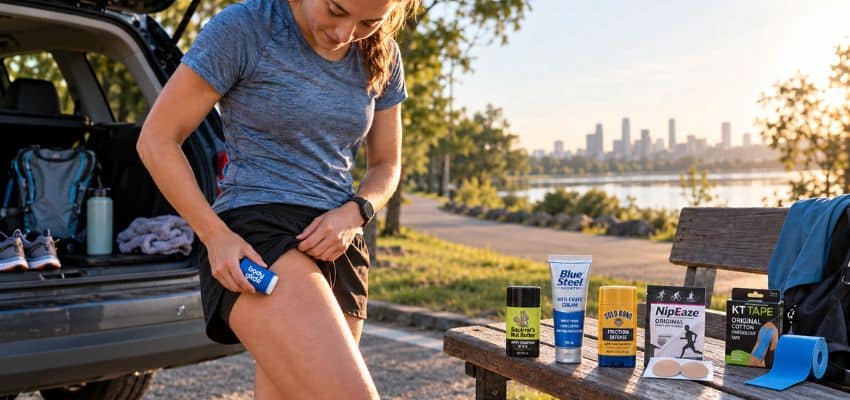
A small fit mistake can become a big distraction miles from home.
At mile six, shorts that creep up can leave my thighs rubbing with every stride. A balm and a pair of shorts tackle that problem differently: balm needs to cover the full friction zone, while shorts need to keep skin covered as I move. Neither helps much if I miss a narrow strip with the balm or the fabric shifts out of place.
Before a long run, I check exactly where rubbing might happen and whether my shorts stay there when I walk and jog. If skin is already broken, I don’t treat it like an ordinary pre-run application.
What must stay put on a long run
A balm or stick only helps where it actually covers the friction zone. Shorts solve a different problem: they need to keep fabric between the rubbing surfaces while I move. Before comparing products, I would decide whether the failure is disappearing coverage, a hem that rides up, or both.
Six anti-chafing products at a glance


Balms, sticks, and cream for long runs
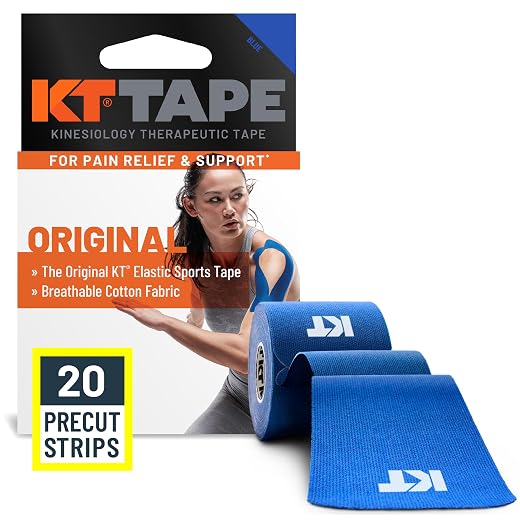
I would compare these by application format, ingredient preference, current price and how easily I could carry them – not by invented scores. A shorter trial run is more useful than discovering halfway through a long run that a formula or application method does not suit my skin.
Body Glide Original for targeted coverage

Intended As A Barrier To The Effects Of Rubbing, Its Formulation Makes It Easy To Apply For All-Day Protection From Skin On Skin Rubbing, Chafing From Clothing, Or Pinching And Friction From Shoes, Protective Gear, And Other Irritants.
- Stick format makes a known contact area easy to cover.
- Portable enough to consider carrying for a touch-up.
- An uncovered edge can still become a hotspot.
- It will not keep a waistband or short leg in place.
Squirrel’s Nut Butter for runners who prefer its ingredient list

Squirrel’s Nut Butter is the alternative I would consider when its all-natural formula matters to me. That phrase is not a promise that every ingredient will suit every skin type, so I would read the label and try it on intact skin during a shorter run before relying on it for hours.
- Portable stick format suits targeted application.
- The maker publishes an ingredient list that can be checked before buying.
- An all-natural label does not predict skin tolerance.
- It is not a substitute for shorts that stay over the rubbing area.
Gold Bond Friction Defense when current price matters

Gold Bond Friction Defense belongs in the comparison when price matters. Because marketplace prices change, I would compare the current cost per ounce with the other sticks instead of repeating one temporary dollar figure or declaring it permanently cheapest.
- Stick format allows targeted application.
- Its value can be compared directly by current cost per ounce.
- The listing does not establish a fixed number of sweat-resistant miles.
- A topical stick cannot stop shorts from riding up.
Blue Steel Sports for runners who prefer spreading a cream

Blue Steel earns a separate place because it changes the application method rather than repeating another stick. A cream can be spread by hand around the edges of shorts or another awkward contact area, but that same feature makes a mid-run touch-up less tidy.
- Cream can be spread by hand across an irregular contact area.
- A distinct alternative for runners who dislike swiping on a solid stick.
- Messier to reapply away from a sink or private stopping place.
- Tea tree oil and other ingredients still need to suit the runner’s skin.
Shorts that reduce thigh chafing
Longer inseams, stable hems and smoother seam placement address the part a topical product cannot: keeping the friction zone covered.
Choosing comfortable running clothes for the conditions also matters because damp, shifting fabric can create new contact points.
Cleveland Clinic’s chafing guidance also emphasizes reducing moisture and changing the clothing that contributes to rubbing.
-
Longer inseams covering rubbing areas
When shorts creep up and expose the same thigh patch, I would check their length before adding more balm. The inseam needs to keep fabric over the entire rubbing area while I move, not just while I stand still. For more on locating that area, see how to stop thigh chafing before a run.
Look forCoverage that stays below the rubbing patch during a jog.AvoidAn inseam that looks long enough only when standing. -
Secure fit, flat seams and moisture control
I would try a few strides before committing to a long run: the legs should stay in place without feeling restrictive. I’d also check where the seams land and choose fabric that handles moisture rather than holding it against my thighs. Balm can help with a contact point, but it cannot keep a loose short leg from rolling up.
Look forLegs that stay put, comfortable seam placement and moisture-handling fabric.AvoidRolling hems, rubbing seams or damp fabric bunching at the thighs.
Protection for nipples and small hotspots
When one small spot keeps rubbing, I’d cover that point rather than spread balm over a larger area. For preventing nipple chafing, targeted coverage may also keep balm off my shirt. The tradeoff is that adhesive must agree with my skin.
NipEaze for a small, predictable rubbing point

NipEaze makes sense when the problem is one small, repeatable contact point and I do not want to cut tape before every run. The maker says the cover should contact the areola rather than the surrounding skin for the adhesive to work as intended, so choosing the correct diameter matters more than simply pressing on any available patch.
- Pre-cut shape avoids trimming tape before a run.
- Designed specifically to shield a small nipple contact point from shirt friction.
- A fixed diameter may not cover every rubbing pattern.
- Adhesive still needs to suit the runner’s skin.
KT Tape Original when a custom patch is more practical
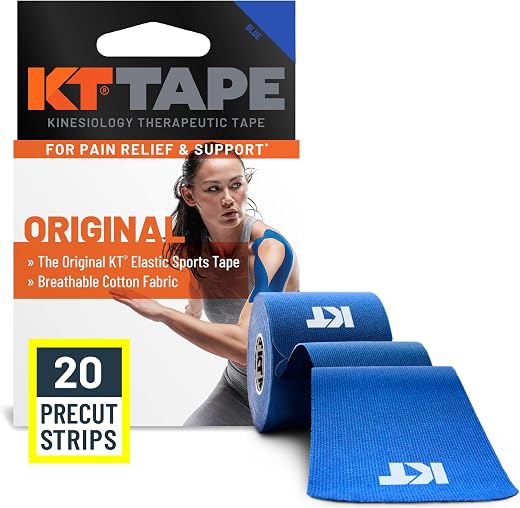
KT Tape Original is not a dedicated nipple guard, but a small piece can provide targeted coverage when a pre-cut cover does not fit the rubbing spot. Trim the tape to size, round the corners so they are less likely to lift, and apply it without stretch to clean, dry skin.
- Can be cut to fit a small or irregular contact area.
- One roll or pack can serve other sports-tape uses.
- Requires cutting and careful placement.
- Removal may be uncomfortable, especially on hair or sensitive skin.
Skip adhesive on broken or severely irritated skin. Stop using it and seek medical advice if irritation is persistent, spreading, infected, or severe.
Choose by body area and conditions
I would not use “long-lasting” as the only buying test. Heat, sweat, clothing movement and access to the rubbing spot all change what is practical, and different body areas call for different forms of protection.
- Thighs and shorts When my thighs rub, I start with shorts that cover the contact area and stay down. I think about what to wear under shorts to reduce rubbing, too. A balm can cover exposed intact skin, but it cannot hold a riding-up hem in place.
- Underarms and groin For underarms, I place a stick only where my arm and shirt – or skin – actually meet. Around the groin, I keep it on intact external skin at the rubbing edge of clothing, never inside the body.
- Nipple rubbing For nipple rubbing, I would choose a nipple guard or carefully placed sports tape rather than spread balm across a larger area. Adhesive can irritate skin, so removal matters as much as placement.
- Conditions and access On a hot or sweaty run, I plan for rubbing spots to change rather than assume any product will last a set distance. If I can carry a stick, I can check and reapply at a stop. I skip products on broken skin and seek medical advice for severe, persistent, spreading, or infected irritation.
Apply protection before rubbing starts
I would prepare while the skin is clean, dry and intact, then move around in the clothing I plan to wear. That short check can reveal a missed edge or a rolling hem before miles of repeated friction turn it into the only thing I can think about.
-
Find the whole rubbing area
Before I get dressed, I check where skin meets skin or fabric. I look beyond the sorest point so I don’t miss the edges of the contact area.
-
Apply protection before dressing
I put balm or cream on intact external skin across that full area, then give it a moment before pulling on shorts or a shirt.
-
Check the fit
I walk around and lift my knees to see whether shorts ride up or seams shift onto a rubbing spot. More balm won’t hold loose fabric in place.
-
Pack a backup if I can use it
For a longer run with a practical place to stop, I carry a small stick for touch-ups. I don’t count on reapplying if I won’t be able to reach the spot.
I keep this routine for prevention on intact skin, not for covering an open or bleeding spot. For persistent, spreading, infected or severe irritation, I stop and seek appropriate medical advice.
For my next run, I’d change what is failing: if my shorts ride up, I’d try a longer, secure pair before adding more topical protection. The beginner running gear guide can help with fit basics. If the fabric stays put but skin still rubs, I’d choose a stick by formula or current price, or Blue Steel when spreading a cream suits the contact area better. NipEaze and carefully used sports tape remain targeted choices for small nipple hotspots. If both fit and coverage are off, I’d change both.
I’d stop and seek appropriate medical advice for persistent, spreading, infected, or severe irritation.


