

If your knees feel sensitive after a few short runs, one thing to notice is how each landing feels under your feet.
This guide is not about finding a shoe that fixes knee pain. It is about choosing the right kind of cushioning when running feels too harsh, too firm, or too jarring on easy days. If you are still unsure whether you need cushioning, support, or a more balanced shoe type, start with choosing running shoes when your knees feel sensitive. This page goes deeper only into cushioning: how soft is enough, when max cushion helps, and when more foam becomes too much.
- What cushioning actually changes under your feet
- How to tell enough cushioning from too much cushioning
- When balanced plush, max cushion, or daily-run softness makes sense
- How to test cushioning without using pain as the only signal
If knee pain is sharp, increasing, lasting, changing your stride, or affecting daily life, do not treat cushioned shoes as the main solution. Reduce your running load and consider asking a qualified professional. Cushioning can make running feel less harsh, but it should not be used to ignore a clear pain signal.
What Cushioning Actually Changes Under Your Feet
Cushioning may make running feel less harsh, but it should not be treated as a fix for pain.
A softer midsole can change how each landing feels. It does not automatically solve training load, recovery, fit, surface, or movement issues.
Softness only helps if the shoe still feels stable and natural under your stride.
Some runners enjoy a plush landing, while others feel less controlled when the foam is too soft, too tall, or too disconnected from the ground.
Cushioning can improve comfort, but it does not replace gradual training and recovery.
If your knees are already sensitive, adding distance or running days too quickly can still be too much, even in a soft shoe.
How Much Cushioning Is Enough for Beginner Runs?
Choose cushioning you can still control
-
Soft enough to reduce harshness
The shoe should make landings feel smoother during easy runs, not only feel soft when you press the foam with your hand.
Look forA smoother landing at easy paceAvoidA shoe that only feels good while standing -
Stable enough when tired
Cushioning becomes less useful if your foot feels like it is sinking, sliding, or wobbling as your legs get tired.
Look forA platform that feels centeredAvoidWobble or sinking that changes your stride -
Comfortable over repeated short runs
Beginners should judge cushioning over several easy sessions, not only from the first try-on or one short jog in the store.
Look forComfort after several easy sessionsAvoidJudging only from the first five minutes -
Matched to your real use
A shoe for short easy runs does not need to feel like a premium long-run cruiser unless that is the problem you are trying to solve.
Look forEasy runs, walk-run sessions, and recovery runsAvoidBuying max cushion for a problem you have not identified
Cushioning terms worth understanding
Midsole
The foam layer under your foot. It affects softness, firmness, and how smooth the ride feels.
Stack height
How much material sits under your foot. Higher stack can feel softer, but not always more stable.
Rocker shape
A curved sole shape that may make the transition from landing to toe-off feel smoother.
Platform width
The base under the shoe. A wider base can feel steadier, but fit and stride still matter.
Balanced Plush Cushioning Before Going Max
This type works when comfort matters, but extremes do not
- You want softer landings The run feels a little too harsh, but you do not want the shoe to feel oversized or strange underfoot.
- Your runs are mostly easy Balanced plush cushioning is usually more useful for steady running than for speed sessions.
- You are still learning your preferences A less extreme cushioned shoe can help you understand whether softness actually helps your routine.
- You still care about control The shoe should feel calm and predictable, not just soft.
This is often the most beginner-friendly cushioning category because it avoids jumping straight to the biggest or softest option.
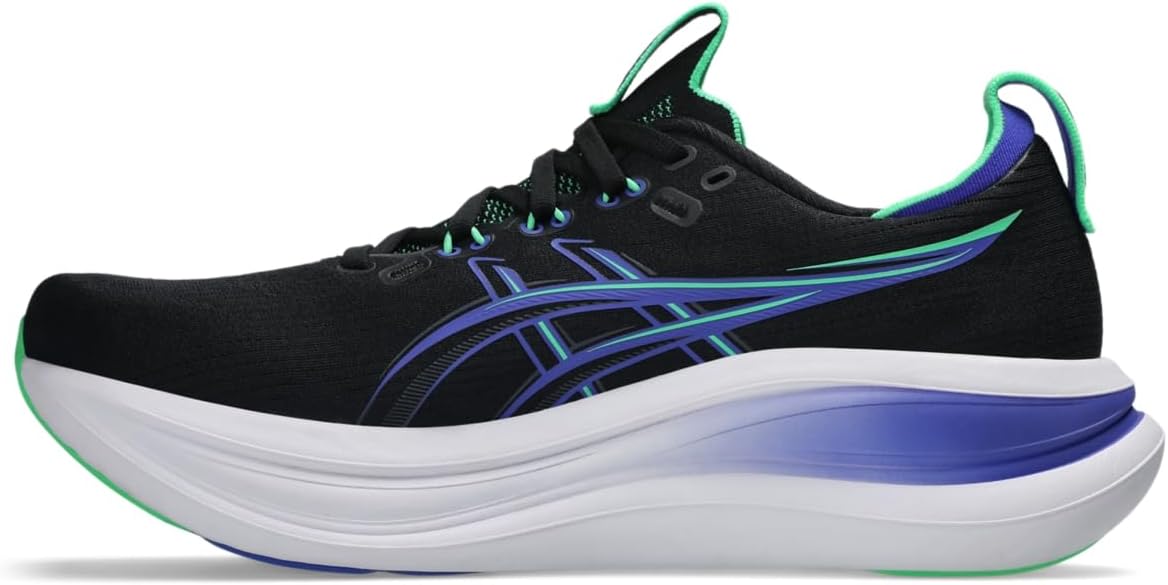
ASICS Gel-Nimbus 28 can help beginners picture what balanced plush cushioning looks like in practice. It may suit runners who want easy runs to feel less harsh without jumping straight to the thickest or most extreme shoe.
- Plush daily-trainer feel
- Useful balanced cushioning reference
- Comfortable for easy running
- Less extreme than some max-cushion shoes
- Not a pain solution
- May still feel too soft for some runners
- Fit depends on foot shape
- Higher price than basic trainers
Maximum Cushioning When Pavement Feels Too Harsh
More foam does not automatically mean a better run
Maximum cushioning can feel comfortable, but it still needs to feel stable under your body.
A tall, soft shoe may feel pleasant at first and still feel awkward if your foot wobbles or your stride changes.
Many max-cushion shoes prioritize comfort over speed, flexibility, or ground feel.
That trade-off can be fine for easy runs, but it may disappoint runners expecting a quick or responsive ride.
Softer shoes may help, but shorter runs, easier pace, and surface choice also matter.
The shoe can reduce some friction, but it cannot replace sensible training choices.
A max-cushion shoe makes the most sense when you like a very soft underfoot feel and the shoe still feels steady when you walk, jog, and turn slowly. If the height or softness makes you feel less coordinated, a more balanced cushioned shoe may be easier to live with.

HOKA Bondi 9 helps illustrate the max-cushion approach. It may suit beginners who want a very soft, protective-feeling ride for easy running, but it is not automatically the right choice for everyone with knee discomfort.
- Very plush underfoot feel
- Good max-cushion reference
- Useful for easy runs and long standing days
- Comfort-focused design
- Heavier and bulkier than many trainers
- May feel too much for some beginners
- Not responsive for faster running
- Not a fix for knee pain
Soft Daily Cushioning Without the Big-Shoe Feeling
Soft daily cushioning should still feel natural
- It should feel softer, not oversized The shoe can make easy runs feel smoother without making your feet feel far away from the ground.
- It should move easily at slow pace A regular cushioned trainer should not feel like too much shoe for short beginner runs.
- It should give enough feedback You should still feel controlled and aware of where your foot is landing.
- It can make sense when value matters A previous-version shoe can be reasonable if the fit, feel, and price are right.
This category is for runners who want comfort, but do not want cushioning to dominate the whole running experience.
A shoe does not have to be the newest version to be useful. If an older model fits well, feels comfortable, and costs less, it can still be a reasonable reference point. Just do not choose it only because it is discounted.

New Balance Fresh Foam X 1080 V14 is useful as an example of soft daily cushioning that still feels like a regular trainer. It can make sense if you want a comfortable easy-run shoe without jumping straight to a very bulky max-cushion option.
- Soft daily cushioning
- More regular-trainer feel than Bondi
- Useful if you want comfort without maximum bulk
- May be easier to find at a lower price
- Not the newest 1080 version
- Toe box may not suit everyone
- Not as plush as Bondi
- Not a pain solution
Plush Cushioning That Still Feels Predictable
Check whether plush cushioning still feels controlled
-
Walk first
Notice whether the shoe feels centered under your foot or sloppy from side to side.
-
Jog slowly
The foam should feel smooth at your real easy pace, not only when you speed up.
-
Notice fatigue
A good cushioned shoe should stay predictable when your legs get tired.
-
Check fit pressure
Plush cushioning is not helpful if the upper rubs your heel, squeezes your toes, or makes your foot slide.
The best plush shoe is not only soft. It is soft in a way you can repeat comfortably.

Brooks Glycerin 23 is useful as an example of plush cushioning that still aims to feel steady for daily running. It may suit beginners who want soft comfort but do not want the shoe to feel unstable or overly dramatic.
- Plush neutral trainer feel
- Steadier cushioning reference
- Comfortable for easy daily running
- Good option for runners who dislike harsh shoes
- Can feel heavier than lighter trainers
- Not built for speed workouts
- Some runners may find it too soft or dull
- Higher price than basic shoes
Test Cushioning Over Three Short Runs
-
Run one: check the first impression at easy pace
Use a short, easy route. Do not test the shoe by running faster or farther than usual. Notice whether each landing feels calmer, whether the shoe feels stable, and whether any part of the fit distracts you.
-
Run two: repeat the same route before judging
A shoe can feel impressive on the first run simply because it is new. Repeat a similar short route and pace so you can tell whether the cushioning still feels useful when the excitement fades.
-
Run three: notice what happens when your legs get tired
During the third short run, pay attention to whether the shoe still feels predictable near the end. Good cushioning should not make you feel like you are sinking, wobbling, or changing your stride.
-
After each run: write one simple note
Use plain words like harsh, soft, stable, wobbly, tight, loose, smooth, or too much shoe. These notes are more useful than trying to decide everything from one run.
-
The next day: check the signal, not just the shoe
If discomfort is sharper, increasing, or changing how you move, treat that as a training-load signal first. Do not assume the answer is simply more cushioning.
A cushioned shoe should become easier to trust over repeated short runs. If it only feels good for the first few minutes, it may not be the right kind of cushioning for you.
Who Does Not Need More Cushioning Yet?
- Your current shoes already feel calm on short runs If your shoes fit well, feel stable, and your short easy runs do not feel harsh, more cushioning may not add much right now.
- The problem started after increasing distance If discomfort appeared after adding more time, speed, hills, or running days, training load may be the bigger issue than cushioning.
- You are chasing softness because of fear Buying a softer shoe can feel reassuring, but fear alone is not a good buying reason. Look for a real obstacle the shoe would solve.
- Tall shoes make you feel less steady Some runners feel better with moderate cushioning because very soft or high-stack shoes feel wobbly or disconnected.
- You have not tested the same route twice One uncomfortable run is not enough information. Repeating a short, easy route can help you tell whether the shoe, the route, or the effort was the problem.
More cushioning is useful only when it solves a specific problem. If your current setup already lets you run short, easy, and comfortably, you do not need to upgrade just because the topic is knee discomfort.
Fit and Stability Still Decide Whether Cushioning Works
Fit
The shoe should hold your heel and midfoot without squeezing your toes. If your foot slides or rubs, the cushioning will not matter much.
Cushioning
The shoe should make easy running feel less harsh, not unstable or disconnected from the ground.
Stability
The platform should feel predictable when your legs get tired. This does not mean you need a dedicated stability shoe.
Use case
A cushioned shoe for easy runs does not need to feel fast or aggressive. It needs to feel repeatable.
A cushioned shoe still needs to fit well, feel stable, and match how often you run. If you want the broader framework, it helps to understand what makes a running shoe healthy for regular use.
FAQ
Do cushioned running shoes help knee pain?
They may make running feel less harsh if impact is part of the issue, especially during easy runs on hard surfaces. But cushioned shoes do not cure knee pain. If discomfort increases, lasts, or changes your stride, reduce your running load instead of relying on more foam.
Are softer shoes always better for knee pain?
No. Softer shoes can feel comfortable, but too much softness may feel unstable for some runners. The better goal is cushioning that feels comfortable, controlled, and repeatable at your easy pace.
What is the difference between plush cushioning and max cushioning?
Plush cushioning usually means a soft, comfortable underfoot feel. Max cushioning usually means a thicker, higher-stack shoe with more material underfoot. Max cushion can feel very comfortable, but it may also feel bulkier or less flexible.
How do I know if a cushioned shoe is too much for me?
It may be too much if you feel wobbly, disconnected from the ground, unusually heavy, or like your stride changes just to manage the shoe. Cushioning should make running feel calmer, not more awkward.
Should I choose HOKA Bondi 9 or ASICS Gel-Nimbus 28?
Choose HOKA Bondi 9 if you want a very plush max-cushion feel and do not mind extra bulk. Choose ASICS Gel-Nimbus 28 if you want a balanced plush daily trainer that does not feel as extreme.
Is New Balance Fresh Foam X 1080 V14 still worth considering?
It can be worth considering if the fit, feel, and price make sense. It is not the newest 1080 version, so it should be chosen because it solves your comfort needs, not only because it is discounted.
How should I test cushioned running shoes as a beginner?
Use short, easy runs on a familiar route. Notice whether the shoe feels smooth, stable, tight, loose, wobbly, or too bulky. Repeat the same route before deciding, because one first run is not enough information.
When should I stop testing shoes and reduce running instead?
Stop and reassess if pain is sharp, increasing, lasting, changing your stride, or affecting daily life. In that situation, reducing load matters more than buying a more cushioned shoe.
The Right Cushioning Is the One You Can Repeat
- Choose balanced plush cushioning if you want comfort without jumping straight to max cushion
- Choose maximum cushioning only if you like a very soft feel and can still stay stable
- Choose soft daily cushioning if you want comfort without a big-shoe feeling
- Choose steady plush cushioning if you want softness that still feels predictable
- Test cushioning over repeated short runs before deciding what your body actually prefers
The best cushioned running shoe is not simply the softest shoe on the shelf. It is the shoe that makes easy running feel calmer while still feeling stable, fitting well, and matching your current routine. ASICS Gel-Nimbus 28, HOKA Bondi 9, New Balance Fresh Foam X 1080 V14, and Brooks Glycerin 23 each show a different version of cushioning, but none of them replaces patient training or listening to your body.


