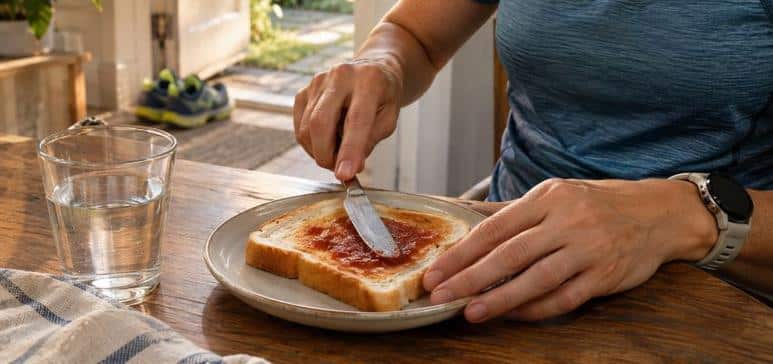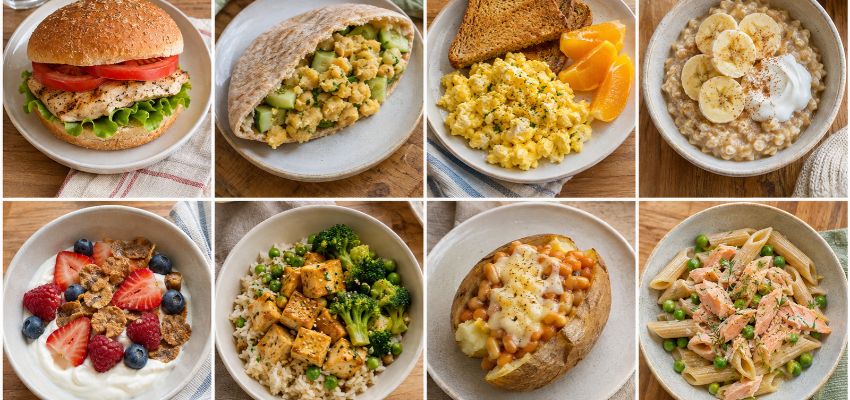
A chicken sandwich, oats with yogurt, or rice with tofu can become a satisfying meal after a run. Start with a carbohydrate food and a protein source, then build around what you have and feel like eating.
The difficult part is often getting food onto a plate when you are tired and the kitchen offers ingredients rather than dinner. These eight post-run meal ideas cover meals you can assemble, breakfast, and warm dinners, with substitutions along the way. Canned beans, frozen vegetables, and food you cooked earlier all have a place here.
Build Your Meal Around Carbs and Protein
Carbohydrate helps replace the energy used during exercise, while protein supports muscle repair. Johns Hopkins Medicine includes ordinary combinations such as eggs with toast and pasta with a protein source among its post-run food suggestions.
After a short, easy run, breakfast, lunch, or dinner may already cover the job. A longer or harder outing can call for more food, including more carbohydrate; adding only extra protein misses part of the need.
This fits the wider picture of running nutrition, where eating enough across the day matters alongside one meal.
The portions below are starting points for assembling food, not a prescription for every runner. Adjust them to your needs, what you ate earlier, and the outing you completed.
A banana or a handful of nuts can be useful while dinner is coming together, but neither automatically replaces the dinner.
Your post-run eating timing also depends on when a meal is available. Mayo Clinic suggests a meal containing carbohydrate and protein within two hours of exercise when possible, with a snack when the meal is farther away.
Plan for food without treating the finish of an ordinary jog as the start of a food emergency.
No Cooking? Make a Sandwich or Chickpea Pita
These options use ingredients that are already cooked or ready to eat. They work when you want a meal without another pan to wash. Take refrigerated ingredients out when you are ready to assemble the food, rather than leaving them on the counter while you run.
Fill a Sandwich With Chicken and Vegetables
Use: Two slices of bread or a roll, cooked chicken, lettuce or another washed vegetable, and a spread you enjoy. Mayonnaise, mustard, or a yogurt-based dressing can keep the filling from feeling dry.
Shred or slice the chicken so you can spread it evenly. Pat wet vegetables dry, add the filling, and close the sandwich. Put particularly juicy tomato slices between the chicken and lettuce if you are packing it for later; bread is less appealing once it has become a sponge.
Swap: Use chopped hard-boiled eggs when there is no chicken. Add fruit or another side if the sandwich is not enough for your meal. For a bigger appetite, increase the bread and filling together rather than simply making an enormous pile of lettuce.
Mash Chickpeas Into a Filling Pita
Use: Canned chickpeas, a pita, cucumber or grated carrot, and a little olive oil, yogurt, or tahini thinned with water. Roughly three-quarters of a cup of drained chickpeas gives you a starting amount for the filling; adjust the whole meal to suit you.
-
Drain and mash
Rinse and drain the chickpeas, then mash them roughly with a fork. Leave some texture so the filling does not become a smooth paste.
-
Moisten and season
Mix in your chosen dressing a little at a time, plus the chopped vegetables and seasonings. Stop when the mixture holds together without becoming runny.
-
Fill the pita
Spoon the mixture into the bread. Serve any filling that will not fit on the side rather than forcing the pita to carry more than it can hold.
A thin smear of hummus with vegetables makes a different meal from a pita generously filled with chickpeas. Look at what is actually on the plate, not just the name of the dish.
Make Breakfast With Eggs, Oats, or Yogurt
Choose the texture you want when you return: warm eggs and toast, soft oats, or a cool bowl you can assemble. These meals also work at other times of day. Eggs do not check the clock before agreeing to become dinner.
Pair Scrambled Eggs With Toast and Fruit
Scramble two eggs in a lightly oiled pan, stirring until cooked through. Serve with toast and fruit you already have. If you want vegetables, leftover cooked spinach or mushrooms can go into the eggs without requiring a separate cooking project.
The toast supplies a carbohydrate component that eggs alone would leave out. Add more toast, fruit, or another food if this starting portion does not meet your needs.
When you want no stove time at all, use properly refrigerated hard-boiled eggs and bread instead; the meal does not have to be hot to count.
Cook Oats With Milk and Add Yogurt
Cook a serving of oats with milk according to the package directions, using a bowl with room for the oats to rise if microwaving. Let the oats stop bubbling before stirring in yogurt. Add banana, berries, or chopped apple, then thin with more milk if the texture becomes too thick.
For a dairy-free version, use a beverage and yogurt alternative that suit you, checking their protein content on the labels. Soy options are worth comparing, but brands and formulations differ.
A splash of a low-protein plant drink is not automatically an equivalent replacement for the milk and yogurt in this meal.
Build a Yogurt Bowl With Cereal and Fruit
Spoon yogurt into a bowl and add cereal or granola plus fresh, thawed, or canned fruit. Greek yogurt is one option; choose a type you enjoy and tolerate. Start with a portion you would normally consider breakfast, then adjust rather than assuming a small snack cup is a complete meal.
- Keep the cereal crisp Add cereal just before eating if you dislike a soft texture.
- Check the yogurt Protein content varies, especially among plant-based alternatives. Compare the portion you will actually eat.
- Make it more substantial when needed Increase the yogurt and cereal or add toast alongside. A few decorative berries are not the whole carbohydrate portion.
Turn Ready Ingredients Into a Warm Dinner
A warm meal becomes easier when at least one component is ready before you start. Microwaveable rice, canned beans, frozen vegetables, and cooked pasta can reduce preparation.
Check which ingredients need cooking and which only need reheating; similar-looking packages do not always give the same instructions.
Combine Rice, Tofu, and Frozen Vegetables
Prepare the rice and frozen vegetables according to their package directions. Use ready-to-eat tofu if the label permits, or cook the tofu as directed. Cut it into bite-sized pieces and combine everything with a sauce you like, such as a little soy sauce with oil or a mild peanut dressing.
Let rice form a substantial part of the bowl instead of burying a spoonful beneath vegetables. Add the tofu as an actual component of the meal, not a few scattered cubes. Cooked chicken can replace tofu, and another cooked grain can replace rice; the method stays much the same.
If using refrigerated leftovers, reheat the portion you will eat thoroughly. A bowl that is hot around the edges may still have a cold center, so stir during heating and check it properly before sitting down.
Top a Potato With Beans and Cheese
Use: A potato, canned beans, shredded cheese, and a vegetable side or topping. Black beans, pinto beans, or baked beans can work. Pick a flavor you enjoy rather than buying a special ingredient for one post-run meal.
-
Cook the potato
Scrub and pierce it, then microwave or bake using suitable cooking instructions. Size and appliance power affect the time; check that the center is tender and take care with escaping steam.
-
Warm the filling
Heat the beans according to their directions. If you are using leftovers, follow safe reheating guidance rather than warming them only enough to take off the chill.
-
Split and finish
Open the potato, add the beans, and scatter cheese over the top. Serve vegetables alongside or add cooked vegetables to the filling.
For a dairy-free version, keep a generous bean filling. A dairy-free cheese topping may add flavor, but check its label before counting it as a replacement protein source.
Add Peas and Salmon to Pasta
Cook pasta according to its package instructions. Prepare frozen peas as directed, timing them to finish near the pasta. Drain canned salmon, check for pieces of bone or skin you prefer to remove, and flake it into the warm pasta with the peas.
Add olive oil and a little reserved pasta water to loosen the mixture, then season. A spoonful of pesto is another option if its ingredients suit your dietary needs.
For a meat-free version, use canned white beans in place of salmon; adjust the amount rather than treating one spoonful as an equivalent serving.
Already-cooked pasta shortens the process, but reheating still takes time. These are low-preparation meals, not a promise that every ingredient will be ready in five minutes.
Reading the cooking instructions before you leave can prevent returning hungry to a potato that still needs a long spell in the oven.
Refrigerate perishable food within two hours of cooking or purchase, or within one hour when the temperature is above 90°F. Keep the refrigerator at 40°F or below. When reheating leftovers, bring them to 165°F throughout, checking with a food thermometer; stir microwave-heated food for more even heating. These are FDA food-safety recommendations. Reheating does not make improperly stored food a suitable choice.
Low Appetite? Start Small and Finish the Meal Later
Wanting very little food immediately after a run can happen. Johns Hopkins notes that reduced appetite is common after running. You do not have to begin with the largest plate in this article, but a delayed appetite needs a workable eating arrangement.
Take a manageable portion of a meal you find appealing: part of the yogurt bowl, a few bites of the sandwich, or a smaller serving of soft oats.
Put the remaining perishable food back in the refrigerator. Make room to return to it rather than leaving the meal unfinished and rushing into several hours of errands.
Choose texture as well as ingredients. A cool bowl may appeal more than a hot dinner, or plain rice with a familiar topping may sound better than a heavily dressed dish. Those are preferences to work with, not proof that one food is universally easier to digest.
Recurring stomach cramps while running deserve attention to food, portion size, timing, effort, and conditions rather than an assumption that dinner afterward is the problem.
A smaller serving can make eating more manageable, but it does not establish what caused the discomfort. Persistent nausea, vomiting, or a repeated inability to eat enough needs professional advice.
After a Late Run, Check Whether Dinner Is Still Missing
If dinner has not happened: Choose one of the meals above and give yourself time to eat it. A sandwich, oats, or a bowl made from prepared ingredients may be more practical than beginning a complicated recipe late at night.
A late finish does not make a missed dinner disappear from your food needs.
If you already ate dinner: Consider what you ate, how demanding the run was, and whether you need more food. An easy outing after an adequate meal does not automatically require a second dinner.
A longer or harder run, an unusually small dinner, or hunger afterward can change that decision.
If a large meal near bedtime leaves you uncomfortable, plan a smaller first portion and adjust the schedule for future evenings.
Your meal-to-run timing can leave room for both a comfortable outing and food afterward. Recurring reflux needs attention rather than a growing list of foods you are afraid to eat.
Food for this meal also has a different job from food carried on long runs, where portability and eating while moving matter.
At home, you can sit down, use a plate, and choose a wider mix of ingredients. There is no need to keep eating as though you are still on the route.
Your post-run recovery routine also needs room for rest and sleep. Choose a meal that fits the evening you have, then leave yourself time to wind down.
An elaborate dinner that repeatedly pushes bedtime later may be less useful than a familiar meal you can prepare and enjoy without much effort.
Choose one meal you would enjoy returning to, then prepare its easiest component before leaving: drain the beans, set out the oats, or put cooked chicken and washed vegetables together in the refrigerator. Keep perishable ingredients cold until you need them. You do not need eight new recipes in your weekly routine. One dependable meal, with a substitution you know how to make, is enough to make the next homecoming easier.