
I used to wonder why people bothered running if they were going to stop and walk every few minutes. Then I started running myself. About three minutes into one of my early attempts, I was walking too. That cured the judgment rather quickly.
Run-walk eventually became the thing that made running manageable for me. But once I improved a little, my impatience came back wearing a different outfit. Now I was staring at the walk breaks and wondering when I could finally graduate from them. I expected one clear moment when I became ready for continuous running. There wasn’t. What changed instead was much quieter: little by little, some of those walk breaks stopped feeling necessary.
The Jeff Galloway Run Walk Run method helped me stop treating walking as evidence that a run had gone wrong. A walk break could be planned from the beginning. That was a surprisingly difficult idea for my impatient brain to accept.
Once I accepted it, though, I made another mistake. I began treating continuous running as the next badge I had to earn. I kept waiting for some unmistakable sign that said: Congratulations. You may now remove the walking.
The signs mattered more than the week number
I did not wait until all four signs lined up perfectly. Running rarely gave me that kind of neat answer. What mattered was that these changes started appearing together, more than once, on ordinary days rather than only on the occasional run when everything happened to feel wonderful.
The most revealing change was actually the simplest one: I stopped watching the countdown with quite so much desperation.
The beep changed meaning before the walking disappeared
At first, I was waiting to be rescued
In the beginning, I watched my interval timer like someone waiting for a microwave to finish.
Ten seconds. Five. Three. Finally – walk.
My breathing was harder, my shoulders had usually tightened without permission, and the walking portion gave everything a chance to settle before I started again. There was no question about whether I needed the break. I was already waiting for it.
That was why beginner-friendly run-walk intervals worked so well for me at that stage. The structure kept me moving without requiring every running portion to end in exhaustion.
There were also days when I could not comfortably finish the running portions I had planned. Instead of treating that as proof that I was hopeless at running, I learned that the interval itself might need adjusting. Shortening the run or giving myself a little more walking often made more sense than struggling through the same ratio again.
Later, the same beep began to feel optional
Then one day the beep arrived and I noticed something odd: I was already okay.
I could have walked. There was nothing wrong with walking. But my breathing was still comfortable enough, my legs were not begging for relief, and for the first time the signal felt less like rescue and more like a suggestion.
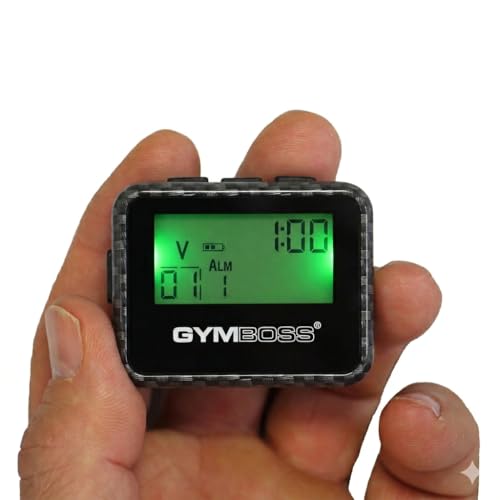
I did not immediately turn the timer off or delete every walk break after that. One comfortable interval did not suddenly make the structure useless. It simply gave me something new to notice.
When I still needed a walk break, I reached it already waiting for relief. When the break was becoming optional, I could reach the same point with controlled breathing and the feeling that continuing at the same easy effort was realistic – not heroic.
My lungs were not allowed to make the decision alone
Feeling better during the run was only half the answer
There was a stage when breathing became noticeably easier, and naturally I took this as excellent evidence that I was ready for everything.
My legs occasionally submitted their objections the following morning.
That was when I stopped asking only, Could I have kept running? It was a useful question, but it told me mainly what was happening in that moment.
- Could I have kept running?
This told me something about the effort in the moment – especially whether my breathing and overall pace were still controlled.
- Did my body handle what I already gave it?
This included later that day and the next morning. Worsening soreness, unusual fatigue, or discomfort that changed how I moved made me more cautious about progressing again.
A yes to the first question did not automatically cancel a no to the second.
The next morning got a vote too
If a longer running interval felt good at the time and I woke up the next morning feeling reasonably normal, that gave me more confidence than the interval alone.
If I was unusually sore, something hurt in a way that changed how I moved, or the previous run had clearly taken more out of me than expected, I did not see much value in removing another walk break just because my breathing had behaved nicely.
This was one reason a beginner running plan became useful to me. It gave my enthusiasm some boundaries. A good Tuesday did not automatically require me to invent a harder Wednesday.
Some mornings, the better decision was simply to keep the walk breaks – or make walking the main event. I became much less stubborn once I started treating whether to run or walk that day as a decision based on how I actually felt, rather than a test of whether I was still making progress.
How I tested one longer stretch without turning it into a dare
-
I changed only one thing
Instead of removing every walk break, I extended one easy running portion or ran through one scheduled break.
-
I kept the effort easy
Skipping the walk was not permission to speed up. I wanted to learn whether I could continue comfortably, not how long I could postpone exhaustion.
-
I left another walk break in place
Knowing another break was still available kept one experiment from turning into an all-or-nothing test.
-
I judged the whole experience afterward
How I finished, how I recovered, and whether I could repeat something similar mattered more than simply saying I had run nonstop once.
The first break I skipped was almost an accident.
I had imagined my first continuous run would begin with a decision: Today I am running without walking. What actually happened was much less ceremonial. The timer told me to walk. I still felt comfortable, so I kept jogging. I left the next walk break exactly where it was.
No graduation music played. Nobody handed me a certificate. I had simply run through one break because, on that particular day, I did not need it yet.
That gradual approach also changed how I thought about running one mile without stopping. A mile became a useful little experiment, not a declaration that the run-walk stage of my life had officially ended.
Continuous running brought a different kind of difficulty
Without the timer, my brain suddenly had less to do
Run-walk had always given my brain a small job. Run until the beep. Walk until the next beep. Start again. Even when my legs were tired, there was always a nearby finish line.
Then I began running continuously and the instructions suddenly became: Well… keep running.
I discovered that I could get bored before I got physically tired. Looking at my watch every two minutes only made things worse, because apparently time moves more slowly when you stare directly at it.
I started using landmarks instead. Run to the large tree. Settle again. Reach the corner. Then think about the next stretch. Breaking the route into visible pieces gave my brain something smaller to deal with than the entire remaining run.

A tired moment did not always mean I needed to stop
When continuous running started feeling harder, my old habit was to treat that moment as the beginning of the end.
Later I learned to try something smaller first. I slowed down a little. I loosened my hands. I let my shoulders drop. Then I gave the change enough time to see whether the effort settled.
When the effort rises but nothing hurts, I first reduce the pace and release unnecessary tension. I do not change my stride, breathing, posture and foot strike all at once while trying to keep running.
Sometimes that was enough. Sometimes it was not – which led to another lesson I took embarrassingly long to accept.
A walk break did not send me back to the beginning
Sometimes I simply needed a short reset on that particular run.
Thirty seconds of walking did not erase the running I had already done. If it helped me settle and continue, I used it instead of turning one difficult stretch into a pass-or-fail test.
My transition was not perfectly linear.
Some days I ran continuously. Other days a short walk was useful. What mattered was the overall direction: longer easy stretches were becoming more comfortable and more repeatable.
This was probably the biggest change in my thinking. Walking went from something I automatically needed every few minutes to something I could still use when it was useful.
I no longer had to decide whether I was a “run-walk runner” or a “continuous runner” before leaving the house. My body was perfectly happy to ignore those administrative categories.
Repeatability became my real green light
I stopped being impressed by the heroic run
For a while, any personal best felt important. If I ran longer than ever before, surely that meant the new distance was now mine.
Not necessarily.
If I finished completely drained and spent the next few days avoiding another run, the milestone had told me something – but not necessarily that I should make it my new minimum.
I began trusting progress more when longer running felt controlled, recovery felt normal for me, and I could do something similar again without needing a small motivational summit meeting first.
Thirty minutes became an extension, not another leap
There was a time when running for thirty minutes without walking sounded like a completely different sport.
Later, five comfortable minutes became ten. Ten could become fifteen. As those stretches became familiar, running for 30 minutes without stopping stopped looking like one enormous leap.
I did not need to jump from run-walk straight to thirty minutes simply to prove the walking phase was over. And even after I could run continuously, a difficult day could still include walking.
Apparently nobody from the Running Department comes to confiscate your continuous-run membership card.
There was no graduation day after all
- I trusted repeated signs more than a week number
- I noticed when walk breaks became optional instead of desperately needed
- I tested one longer stretch before removing every break
- I paid attention to recovery after the run, not just breathing during it
- I kept walking available even after continuous running became possible
I used to think walking was what happened when running failed. Running taught me almost the opposite. Those breaks were part of how I learned to run in the first place. When I eventually began running through some of them, it was not because I had become too good for walking. I simply did not need that particular break anymore. That is still the clearest answer I know to when a beginner should move toward continuous running: when easy running is becoming repeatable and some of the recovery breaks genuinely start feeling optional. No graduation bell required.