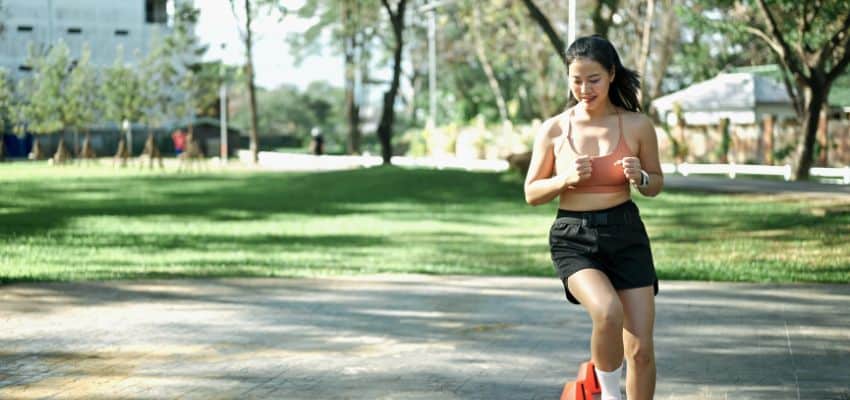
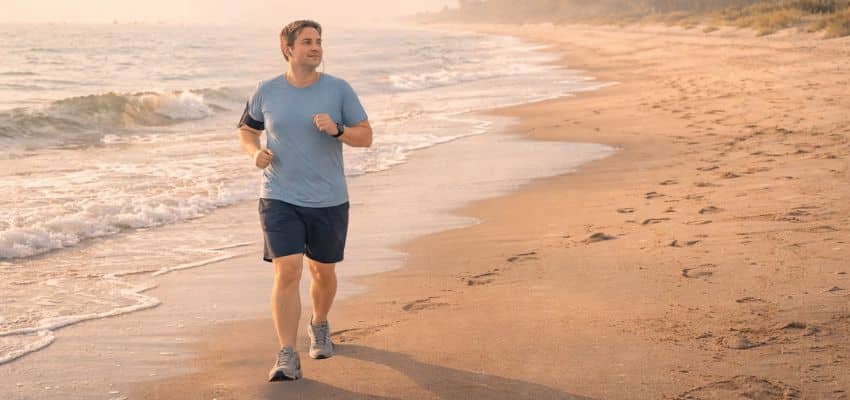
I used to begin a one-mile run like a startled rabbit. Fresh legs, a favorite song, far too much confidence – and for the first minute or two, I honestly felt fantastic. Then the rabbit tax arrived.
My breathing got louder, my throat went dry, and the legs that had felt wonderfully light suddenly seemed to have been dipped in wet cement. Before long, the nonstop mile I had promised myself became a heavy-footed walk home. I eventually realized that learning how to run one mile nonstop was not mainly about becoming tougher. I had to stop spending so much of the mile at the beginning.
- I stopped trusting the pace that felt easy in the first minute
- I deliberately made the beginning slower than I wanted
- I learned to adjust before tiredness turned into a forced stop
The strange part was that slowing down at the beginning felt wrong. Fresh legs made a faster pace feel almost free, while an easy pace felt unnecessarily cautious. But the mile did not care how impressive my first hundred meters looked. It only cared whether I still had enough left for the last hundred.
That became the whole idea behind this mile for me: I did not need to win the beginning. I needed to leave enough of myself for the end.
The pace that fooled me at the beginning
Fresh legs fooled me more than once. The opening minute eventually became the part of the run I trusted the least.
I came to think of that deceptive early speed as my “ghost pace.” That is not an official running term – just my name for the pace that felt wonderfully easy before my breathing and legs had enough time to tell me what the effort was really costing.
The pace that finally helped me cover more distance was often slower than the pace my ego wanted.
I stopped asking how fast I could run while fresh and started looking for an easy running pace I could still manage after the excitement of starting had disappeared.
My “ghost pace” always offered the same deal: enjoy yourself now and pay later. For a while I kept accepting it. Eventually I learned that feeling fantastic after thirty seconds was not an invitation to speed up. Sometimes it was simply a good feeling worth leaving alone.
The goal became very ordinary: get far enough into the mile for my breathing and legs to tell me the truth. Once I stopped trying to prove something in the opening minutes, the rest of the mile finally had a fair chance.
A calmer start begins before the first step
I stopped tying my shoes like they owed me money
I used to pull my laces very tight before running. I suppose it felt reassuring: tight meant secure, and secure sounded like something a proper runner should want.
Except once I started moving, “secure” sometimes became “why is the top of my foot annoying me?” So I stopped trying to lock my feet into my shoes. I wanted the heel reasonably secure and the shoe comfortable enough that, once I started running, I could forget about it.
Shoelaces will not decide whether I finish a mile, and changing them will not magically fix poor pacing. But I already have enough to think about while learning to control my effort. I do not need my shoes joining the conversation.
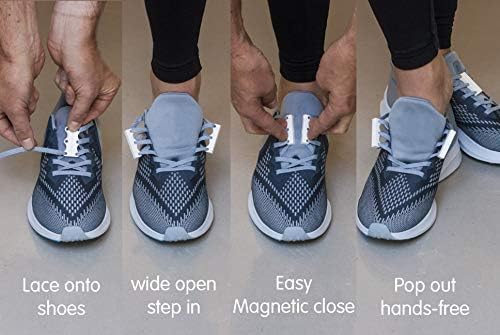
I see something like this as a comfort option, not a shortcut to better running. If ordinary laces already stay comfortable and disappear from your thoughts once you start moving, there is nothing that needs fixing.
My 60-second turtle start
I finally gave myself one slightly ridiculous rule: for the first 60 seconds, I was not allowed to look impressive.
I shuffled. Short steps, easy effort, almost comically slow. If someone walking a dog passed me, fine. The rabbit in me hated it. The part of me that actually wanted to finish the mile eventually learned to appreciate it.
-
Start slower than feels necessary
Fresh legs are persuasive, so I deliberately refuse their first offer. I use short, comfortable steps and let the pace feel almost too easy.
-
Let the excitement settle
I do not use the first thirty seconds to decide how fast I can run that day. I give my breathing and legs a little time to join the conversation.
-
Check what my body is saying
After the opening minute, I notice my breathing, shoulders and hands. If I already feel as though I am working to maintain the pace, I have probably started too fast.
-
Slow down before I have to stop
This became the biggest change for me. A small voluntary slowdown is much easier than waiting until exhaustion makes the decision for me.
What changed was not that I suddenly became fitter during those sixty seconds. I simply stopped spending the first part of the mile as though the last part did not exist.
And if continuous running was still too much on a particular day, I walked. Short run-walk intervals let me spend more time moving without repeatedly reaching the point where I had nothing left. Once I began running more regularly, I also found that a beginner running plan that fit real life worked better for me than turning every run into another test of how far I could go.
That mattered because one mile was never going to become easier if every attempt ended with me completely spent. I needed runs I could recover from, repeat, and gradually make a little less dramatic.
The playlist could turn me back into a rabbit
Music was one of those things I thought was helping until I noticed how easily it could change my pace without asking permission.
-
I noticed what fast music did to my feet
Give me the right high-energy song at the beginning and apparently my legs believe they have signed a contract with the drummer. I would not consciously decide to accelerate; my steps simply became quicker.
-
I tried slower audio
Slower music made it easier for me to settle into the run. Sometimes a podcast worked even better because there was no beat quietly encouraging my feet to speed up.
-
I found a tempo that felt calmer to me
When I did use music, something around 120–130 BPM often worked well for me at the beginning. I treat that as a personal preference, not a universal running formula.
-
I still let my body have the final vote
No playlist gets to overrule my breathing. If the audio pulls me into an effort I cannot comfortably sustain, I slow down regardless of what is playing.
For me, audio is useful when it supports an easy rhythm. The moment I start chasing the beat, it has stopped helping with this particular goal.
I also prefer to hear what is happening around me when I run outside. A good rhythm is useful. Hearing a bicycle, car, dog or person approaching is considerably more useful.
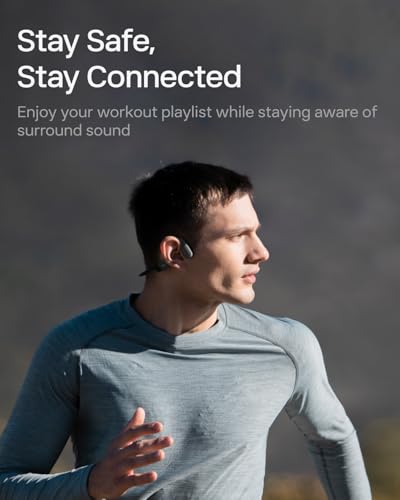
That is where open-ear headphones make sense to me. They do not teach me how to pace a mile. They simply let me use the audio I enjoy without deliberately sealing my ears from the environment around me.
What I do when the mile starts getting harder
I make the smallest correction first
There is usually a point when the mile stops feeling quite so friendly. My breathing gets louder, my legs feel less springy, and the old thought appears: Here we go again.
- Shorten the steps
I do not reach farther in an attempt to get the mile over with. I make the stride a little smaller and allow the pace to fall.
- Release unnecessary tension
I loosen my hands, drop my shoulders and check whether I have begun running as though I am carrying groceries in both fists.
- Give the adjustment time
I do not expect one slower step to fix everything. I settle for a little while and see whether my breathing comes back under control.
What I try not to do is change everything at once—stride, breathing, posture, foot strike and pace – while continuing to run. At that point I am no longer running a mile. I am conducting an emergency committee meeting with my entire body.
This was also where I began to understand the difference between surviving a distance once and becoming comfortable enough to extend it. As my easy stretches became longer, running continuously for 30 minutes stopped sounding like an entirely different kind of challenge. It was the same lesson stretched over more time: keep the effort manageable before it gets away from me.
When discomfort feels different from ordinary effort
If the front of my shins begins feeling uncomfortable, for example, I do not try to diagnose my foot strike while I am still running. I reduce the effort, shorten my steps and pay attention to whether the discomfort settles.
Ordinary effort, heavier breathing and tired legs are one thing. Pain that is sharp, worsening, persistent, or changing the way I move is different. I would rather stop one mile early than turn a small problem into something that follows me into the next several runs.
The embarrassment of running very slowly
Running slowly in public used to make me strangely self-conscious. Someone would pass me and suddenly my easy pace did not feel quite so sensible anymore. The rabbit would wake up.
Eventually I realized that most people were paying far less attention to my pace than I imagined. And even if somebody did notice me shuffling along, they were not the one trying to finish my mile. I was.
Walking stopped feeling quite so embarrassing for the same reason. The Jeff Galloway Run Walk Run method deliberately uses walking before exhaustion instead of treating it as something that only happens after a runner has failed to keep going. That idea made sense to me: a planned walk break and an exhausted surrender are not the same thing.
If I still needed those breaks, I used them. I found that moving from run-walk to continuous running worked much better when I let my body decide when the walking could disappear instead of letting embarrassment decide for me.
That took some of the drama out of the milestone. I was no longer asking, “Can I force myself through one whole mile today?” I was asking whether running was becoming comfortable enough that I simply did not need the walk yet.
Finishing the mile without turning the end into another race
I try not to negotiate with the distance
When I know the finish is getting close, my brain becomes very interested in mathematics. How far is left? How many minutes? Could I speed up and get this over with?
I have learned to leave the calculation alone when I can. I return to the same small things that got me there: easy steps, relaxed hands, breathing I can still manage. The final quarter-mile does not require a new running personality.
I finish with something left
For a long time, I thought having energy left at the end meant I had been too cautious. Now I see it differently. If I can finish the mile without staggering to a stop, I have probably found something much more valuable than the fastest mile I could squeeze out that day: an effort I can repeat.
Once one mile stopped feeling like a survival test, longer distances no longer looked quite as impossible as they once had. When I began thinking about what it would take to prepare for my first 5K, I realized the lesson was already sitting inside that first mile: I did not need to win the beginning.
A mile finished under control gave me somewhere to build from. A mile that left me completely wrecked mostly gave me a good story about why I did not feel like running again tomorrow.
The rabbit still comes with me
- I distrust the pace that feels magically easy in the opening minute
- I give myself one deliberately slow minute before judging the run
- I adjust while I am still in control instead of waiting until I have to stop
- I would rather finish slowly than win the first hundred meters
I wish I could say that once I understood this, I never started too fast again. Of course I did. Fresh legs are persuasive. A cool morning is persuasive. A favorite song is very persuasive. The difference is that now I recognize the rabbit earlier. When that little voice says, “You feel fantastic – go faster,” I know I do not have to obey immediately. I can let the first minute be boring and allow somebody else to disappear down the road without turning their run into my race. That is what finally changed the mile for me. The victory was never learning how to suffer through the final few hundred meters after a heroic start. It was learning to arrive there with something left. So if your mile keeps ending the same way – rabbit out, turtle home – try reversing the story. Start with the turtle. Short steps, easy breathing, almost annoyingly slow. The rabbit can wait.