
I had been doing so well. I had run on the days I said I would run, got through mornings when I would rather have stayed in bed, and slowly started trusting myself to keep this thing going. Then one afternoon, life looked at my neat little running plan and apparently decided it had other ideas.
A deadline landed late. Something at home needed me. Maybe I was simply exhausted after a day that had already taken enough. I looked at the clock, then at my running shoes sitting by the door, and knew the run was not going to happen. My first thought was not calm or sensible. It was much closer to: “Oh crap. I missed the workout. Now what am I supposed to do with it?”
That was the strange thing. The run was gone, but in my head it had not disappeared at all.
It had become a debt.
Could I squeeze it into tomorrow? Could I run on the rest day? Could I move Thursday’s run to Friday, Friday’s rest to Saturday, and somehow push everything else one square to the right?
Within five minutes, one missed run had turned my perfectly ordinary week into a small scheduling crisis.
What took me much longer to understand was this: a missed workout does not always need somewhere else to go.
My first mistake was treating the missed run like a debt
When I first started following a running schedule, those little boxes on the calendar had more power over me than I would like to admit.
A completed run felt satisfying. An empty box looked accusing.
I could have had a completely legitimate reason for missing it. Work ran late. Someone in the family needed me. I slept terribly. An appointment swallowed the only free hour I had. None of that mattered much when I looked at the blank space.
I still thought: I was supposed to run today.
And because I was trying so hard to become consistent, skipping the run felt bigger than skipping 30 or 40 minutes of exercise. It felt as though I had damaged the habit itself.
That fear made me want to fix the calendar immediately.
But a beginner running plan that fits real life cannot fall apart every time real life actually shows up. Mine had to survive late meetings, family problems, tired evenings, bad weather, and the occasional day when I simply did not have another useful ounce of energy left.
Once I accepted that, the blank square on the calendar started looking less like a broken promise and more like what it really was.
One day that did not go according to plan.
The workout I missed yesterday is not sitting somewhere waiting for me to repay it. I still have to decide what makes sense today.
The trouble started when I tried to put yesterday back into today
Imagine Tuesday was supposed to be a running day.
Tuesday disappeared behind a late meeting, so I did not run.
Wednesday was supposed to be a non-running day, and Thursday had the next planned run.
My old solution was obvious: put Tuesday’s run on Wednesday.
Problem solved.
Except now I had changed:
run → non-running day → run
into:
run → run
Then another question appeared. Should Thursday’s run move too? If Thursday moved to Friday, what happened to the rest of the week?
I had missed one workout and somehow created three new decisions.
That was when I started seeing why keeping a needed rest day could matter more than making the calendar look complete. The U.S. Physical Activity Guidelines also recommend spreading aerobic activity through the week; that distribution can help avoid excessive fatigue rather than concentrating everything into a smaller window.
I did not need to punish Wednesday because Tuesday went badly.
That sounds almost comically obvious now.
It was not obvious to me when I was standing in the kitchen mentally moving workouts around like furniture.
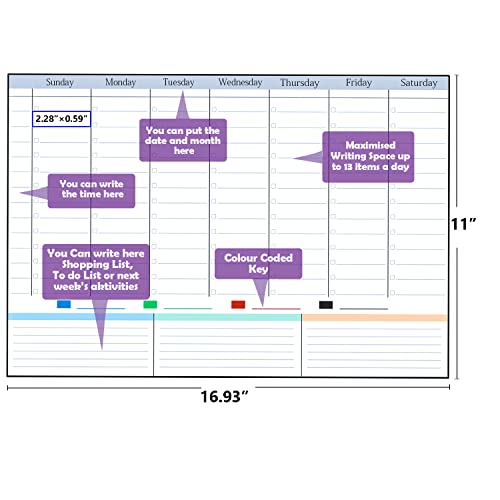
Consistency was easier to protect when I returned to a sensible rhythm instead of turning one missed run into several crowded days.
One blank square on the calendar did not need to be repaid by crowding the runs that were still ahead of me.
One missed run did not erase the runs I had already done
The evening I missed a run, I could feel as though all the work before it had suddenly become fragile.
I had run last week. I had run earlier that week. I had been getting out the door when I said I would.
Yet one Tuesday evening on the couch could make me think, There it goes. I’m losing it.
I no longer think about consistency that way.
Health recommendations themselves are based on activity accumulated across the week, not on maintaining an unbroken chain of perfect calendar appointments. The federal Physical Activity Guidelines for Americans emphasize regular weekly activity and explicitly note that some physical activity is better than none.
That helped me put one missed run back into proportion.
I had not returned to zero. I had missed Tuesday. Those are very different things.
I also began to understand why staying consistent with running could not mean never missing anything. A habit that survives only perfect weeks is not much use to somebody with an imperfect life.
What I do depends on how much of the week disappeared
When I miss one run, I usually let that run stay missed
This was the hardest option for me because it felt like doing nothing.
But sometimes doing nothing to the calendar is exactly what keeps one missed run from spreading into the rest of the week.
I look at the next planned running day and the space around it. If the schedule still makes sense, I continue from there.
I do not double the distance.
I do not turn the next easy run into a longer one because I owe myself mileage.
I do not automatically steal a rest day.
The missing run remains missing.
Once I stopped trying to repair every blank square, returning became surprisingly boring.
And boring was good.
When most of the week disappears, I stop pretending only one square is missing
Sometimes Tuesday is not the problem.
The whole week goes sideways.
A child gets sick. Work becomes ridiculous. Travel interferes. I manage one run out of three and suddenly find myself looking at next week’s harder schedule as though nothing happened.
This is where I make a different decision.
If I barely experienced the current week, repeating that week instead of automatically moving forward can make much more sense. I am not going backward. I am simply giving myself the week I did not really get the first time.
This distinction saved me from a lot of silly calendar gymnastics.
One missed workout does not necessarily need replacing.
Most of a missed week may change what I do next.
When I have been away longer, I stop calling it a missed workout
If I have not run for a week or two, the question has changed.
I am no longer deciding what to do with Tuesday’s missing run. I am deciding how to come back after an interruption.
I used to want a neat rule here: go back one week, go back two weeks, reduce this percentage, run that many minutes.
Real life is less cooperative.
Two weeks away because of a vacation is not necessarily the same as two weeks away because I was ill. Two weeks with plenty of walking and ordinary movement is not the same as two weeks when I felt awful and barely moved.
So after a longer break, I would rather think about restarting after two weeks away from running than mechanically cram old workouts into a new week.
-
One workout disappeared
I usually protect the rhythm of the runs that remain and let the missed session stay missed.
Look forThe rest of the week's running days still have sensible spacing.AvoidSqueezing the missed run into a rest day just to make the calendar look complete. -
Most of the week disappeared
At that point, I stop treating it like one missing square and consider repeating the current week instead of automatically moving forward.
Look forA week where I completed too little of the planned running to feel ready for the next progression.AvoidJumping into a harder week simply because the calendar moved on. -
I have been away for longer
After a longer interruption, I treat the next run as a return rather than a pile of old workouts waiting to be repaid.
Look forA sensible restart based on why I was away and how I feel now.AvoidCramming old sessions into the new week or mechanically trying to catch up.
Sometimes the run was not missed by accident
Not every missed workout in my life came from a deadline or family emergency.
Sometimes I was simply tired.
Not “I would rather watch television” tired.
I mean the kind of tired where the day had already emptied me out. My legs felt heavy before I put my shoes on. I had slept badly. I was sore from the previous run. I stood there knowing I could force myself outside, but also wondering what exactly I was trying to prove.
For a long time, I disliked those decisions because they did not have a clean excuse attached to them. A sick child was acceptable. A work emergency was acceptable.
Being tired felt suspiciously like weakness.
I have become less dramatic about that too. Rest does not automatically mean lying motionless, and it does not mean every tired feeling deserves a cancelled run. But recovery is part of physical activity, not an embarrassing gap between the “real” work. The American College of Sports Medicine also discusses balancing activity with rest and modifying activity when the body cannot tolerate the planned load.
Sometimes I ran anyway and felt fine once I got moving. Sometimes I took the day.
The important change was that I stopped believing a missed workout automatically created a debt.
The guilt did more damage to my routine than the missed run
I used to think the danger was missing Tuesday.
Looking back, the bigger danger was what happened in my head afterward.
I missed one run, felt guilty, rearranged the week, made the next few days harder, then started feeling as though I was falling behind.
That is a lot of trouble for one evening when I did not put on my shoes.
It also helped me understand one reason beginners can end up quitting running. The habit starts out as something healthy, but perfection quietly adds rules until missing one session feels like failing the whole thing.
I did not need more discipline at that point. I needed running to be allowed to survive a bad Tuesday.
My running plan had one small problem: it had never met my real life.
Real life does not arrive in seven tidy boxes.
A boss can send something at 4:30 PM that apparently needed to be finished yesterday.
Someone at home can need me more than my running shoes do.
A friend can call on exactly the evening I planned to run, and sometimes that conversation matters more to me than protecting a perfect streak.
And occasionally I am simply a human being who made a plan on Sunday and discovered by Thursday that Sunday-me had been wildly optimistic.
I still like a plan. Without some structure, I am very good at telling myself I will run “later,” a mysterious time of day that has never appeared on any clock I own.
But I need the plan to work for my life, not turn my life into a problem every time it refuses to cooperate.

What I do now when a planned run disappears
-
I stop trying to rescue yesterday
Before moving anything, I accept that the planned run did not happen. That keeps guilt from making the first decision for me.
-
I look at the spacing of the runs that remain
I do not automatically convert a non-running day into a make-up run when that crowds the sessions that were already planned.
-
I leave one missed run alone when the rest of the week still works
There is no automatic mileage debt and no bonus distance attached to the next run.
-
I reconsider the week when most of it disappeared
A nearly missed week is different from one missed session. Repeating may be more sensible than advancing.
-
I treat a longer interruption as a return
After more time away, especially illness or injury, I stop chasing the old calendar and decide what my body can reasonably do now.
The shoes will still be there
- One missed workout does not need to be repaid automatically
- Cramming it into a rest day can make the remaining week harder to manage
- Missing most of a week may be a reason to repeat rather than progress
- A longer interruption deserves a fresh return decision rather than calendar arithmetic
- Consistency has to survive ordinary life or it is too fragile to be useful
I still notice the little sting when a planned run does not happen. I can look at the shoes by the door and think, “Damn, I missed it.” The difference is that I no longer turn that thought into a debt. Yesterday’s run is gone. I do not have to chase it around the rest of the week. The next time running fits again, I put on the shoes and continue. No double session. No punishment. No little ceremony to earn my way back.