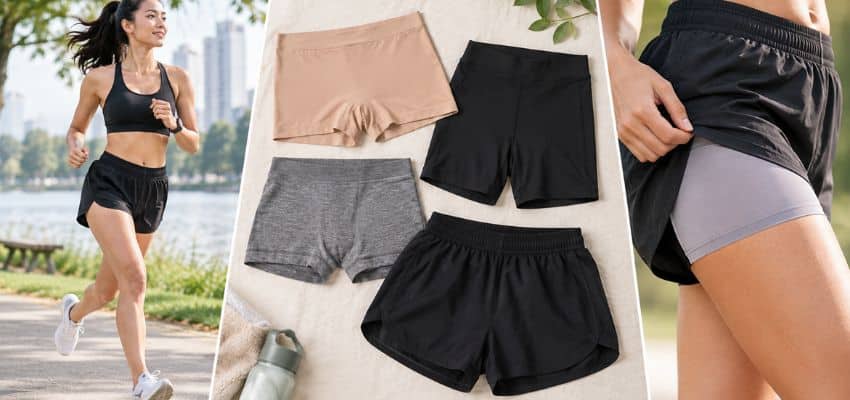
The best hot-weather outfit feels almost forgettable once the first mile begins.
If you are deciding what to wear running in hot weather, start with one light, moisture-managing top; stable, quick-drying shorts; thin technical socks; and only the sun coverage the route needs. Loose or lightly fitted fabric should let air move without flapping, twisting, or sagging when soaked. Cotton, heavy compression pieces, padded layers, and casual rain jackets usually hold more moisture or heat than a summer run can comfortably carry.
Temperature alone does not settle the choice. Humidity slows sweat evaporation, direct sun adds radiant heat, and a long or hard session creates more body heat than a short easy loop. The right hot weather running clothes help sweat spread, reduce rubbing, and protect exposed skin; they cannot make dangerous conditions safe. Keep the kit simple within the broader approach to running clothes for beginners, then adjust the route, pace, and timing before asking clothing to solve a weather problem.
- Choose thin fabric that remains light and smooth when soaked.
- Use fit and seam placement to prevent wet fabric from rubbing.
- Balance ventilation with sun protection instead of assuming less fabric is always cooler.
A summer running outfit should release heat, not store it
- Short and shaded For most short, easy runs, begin with a thin technical tee or singlet, split shorts or light lined shorts, and low-bulk synthetic or merino-blend socks. Each item should remain light when wet and should not need mid-run adjustment.
- Long and exposed For a long route in direct sun, consider a light-colored, genuinely breathable UPF top or airy long sleeve, a vented cap or visor, and stable shorts. More coverage can protect skin, but only when the fabric is thin enough to release heat.
- Hot and humid When humidity is high, wear the lightest familiar kit and reduce pace or duration. Sweat may soak even excellent fabric because humid air limits evaporation; another clever garment cannot negotiate with physics.
A dependable summer running outfit is a starting point, not permission to ignore a dangerous heat index or heat alert. The CDC’s heat guidance for athletes recommends stopping activity and moving to a cool place when weakness or faintness develops.
Four factors should decide how little – or how much – you wear
-
Heat and humidity together
Humidity matters because sweat cools the body mainly when it evaporates. In saturated air, even a fine technical shirt can stay wet and cling. Choose minimal, fast-drying layers, but change the time, route, pace, or duration when the conditions are oppressive.
FavorHeat index, humidity, shade, and a shorter fallback routeAvoidTreating a low clothing weight as protection from heat illness -
Direct sun and route exposure
A shaded neighborhood loop and an open waterfront at the same temperature do not place the same demand on the outfit. On an exposed route, a loose, lightweight UPF top may be more useful than bare shoulders, provided it is ventilated and comfortable when wet.
FavorShade, reflected heat, cloud cover, and time of dayAvoidA thick long sleeve chosen only because it covers more skin -
Effort and time outside
Fast running generates more body heat; long running provides more time for moisture, salt, and friction to build. A hard workout may need less clothing but a more conservative pace, while a long easy run needs fabric and seams proven over time.
FavorPlanned effort, duration, stops, and access to coolingAvoidUsing one outfit formula for every session -
Personal sweat and rubbing patterns
One runner soaks the back first; another develops trouble at the waistband, bra band, inner thigh, or toes. Past runs reveal where ventilation, a steadier hem, or an anti-chafing barrier will matter most.
FavorKnown hot spots and garments that stay stable when saturatedAvoidBuying more clothing before identifying the actual trouble spot
Breathable is a behavior, not a word on the label
Look for thin polyester or nylon blends, open knits, mesh zones, and a cut that does not press wet fabric against the whole torso. The best breathable running gear combines fiber, construction, and fit.
Wicking can spread sweat across fabric, but high humidity still slows evaporation. A dense, tight technical shirt may wick and yet feel like warm plastic wrap.
Minimal coverage often suits short shaded runs, while an airy sun-protective layer can be useful on a long exposed route. Coverage should answer the route rather than follow a universal rule.
Bare skin allows evaporation but also receives direct ultraviolet and radiant exposure. Added fabric helps only when it remains loose, light, and ventilated.
A very light cotton shirt may be tolerable on a short dry outing, but thin synthetics generally absorb less water, stay lighter, and dry faster once sweating becomes heavy.
Wet cotton can sag, cling, and repeatedly rub the underarms, chest, waist, or back. The problem is not a moral failing by cotton; it has simply applied for the wrong job.
A feather-light fabric still needs enough structure to recover after stretching and enough opacity and coverage for its intended use. Soft seams and a stable hem often matter more than shaving off another gram.
Very flimsy material can twist, become transparent, or collect in skin folds when soaked. That movement turns a cooling choice into a friction problem.
Choose a top that ventilates without wandering
A singlet leaves the arms and shoulders open and often feels best on a short shaded run. Its armholes should lie flat when the arms swing; oversized openings can shift and rub once the fabric becomes wet. A short-sleeve technical tee offers a useful middle ground for mixed shade and sun. It should skim the torso, with space at the underarms and upper back, but not enough loose fabric to twist around the waist.
For long exposure, a thin UPF long sleeve can protect more skin, but “long sleeve” does not automatically mean suitable for heat. Look for ventilation, low fabric weight, sleeves that can be pushed up, and a pale or heat-managing finish that remains comfortable when saturated.
Sun protection also includes shade, sensible timing, and broad-spectrum, water-resistant sunscreen on uncovered skin. The AAD clothing guidance also recommends looking for a UPF label when choosing garments for more effective ultraviolet protection.

A sports bra needs enough support for the run without using more coverage and compression than necessary. Wide, wet bands and layered pads can trap warmth or rub, while a bra that is too loose shifts. Test the bra and top together: straps should not collide with shirt seams, and neither layer should require pulling or rearranging after ten sweaty minutes.
Choose bottoms that stay smooth when soaked
Light lined shorts suit many everyday runs because the outer shell moves freely while the liner stays close to the skin. Check that the liner does not curl and that the shell does not collect between the thighs. Split shorts maximize airflow and stride freedom, but their loose shape is useful only if the waistband remains secure and the inner coverage feels comfortable.
Five- to seven-inch shorts or half tights can be cooler in practice for runners whose thighs rub, even though they cover more skin. Smooth fabric held steadily in place often creates less heat and irritation than a shorter hem that repeatedly rides upward.

Flat seams, a soft leg opening, and good fabric recovery matter. For recurring friction, preventing thigh chafing before a run deserves a deliberate plan rather than endless shorts roulette.
Test new bottoms on a short humid outing before trusting them for a long run. Notice whether the waistband rolls, pockets bounce, the liner shifts, or salt collects at a seam. If a known hot spot still needs protection, compare anti-chafing products that stay put on long runs and try the chosen option on intact skin during ordinary training first.
Accessories should solve one problem without creating another
Clothing and hydration solve different problems. Plan how much to drink before running separately instead of expecting a cooler shirt to compensate for poor preparation.

A 60-second hot-weather outfit check
-
Check more than the air temperature
Look at humidity, heat index, direct sun, air quality, and any local heat alert. Then compare those conditions with the route, effort, duration, and access to shade or cooling.
-
Start with the lightest proven combination
Choose one breathable top, stable shorts, and thin socks that have already behaved well when wet. A new piece belongs on a short familiar loop, not the longest run of the hottest week.
-
Check every contact point
Swing the arms, lift the knees, and tug lightly at the waistband, hems, bra band, socks, and straps. Nothing should pinch when dry or have enough loose material to wander once soaked.
-
Match coverage to exposure
Use minimal coverage for a short shaded run if comfortable. For sustained sun, choose a lightweight UPF layer, cap or visor, sunglasses, and sunscreen on exposed skin – then seek shade whenever possible.
-
Make the weather decision separately
If the conditions are beyond the runner’s experience or a heat warning is active, move the run, shorten it, slow it, or train indoors. Beginners who are unsure what “shorten it” means can first choose a manageable running duration. No item of clothing upgrades a hazardous day into a sensible workout.
After the run, record the conditions, pace, outfit, and where fabric felt hot, heavy, or abrasive. Change one element next time so the result teaches something useful.

Stop running and move to a cooler place when heavy sweating is joined by unusual weakness, dizziness, headache, nausea, cramps, or worsening fatigue. These are among the symptoms listed in the CDC heat-illness guidance. Confusion, loss of coordination, fainting, seizure, or inability to respond normally may indicate heat stroke and require emergency medical help and rapid cooling. A person with suspected heat stroke should not be left alone.
Build one reliable hot-weather kit
- Repeat the top and bottoms that remain light, stable, and smooth when saturated.
- Change coverage with sun, humidity, duration, and effort—not appearance alone.
- Let heat alerts and warning signs overrule the day's running plan.
The clearest answer to what to wear running in hot weather is usually modest: a thin technical top, quick-drying shorts that stay put, low-bulk socks, and targeted sun protection. The details become personal after a few careful tests. Keep what disappears into the run, replace what clings or rubs, and remember that the smartest hot-weather adjustment is sometimes changing the run rather than changing the shirt.