
The urge to add more is often strongest just when running begins to feel easier.
For many beginners, the familiar 10% rule works better as a ceiling than a weekly target. An increase makes more sense only after the current mileage has felt comfortable and repeatable, not simply because the calculator allows another fraction of a mile.
Before adding distance, I would look for easy runs that still feel easy, normal energy over the next day or two, reasonably steady sleep, and no pain that is becoming louder. When those signals are mixed, repeating the same week is not falling behind. It is often the more useful training decision.
There is no weekly percentage that is safe for every beginner. The practical answer is to increase mileage only after the current amount feels comfortably repeatable, then make one small change while leaving pace, hills, and running frequency alone.
The 10% rule is easy to remember, but it is not a promise against injury. Research involving novice runners has found that larger jumps in running distance may matter, yet the relationship is not clean enough to turn one percentage into a universal prescription. One study found greater vulnerability among beginners whose running distance increased by more than 30% over two weeks, while another found more injuries early in the study among runners increasing weekly distance by 20% to 60%. The findings support caution, not a magical cutoff. The research summaries are available through PubMed’s novice-runner study and its weekly-distance analysis.
A useful baseline may begin with a three-day running routine that feels manageable enough to repeat. The total does not need to be impressive. It needs to be settled.
Treat 10% as an upper reference, not an amount that must be added every week. Hold the same mileage when recovery is uncertain. When the week feels settled, add a small amount to one easy run and watch what happens over the next 24–48 hours.
Make sure the current mileage is truly settled
A stable baseline is not the biggest week completed so far. It is a pattern of similar weeks: mostly easy effort, ordinary recovery, and no sense that the final run was held together by determination alone.
Look beyond the running log. Daily life often reveals the cost of training more clearly than the mileage total.
Before increasing distance, I would want most of these signs to be present:
- Easy runs remain easy enough for short sentences.
- Walking, stairs, and normal daily tasks feel ordinary the next day.
- Sleep and general energy are reasonably steady.
- Minor stiffness fades rather than becoming sharper or more persistent.
- The same pace is not beginning to feel harder from run to run.
One unusually good run does not establish a baseline. Neither does a high-mileage week squeezed between poor sleep, a demanding work schedule, or lingering soreness. Running is only one part of what the body is recovering from.
For a beginner running plan that fits real life, repeating a manageable week can be more valuable than winning a small argument with a spreadsheet.
Someone still building consistency may use a 20-minute running routine as a steadier baseline than chasing a larger weekly number too soon.
Use a quick go-or-hold check
-
Review the last few runs
Look for a pattern, not one heroic morning. Recent easy runs should feel manageable without recovery becoming progressively worse.
-
Check the next day or two
A little tiredness can be normal. Unusual heaviness, worsening sleep, or fatigue that keeps accumulating is a reason to hold the current mileage.
-
Notice the direction of discomfort
A minor sensation that fades is different from pain that becomes sharper, appears earlier, changes your stride, or affects ordinary movement. Do not increase through that pattern.
-
Change one variable
Add a small amount to one easy run. Keep the usual pace, hills, number of runs, and other outings unchanged so the response is easier to interpret.
-
Record what happens
Note the added distance, how the run felt, and how the next 24–48 hours compared with the old baseline.
Check the weekly total and the longest run
Weekly mileage is only one view of training load. A runner who usually completes two-mile outings does not make a sudden five-mile run gentle merely by placing it inside an otherwise quiet week.
A 2025 cohort study of more than 5,200 runners found that injury risk rose when the distance of a single session exceeded the runner’s longest run in the previous 30 days. This does not establish another perfect rule, and it should not be confused with the traditional weekly 10% rule. It does show why the longest individual run deserves attention alongside the weekly total. The full study is available in the British Journal of Sports Medicine.
In practice, compare the proposed longer run with what has actually been completed recently. A small weekly increase can still be concentrated too heavily in one outing.
Make one small change at a time
When distance, pace, hilliness, and running days all change together, it becomes difficult to tell what made the week harder. Adjusting one variable gives the body’s response a clearer meaning.
Here is a modest mileage example. The number is an illustration, not a prescription.
Suppose a settled week contains three easy two-mile runs, totaling six miles. One cautious next step could be extending a single run to 2.5 miles while leaving the other two at two miles. The new weekly total is 6.5 miles, an increase of about 8.3%.

The half-mile is not magical. It merely shows how to change one run without rebuilding the entire week. At a lower starting mileage, even half a mile may be too large; at a higher mileage, it may be barely noticeable. The amount must remain modest relative to the runner’s established baseline.
Adding another run is a different decision from extending an existing one. So is deciding whether to run on consecutive days, because that change reduces the recovery time between outings even when the mileage total looks modest.
Understanding why rest days matter helps you consider recovery alongside the weekly mileage total.
When the goal is general wellbeing rather than race preparation, health-first running frequency matters as much as the number recorded at the end of the week.
Let recovery decide whether the increase stays
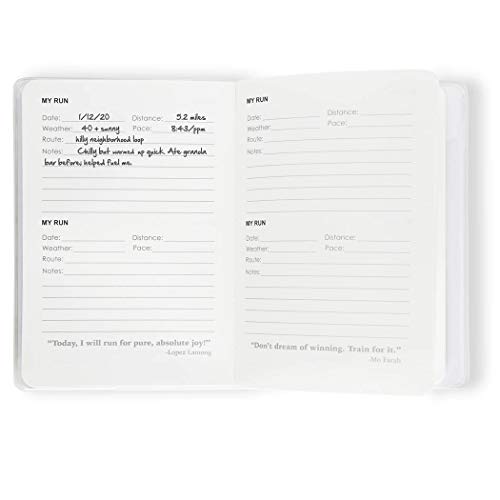
A running log does not need elaborate charts. After each run, record the distance, whether the effort remained easy, any discomfort, and how normal movement felt later that day and over the next two mornings.
What the notes are trying to reveal
- Settling normally
General tiredness or mild stiffness fades, ordinary movement remains comfortable, and the next easy run does not feel unexpectedly harder.
- Hold the mileage
Sleep, energy, heaviness, or soreness is less predictable than usual, but the pattern improves when no further distance is added.
- Reduce or pause
Pain becomes sharper, returns earlier, changes the running stride, persists, or begins to interfere with normal daily activity.
A little stiffness that eases can be ordinary post-run leg soreness. A log cannot diagnose the cause of pain, but it can reveal that an added workload is not settling well.
Context belongs in the log too. Poor sleep, an unusually hilly route, illness, heat, or a long day on your feet may explain why one entry looks different. Those details prevent a single bad day from becoming a verdict, while still making repeated warning signs harder to ignore.
Holding steady is still progress
Hold the mileage when easy runs feel unusually demanding, sleep has deteriorated, fatigue is accumulating, or discomfort is becoming more noticeable. Keeping the same total for another week allows those signals to settle without adding a fresh demand.
That is why holding your mileage steady for another week can be a deliberate decision rather than a failure to progress.
After several increases or a difficult stretch outside running, a planned cutback week can create room to absorb the work already completed. You can reduce distance or consider repeating a week in your running plan rather than simultaneously changing pace, hills, and frequency.
Stop increasing mileage when pain is worsening, changes the way you run, or interferes with normal movement. Sudden severe pain, inability to bear weight, chest pain, fainting, or severe breathing difficulty needs prompt medical attention rather than another training adjustment.
Let repeatable runs earn the next step
- Treat 10% as an upper reference, not a weekly assignment.
- Check both total weekly mileage and the size of the longest individual run.
- Change one variable, then watch recovery for the next 24 – 48 hours.
Before adding mileage, ask whether recent easy runs were truly easy, ordinary movement felt normal afterward, sleep and energy remained steady, and no pain was worsening. A clear yes may support one small change. An uncertain answer supports another week at the same mileage.
A calculator can produce a tidy number, but it cannot feel tomorrow morning’s legs. Comfortable, repeatable running is the more useful green light.