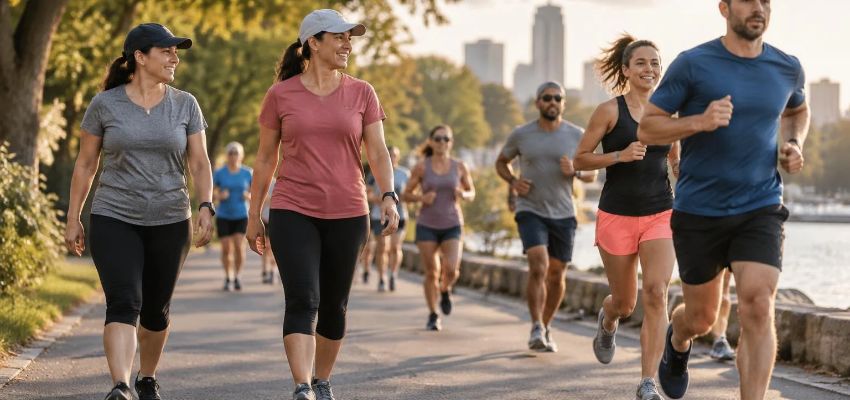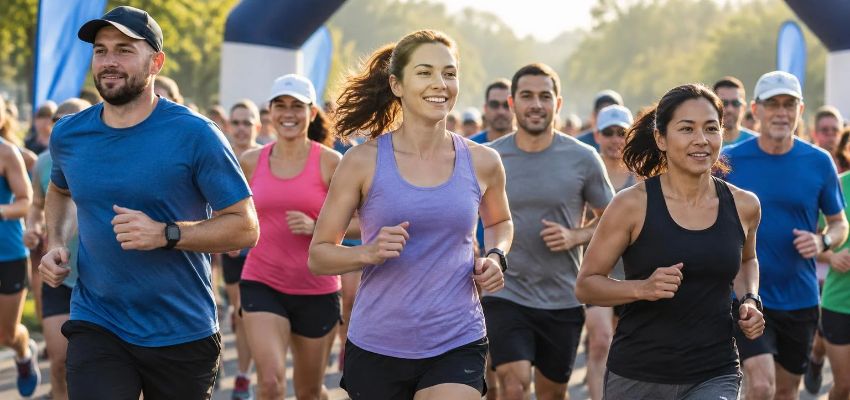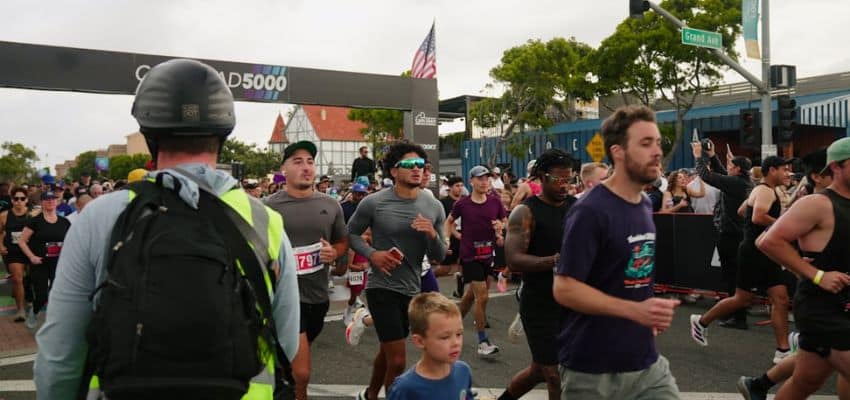
The miles may be familiar; the crowd, bib, and countdown are the new part.
Learning how to prepare for your first 5K race is less about finding a secret workout and more about removing avoidable surprises. The email confirmation can make a casual plan suddenly feel very official: a race bib to collect, a start time, and hundreds of strangers gathering before breakfast. That nervous buzz is normal.
A calm first race rests on four ordinary things: being comfortable covering the distance, reading the event instructions, using clothes and food already tested on runs, and knowing the sequence from arrival to reunion. This guide explains what to expect at your first 5K without turning a short community event into a military operation with safety pins.
- A 5K is 3.1 miles, but start-area logistics often take longer than the run itself.
- Race organizers’ emails and official event page are the best source for current pickup and safety rules.
- Nothing new on race morning is a useful rule for shoes, clothes, breakfast, and carrying gear.
Pick the race that makes race day easier
A first-timer may spot a cheerful 5K poster and click Register before noticing that the start is at 7 a.m., parking is a mile away, and the course climbs a park trail. None of those details makes it a bad event – but they can make a first race feel needlessly complicated.
Treat the official event page as the source of truth, then check the practical parts before paying the entry fee:
- Date and start time: leave room for packet pickup, travel, and an unhurried morning.
- Course and surface: look for a map, elevation notes, and whether it is road, path, trail, or laps.
- Access: confirm parking, public transport, restroom locations, and whether someone can meet the finisher afterward.
- Rules: check the cutoff time, stroller and pet policies, and any bag or headphone restrictions.
- Format: an in-person race brings crowds and course support; a virtual option may suit someone who needs flexibility.
A local, flat event with a convenient start can be a far warmer introduction than a more glamorous race that turns the whole weekend into a logistics puzzle. For someone choosing a first event, the practical differences between starting with a 5K or a 10K matter more than which distance sounds impressive. The goal is to arrive calm enough to enjoy the occasion.
Make the distance feel familiar
Be comfortable covering the distance
A first 5K does not require running every step. A runner can jog, use planned walk breaks, or walk the event when its cutoff allows. The useful question is whether 3.1 miles can be covered at an easy, controlled effort without turning the final mile into an emergency negotiation with the legs. For someone still building that comfort, how long a beginner should run is a more useful starting question than how fast the first race should be.
In the weeks before the event, ordinary consistency matters more than one heroic rehearsal. A simple running routine for busy people may be enough to keep movement familiar without making life revolve around a date on the calendar. Pain that changes the stride, illness, or unusual shortness of breath is a reason to stop and seek appropriate advice – not a challenge the entry fee must somehow defeat.
Rehearse the routine once
One easy run can quietly test the planned breakfast, shoes, socks, clothing, phone pocket, and walk-break rhythm. Start around the same time of day as the event when practical. This is not a time trial; it is a chance to notice small annoyances while there is still time to solve them.
That rehearsal is also the safest place to test running clothes for beginners, because a shirt, waistband, bra band, or liner that feels fine indoors may behave differently after sweat and repeated movement.

A first 5K does not need a dress rehearsal at full effort
Use recent easy runs as evidence and keep the final days familiar. A hard test close to race day can add fatigue without teaching much that ordinary running has not already shown.
The goal of race week is to arrive with settled legs and a settled routine, not to win an argument with the watch.
Planned walk breaks are a valid way to cover a 5K, provided the event permits the expected pace within its cutoff. Move safely toward the side before slowing.
A repeatable run-walk rhythm often feels calmer than starting too fast and being forced into an unplanned stop later.
Build a first 5K checklist from the event instructions
-
Read the official page again
The first email can feel like a receipt; the final race-week update is often the useful one. Check the organizer’s current instructions for the exact start time, location, route changes, bag rules, cutoff, and weather policy—those details override any general race advice.
-
Write down the non-negotiables
Put packet-pickup hours, parking or transit directions, the meeting point, and the required ID or QR code in one note. A 5K can be wonderfully simple until a missed pickup window or closed road turns it into a scramble.
-
Decide the night-before items
Lay out familiar clothes and shoes, bib and pins if needed, photo ID, phone, and any small item already used on ordinary runs. Special gear is not necessary; the aim is to avoid hunting for something at dawn.
-
Check the forecast, then check the event page
A light rain may only call for a spare dry layer, while lightning or severe conditions can change plans entirely. Follow organizer messages rather than guessing whether the race will proceed.
-
Plan the arrival and start
Choose when to leave with time for parking, toilets, bag check if offered, and finding the start area. At the corral, line up where the event asks; an easy opening feels far better than weaving through a crowd.
-
Know the first ten minutes after finishing
Keep moving through the finish chute, take offered water or food if wanted, and find the designated reunion point before the crowd scatters. Save the bib until results and photos are sorted.
A useful first 5K checklist is short enough to read at the door and specific enough to prevent a missed pickup window.
Let race week feel familiar
By race week, the useful work is mostly quiet. A first-timer may feel tempted to test new shoes, a different breakfast, or a clever pre-race drink after seeing it online. This is the moment to keep things boring: wear and eat what has already felt comfortable, and save experiments for another ordinary day. A beginner running plan that fits real life should make this week feel familiar, not turn it into a final examination.
Two days before
Read the organizer’s latest email once more. Note packet-pickup hours, bib requirements, parking or transit, bag rules, the start time, and where the finish area meets friends or family. Knowing what to bring to race packet pickup can prevent a missing ID or confirmation code from creating an unnecessary second trip. Check the forecast, then set out familiar clothes, shoes, socks, bib, pins, identification, and any usual weather layer.
The night before
Confirm the route and leave extra time for crowds, road closures, and restroom lines. Put essentials by the door and charge a phone, but avoid turning the evening into a checklist marathon. A simple finish plan – water, a light snack if wanted, dry layers, and a meeting spot – can make the final minutes feel as calm as the first.
If it is new on race morning, it can usually wait until after the race.
Bring the things that solve race-day problems
-
Keep the race essentials together
The small, unglamorous pile matters most: race bib, timing tag if issued separately, photo ID for pickup when required, and any organizer instructions. A runner who has those can usually handle the rest of the morning.
-
Wear only familiar running clothes
Shoes, socks, and layers that have already felt comfortable on an ordinary run are the sensible choice. Check the forecast near race time, then add or remove a layer rather than debuting something new.
-
Carry only what has a clear job
A phone, keys, payment card, and any personal item needed before or after the finish may be enough. Pockets or a running belt can work, while wearing a belt bag during a race depends on the event’s bag rules and whether it stays unnoticeable in motion.
-
Treat bib attachments as a choice, not a requirement
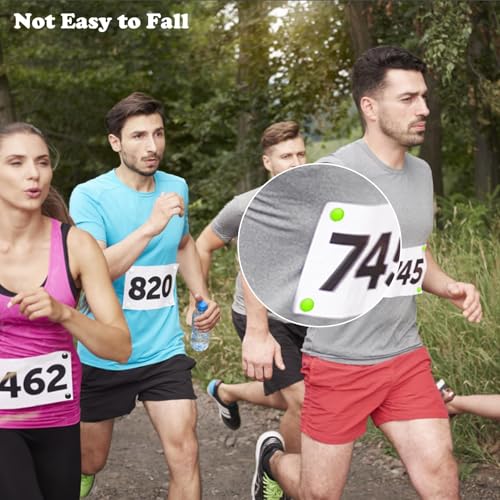
Safety pins supplied at pickup are perfectly workable. Race bib magnets that stay put without damaging a shirt can be convenient, but they are optional—and the bib should never be folded or covered if the organizer says its timing chip must remain visible.
-
Plan for the wait, not just the run
A throwaway outer layer, simple rain cover, or dry shirt for afterward can make a chilly or wet start less distracting. Check the event rules before bringing bags, umbrellas, or valuables.
Race organizers have the final word on bib placement, bag policies, and permitted items.


When the forecast turns
A gray race morning can make the start area feel more dramatic than it is. Rain or cold mostly asks for a few comfort decisions: check the organizer’s latest message, then check the official forecast again before leaving. The organizer’s update is the authority on delays, altered routes, shelter, and cancellation.
For a wet wait, a light disposable poncho or old outer layer can keep clothes drier until the last sensible moment. The details of using a disposable poncho while waiting for a wet start matter mainly because the layer must be easy to remove and permitted by the event. In cold weather, an extra old layer helps during the standing-around part and can be removed just before joining the corral. Neither choice needs to become special race equipment.
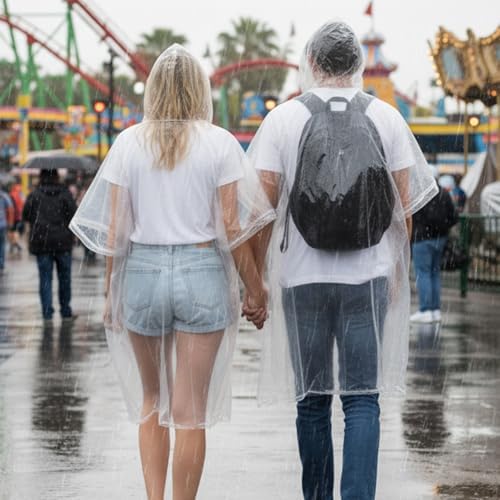
Pack a dry shirt, socks, and a warm layer for afterward in a clearly marked bag or car. Once across the line, moving through the finish area, collecting any needed item, and changing out of wet clothes promptly usually feels far better than lingering for photos. Follow staff directions if conditions change.
If lightning, extreme conditions, or a delay is announced, follow the event team rather than social-media guesses. Their instructions reflect the course and local safety plan.
What to expect at your first 5K
The easiest first 5K morning often begins before the streets feel busy. A runner checks the organizer’s stated arrival time, then works backward: travel time, parking or transit, the walk from the drop-off point, and a buffer for the unexpected queue. Event instructions are the authority here; road closures can make a familiar route surprisingly useless.
At arrival: follow the small sequence
On arrival, it helps to resist the urge to drift toward the crowd. First, find the toilets – lines generally grow nearer the start—then check that the bib is pinned securely and readable. If the event offers bag drop, confirm its location and closing time before handing anything over; keep the claim tag or note the retrieval instructions.
Next comes the only question that matters for a few minutes: Where is the actual start? Signs, volunteers, and the race map usually settle it. Larger events may use corrals or pace signs; a first-timer can simply join the appropriate general area and leave room for faster runners to pass.
A few quiet minutes near the start are not wasted time. They are time to use the toilet once more, shed a disposable waiting layer if needed, and arrive at the line feeling settled rather than chased.
At the start: find a calm place in the crowd
The start area can look like a small moving city: music, announcements, bouncing runners, and a line of portable toilets that somehow still has a line. A corral gives that crowd a little order. Its purpose is simple: people expecting a similar overall finish time begin near one another, so faster runners are not immediately weaving around walkers and relaxed joggers.
Choose the estimate that feels honest, not the one that sounds impressive. When a form asks for a number, choosing a realistic race pace estimate as a beginner is mostly about helping the start area sort itself, not predicting the future to the second. Starting behind the sign is almost always easier than spending the opening minutes being passed in a tight pack.
On the course: let the crowd go first
When the horn sounds, there is no prize for reaching the timing mat in a hurry. A little first-5K start etiquette is mostly ordinary courtesy: move predictably, give others room, and let the excited crowd spread out. This is also why a first 5K usually feels better with a slower start; breathing has time to settle before the road opens up.
A few small habits keep the shared course friendlier. In particular, passing runners in a crowded event becomes much simpler when nobody makes a sudden sideways move:
- Hold a predictable line instead of drifting across the road.
- Pass with space when possible; a brief “on your left” can prevent surprises.
- Before slowing to walk, glance back and move toward the side if it is safe to do so.
- Follow marshal, signage, and road-closure instructions, even when the route seems obvious.
The Road Runners Club of America’s runner-etiquette guidance offers the same basic idea: awareness matters more than racing sophistication. In a first 5K, settling into the flow is plenty.
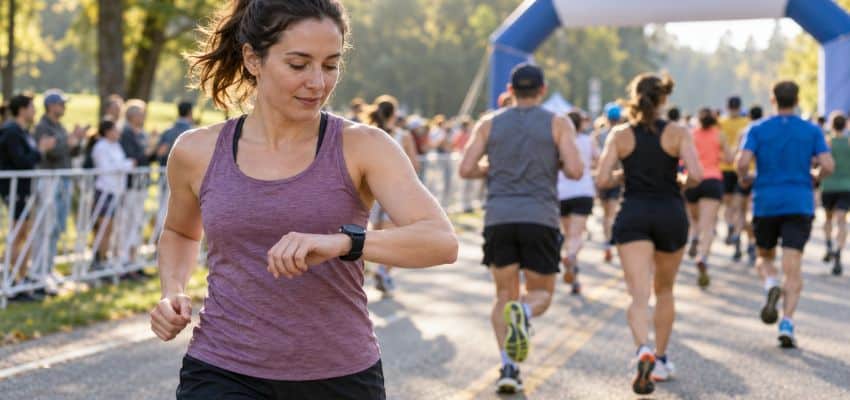

After the finish: keep moving through the chute
The clock may stop at the line, but the small crowd usually keeps shuffling forward. That is normal. Volunteers will guide finishers through the chute toward water, a medal or snack, and whichever exit the event has arranged; there is no need to make a sudden stop for a photo.
For a fuller picture of what happens after crossing the finish line, it helps to think of the area as a one-way path. Take the offered water if wanted, keep the bib visible until leaving the controlled area, and follow signs for bag pickup or family meeting points. A light layer from a checked bag can feel wonderfully ordinary after a wet or chilly race.

Make the reunion easy
Phones can be slow in a dense finish crowd, so the prearranged landmark matters. Once clear of the chute, a finisher can send a short message, collect belongings, and find companions without blocking other runners. It is also worth checking the event instructions before heading home: some races place results, photos, or lost-property details online later that day.
Before the bib disappears into a drawer, note one or two memories: the weather, the start-line nerves, the moment the course settled down. The first 5K’s rituals soon become useful knowledge – and a fine reason to consider another one.
Clear answers before a first 5K
What should be on a first 5K checklist?
Start with the organizer’s current instructions: packet pickup, bib requirements, start time, location, parking or transit, bag rules, cutoff, weather policy, and suggested arrival time. Add familiar shoes and clothes, identification, phone or keys if needed, a reunion point, and a dry or warm layer when the forecast calls for one.
What are the most useful first 5K race day tips?
Arrive with enough time for toilets and the start area, line up according to an honest expected pace, begin more gently than excitement suggests, move toward the side before slowing to walk, and keep moving after crossing the finish line. The event team’s instructions take priority over general advice.
Do I have to run the whole 5K?
No. Jogging, planned walk breaks, or walking can all be valid when the event permits that pace within its cutoff. Practice the intended rhythm beforehand, start in an appropriate part of the crowd, and check behind before moving sideways or slowing.
Should I eat or drink something special before the race?
Use the breakfast and fluids that have already felt comfortable before ordinary runs. A first 5K is not the morning to test a new supplement, sports drink, or large meal. Weather, personal needs, and event provisions vary, so use the organizer’s information and prior experience rather than a universal formula.
What should I do when race-morning weather changes?
Check both the official forecast and the organizer’s latest message. Adjust familiar layers, bring a disposable waiting layer or dry clothes when useful, and follow event instructions about delays, course changes, lightning, or cancellation. Clothing can improve comfort; it cannot overrule a safety decision.
- Use recent easy runs – not a last-minute time trial – as evidence of readiness.
- Build the checklist from the event’s current instructions and familiar personal routines.
- Start honestly, move predictably on the course, and keep walking through the finish chute.
That is the practical heart of how to prepare for your first 5K race: make the distance familiar, make the logistics visible, and leave race morning with very little left to invent. The crowd and countdown may still bring butterflies. They are allowed to come; they just do not need to carry the parking directions.