Starting running after 30 can feel different because your goal is usually clearer: better health, more energy, less stress, and a habit you can actually keep.
The confusing part is not motivation. It is choosing shoes without getting pulled into hype, racing technology, or fear-based advice. This guide is not about finding the fastest shoe or telling you what to buy. It is about understanding what makes a running shoe easier to live with when you are building a simple, healthy running habit.
- Why comfort and fit matter more than speed features
- How cushioning, stability, and daily-training design support consistency
- Which shoe types beginners over 30 may want to be careful with
- How specific shoes can illustrate a principle without becoming a must-buy list
Start With the Running Problem, Not the Shoe Model
You do not need to buy new shoes right away if your current pair still feels comfortable, stable, and safe enough for short, easy runs.
Stop a shoe test if running brings on or worsens pain, and seek professional advice for persistent or recurring symptoms. For knee pain specifically, seek urgent medical advice if the knee is very painful, cannot bear weight, is badly swollen or misshapen, locks or gives way, or becomes hot and red with fever. The NHS describes these warning signs in its knee pain advice.
Start with your current activity, not an age label
- A new routine needs room for recovery If running is new or you are returning after a break, leave recovery time between sessions. Base your starting routine on current activity and how you recover, rather than assuming that turning 30 creates a different footwear requirement.
- Repeated impact becomes easier to notice Running repeats the same motion many times. A shoe that feels slightly harsh, narrow, or unstable can become more distracting as the run goes on.
- Fatigue can expose poor fit A tight toe box, loose heel, or unstable platform may feel manageable at first but more obvious when your legs get tired.
- The shoe should reduce friction A useful beginner shoe should make easy running feel more repeatable, not make you feel like you need perfect form or a performance mindset.
This section is not about being afraid of running after 30. It is about paying attention early so the habit has a better chance to last.
How Much Cushioning Do Beginners Over 30 Really Need?
The goal is comfort you can still control
-
Comfort without sinking
The shoe should soften the landing without making your foot feel like it is wobbling inside the midsole.
Look forA soft but controlled landingAvoidA marshmallow feel that makes your stride inconsistent -
Easy pace comfort
Most beginners run slowly, alternate walking and running, or take short easy runs. Cushioning should feel good at those speeds, not only when running faster.
Look forComfort during walking, jogging, and easy runningAvoidShoes that only feel smooth when you speed up -
Repeatable feel
The shoe should still feel comfortable after several sessions, not just during the first few minutes in the store.
Look forConsistent underfoot feel across short runsAvoidA shoe that feels flat or unstable quickly
More cushioning is not always the answer
Cushioning only helps if the shoe still feels stable and natural at your easy pace.
A very soft shoe can feel comfortable while standing but unstable once you start running.
A cushioned shoe may change how running feels, but it should not be treated as a pain solution.
Pain can involve training load, recovery, strength, surface, and previous activity, not just footwear.
A softer landing can feel more comfortable without proving that the shoe prevents injury. A Cochrane review found low-certainty evidence that soft midsoles may make little or no difference to running injury rates compared with harder midsoles.
The review examined injury prevention, not treatment of existing joint pain, and does not establish extra cushioning as necessary simply because a runner is over 30.
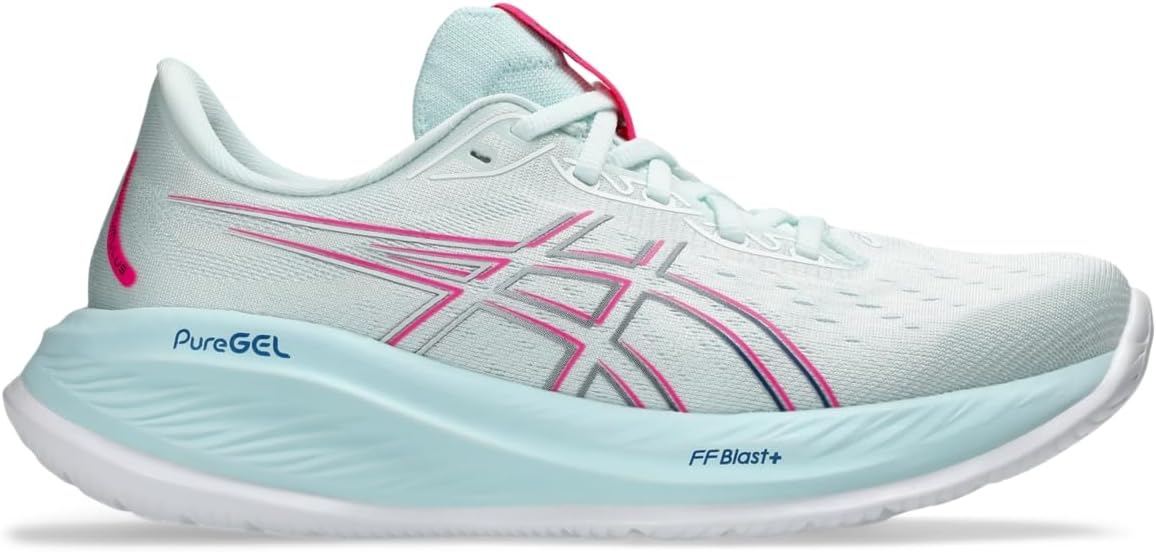
ASICS Gel-Cumulus 26 is a useful reference for the cushioning principle because it represents a daily running shoe built around comfort rather than racing. It can help beginners picture what a softer everyday trainer looks like, while still remembering that cushioning is support for consistency, not a promise to fix pain.
- Useful cushioning reference point
- Made for everyday running use
- Helpful for easy pace comfort
- Simple enough for beginners
- May feel too soft for some
- Not a cure for joint pain
- Fit still depends on foot shape
How Should Stability Feel in a Beginner Running Shoe?
A stable shoe should feel calm under tired legs
-
Predictable platform
The shoe should feel steady when you walk, jog, and run slowly, especially as fatigue builds.
Look forA calm, centered feel underfootAvoidA narrow or twitchy platform that makes every step feel uncertain -
Support without forcing correction
Most beginners do not need a shoe that feels like it is forcing their foot into a position.
Look forGuidance that feels naturalAvoidRigid support that feels uncomfortable or distracting -
Control over lightness
A slightly heavier shoe that feels steady can be more useful than a lighter shoe that feels unstable.
Look forA shoe you trust at easy paceAvoidChoosing weight savings over control
Stable does not mean serious or corrective
Many daily trainers feel stable without being medical or corrective shoes.
A wider, more predictable platform can help beginners feel more controlled even when the shoe is still neutral.
For beginners over 30, control often matters more than minimal weight.
A lighter shoe is not automatically better if it feels unstable, narrow, or hard to trust at an easy pace.
A shoe that feels fast is not always the shoe that helps you build a consistent running habit.
Beginners usually benefit more from comfort and repeatability than from a performance-oriented ride.

New Balance Fresh Foam X 880 V14 is useful here because it illustrates the kind of controlled daily trainer that can suit walk-run beginners and easy runners. It is not presented as a required shoe, but as an example of choosing predictability over flashy performance.
- Stable neutral daily-trainer profile
- Good match for walk-run habits
- Predictable everyday running purpose
- Useful for consistency-focused runners
- Men’s product ref here
- May not feel exciting or fast
- Not a dedicated stability shoe
Why Fit Matters More Than the Shoe Category
-
Try shoes later in the day
Feet often swell after standing or walking. Trying shoes in the afternoon or evening can give you a more realistic sense of fit.
-
Wear the socks you plan to run in
Running socks and casual socks can change how the heel, midfoot, and toe box feel.
-
Check toe space
There should be a little space in front of your longest toe so your foot does not hit the front when running downhill or when tired.
-
Notice the heel and midfoot
The heel should feel secure without rubbing. The midfoot should feel held, not squeezed.
-
Do a first-run comfort check
Sharp pressure, numbness, heel rubbing, or local joint pain is not something to ignore.
Choose length and width by fit rather than automatically sizing up. AAOS fitting advice recommends trying shoes toward the end of the day, wearing the socks used for the activity, and checking both shoes with the laces tied. The toes should have room to move while the heel remains secure.
If you are using a walk-run approach, comfort at slower speeds matters too. Your shoe choice should work with a gradual approach to building distance and time, not just with the idea of running farther. For a practical starting structure, the NHS beginner running plan alternates walking and running across three weekly sessions, with a rest day between runs. Shoes support the routine; they cannot replace recovery time.
When Is a Neutral Daily Trainer Enough for Beginners Over 30?
Neutral can still mean cushioned, structured, and comfortable
-
Your runs are short and easy
If you are running short distances at an easy pace, you may not need aggressive performance features.
Look forComfort during normal easy runsAvoidBuying racing features before you need them -
Your foot feels naturally centered
A neutral shoe can work well if your foot feels controlled without needing strong correction.
Look forA smooth and steady stepAvoidA shoe that makes you feel like you are fighting it -
You want one simple running shoe
A daily trainer can cover walking, jogging, short runs, and early consistency work.
Look forA shoe you can use repeatedly without overthinkingAvoidSpecialized shoes that only make sense for workouts you do not do yet

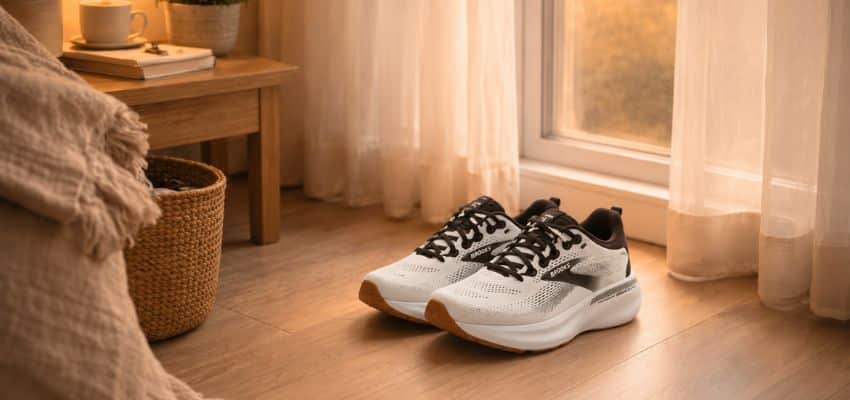
Brooks Ghost 17 is useful here because it represents the kind of simple neutral daily trainer many beginners can understand quickly: cushioned, familiar, and not built around racing. It can be a helpful reference point if you want one shoe for easy, consistent running.
- Simple daily-training purpose
- Neutral feel for many beginners
- Comfort-first design language
- Works for easy running habits
- Not a low-cost option
- Women’s product ref here
- Not for maximal stability needs
How Can Beginners Avoid Overbuying Running Shoes?
Buy for the habit you have now, not the runner you imagine becoming
- Start with the current problem If your only goal is short, easy running, you may not need premium features built for longer or faster training.
- Leave room to learn A few weeks of running can teach you more about your needs than a long product comparison before you begin.
- Upgrade later if the habit grows If your running becomes longer, more frequent, or more specific, you can make a more informed upgrade later.
- Avoid buying an identity You do not need to look like a serious runner before you build a simple running routine.
The goal is to remove friction, not collect features.
You can begin with what you already have if it feels comfortable and safe enough for short, easy runs. A product becomes useful only when it solves a real obstacle to consistency.

ASICS Gel-Excite 11 helps illustrate a more cautious buying mindset for beginners. It shows how a simpler daily running shoe can support the early habit without making the purchase feel bigger than the running itself.
- Lower barrier to getting started
- Simple daily-running purpose
- Good example of not overbuying
- Useful while building consistency
- Less premium than higher-end trainers
- May not suit long mileage
- Fit and feel still matter most
Which Running Shoes Should Beginners Over 30 Be Careful With?
- Racing shoes
Built for speed and efficiency. They can feel exciting, but they often have shapes and materials that ask more from your legs than a beginner needs.
- Minimalist shoes
Low-cushion, low-support shoes that require gradual adaptation. They are not a simple shortcut to better form.
- Overly stiff or worn-out shoes
Stiff shoes can make easy running feel harsh, while worn-out midsoles may lose the stable, protective feel you expected from them.
For a normal beginner running for health, the safer mindset is not “push through and adapt.” It is to reduce unnecessary friction while your body learns the rhythm of running. That fits the broader idea of progressing without rushing the process.
Who Does Not Need to Buy New Running Shoes Yet?
- Your runs are still short Short, easy runs can often begin with the shoes you already own if they feel comfortable and stable.
- There is no repeated discomfort One awkward run is not always a shoe problem. Repeated rubbing, pressure, or instability is more useful feedback.
- You are still testing the habit It can be smarter to build a few weeks of consistency before deciding what gear would actually help.
- The product is not solving a real obstacle If a shoe purchase does not remove a clear problem, it may simply be extra gear.
The goal is not to own the right product. The goal is to remove one clear obstacle to consistency.
FAQ
What type of running shoe is best for beginners over 30?
Most beginners over 30 should start by looking at comfortable daily trainers. These are shoes made for easy running, regular use, and predictable comfort rather than racing or aggressive workouts.
Do beginners over 30 need extra cushioning?
Not always. Cushioning should make running feel more comfortable, but too much softness can feel unstable for some people. The better goal is balanced cushioning that feels controlled at an easy pace.
Can running shoes prevent knee pain?
No shoe can promise to prevent or fix knee pain. A comfortable, stable shoe may reduce some unnecessary stress, but training load, recovery, strength, and running habits also matter. Clear or lasting pain should not be solved by buying shoes alone.
Should I buy running shoes before I know if I will keep running?
Not always. If your current shoes feel comfortable and safe for short easy runs, you can start there. Consider buying running shoes when your current pair feels worn out, unstable, too tight, or uncomfortable enough to block consistency.
Are racing shoes bad for beginners?
They are usually not the best first choice. Racing shoes are built for speed and efficiency, while most beginners need comfort, control, and repeatability. A daily trainer is usually a simpler starting point.
How should running shoes feel on the first run?
They should feel comfortable and predictable. You should not feel sharp pressure, numbness, heel rubbing, or a sense that the shoe needs a painful break-in period. Mild beginner muscle soreness is different from localized foot or joint pain.
The Better Question Is Not “Which Shoe Is Best?”
- Choose comfort and fit before speed features
- Use products as reference points, not rules
- Do not treat shoes as a cure for pain
- Build the running habit gradually and honestly
For beginners over 30, the smarter question is: what is making running hard to repeat? If the answer is discomfort, poor fit, worn-out shoes, or an unstable feel, then a simple daily running shoe may help. If your current setup already lets you run short and easy without problems, you may not need to buy anything yet. Good tools support the habit, but the habit still comes from patience, gradual progress, and listening to your body.