

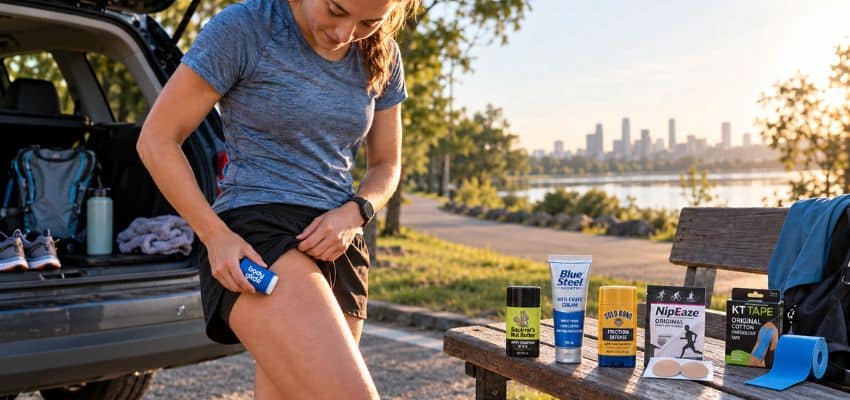
Six anti-chafing products for runners compared by rubbing area, application format, clothing fit, sweat and reapplication needs on long runs.

Why Your Running Watch and Phone Show Different Distances
Your running watch and phone can show different distances for the same run. Compare settings, GPS tracks, and app processing before trusting either total.

How to Set Heart Rate Zones on Your Running Watch
Check how your running watch calculates heart rate zones, enter the settings correctly, and compare the display with effort, breathing, and sensor fit.

Why Your First 5K Should Start Slower
Your first 5K should start slower than the opening rush suggests. Use breathing and familiar effort to avoid following the crowd into a pace you never meant to choose.

How to Read Running Pace on Your Watch Without Chasing Every Split
Understand current, lap, average, and split pace on your running watch – without reacting to every GPS jump or letting the numbers control your run.

How to Stop Bouncing While Running at an Easy Pace
Some bounce is a normal part of running. If every easy step feels like a small jump, check your pace, foot placement, upward push, and tension before trying one brief adjustment at a time.

How to Breathe While Running Without Forcing a Rhythm
Breathing while running should respond to effort, not obey a rigid count. Find a comfortable mix of nose and mouth breathing, ease the pace when needed, and use rhythm only when it helps you relax.

Running Cadence for Beginners: Find Your Rhythm Before Chasing 180
Running cadence for beginners is not about chasing 180. Find your natural rhythm, understand what changes it, and adjust only when your stride gives you a reason.

Leaning Forward While Running: Lean From the Ankles, Not the Waist
A slight forward lean can feel natural while running. See how to lean from the ankles, avoid bending at the waist, and adjust without forcing your posture.

Is Heel Striking Bad for Runners? What Actually Matters
Heel striking is common and not automatically harmful. What matters more is overstriding, training load, comfort, and whether pain keeps returning during or after runs.