

The best beginner running clothes are the ones you stop noticing once the run begins.
Choosing running clothes for beginners can become surprisingly complicated. One label promises cooling, another promises compression, and a third seems prepared for a mountain expedition when you only planned to jog around the neighborhood. None of those claims matters if the shirt rubs, the waistband rolls, or the jacket becomes a portable sauna ten minutes from home.
Start smaller. You need clothing that lets you move, manages the moisture and weather you actually face, and stays comfortable at the places where fabric meets skin. A dependable top, bottoms, socks, and any support layer your body needs can cover many ordinary runs. Add a removable layer when conditions call for one. Let experience – not the size of the activewear aisle – decide what comes next.
- Choose comfort in motion rather than a fashionable fit in the mirror.
- Build one mild-weather outfit before buying for every possible forecast.
- Use light, removable layers when conditions may change.
- Treat rubbing, slipping, and overheating as useful feedback – not personal failure.
Ask the outfit to do four simple jobs
Running clothes do not need to make you look fast. They need to help an ordinary body move without unnecessary distraction. Before comparing brands or fabric names, ask whether each piece can do four practical jobs:
- Move with you: You should be able to swing your arms, lift your knees, bend, and breathe without pulling or pinching.
- Stay reasonably dry and light: The fabric does not have to prevent sweat, but it should not become heavy, clingy, or abrasive once damp.
- Match the conditions: Coverage, ventilation, warmth, and wind or rain protection should fit the route – not merely the temperature shown on the phone.
- Leave your skin alone: Seams, hems, bands, labels, and straps should stay smooth over repeated steps.
A garment can be loose without moving well and tight without staying stable. It can say “moisture-wicking” while still feeling hot when soaked. Fit, fabric construction, seam placement, and your own movement work together. That is why the first test belongs on your body, not on the hangtag.

What beginners need – and what can wait
Build one dependable mild-weather outfit
For a short easy run in mild, dry weather, begin with a lightweight top, comfortable shorts or leggings, and socks that stay smooth inside your shoes. Add a supportive sports bra if you need one. That is an outfit, not a shopping project.
Choose a top that stays quiet
Raise both arms, twist your torso, and lean forward. The shirt should not pull hard across the shoulders, climb toward the neck, or swing so freely that damp fabric will repeatedly sweep the skin. Feel the inside for raised seams, labels, stiff graphics, and rough patches.
A very light cotton shirt may feel fine on a short, cool, dry outing. Once sweat, humidity, rain, or duration increases, fabric that dries faster usually stays lighter and causes fewer problems. The American Academy of Dermatology recommends moisture-wicking workout clothing and a fit that does not repeatedly rub the skin. Its advice is useful, but your own short test remains the final interview.
Let the bottoms move without wandering
Shorts should stay at the waist without a punishing drawstring, and their hems should not climb into the area where your thighs rub. Leggings should bend easily at the knees and hips without becoming transparent, sliding down, or gathering behind the knees. When running leggings keep falling down mid-run, the cause is often a mismatch in rise, waistband, size, fabric recovery, or pocket load – not a duty to spend the whole route pulling them upward.
Some shorts include a liner; others work better with a separate close-fitting layer. The useful answer to what to wear under running shorts depends on coverage, seam placement, moisture, and whether the layers remain smooth together. More fabric is not automatically more protection. Two shifting layers can argue all the way around the block.

Choose support that belongs to your body
A sports bra should support movement without sharp pressure at the band, straps, or underarms. Take several deep breaths, swing your arms, and jog in place. Support needs differ with breast size, sensitivity, pace, and personal comfort, so finding the right sports bra for a beginner runner is a fitting decision rather than a universal product ranking.
Socks deserve the same quiet competence. They should lie flat, fit without bunching, and extend high enough that the shoe collar does not rub bare skin. A clean pair that stays smooth is more valuable than an elaborate pair whose toe seam announces itself at every step.
Give the outfit a 90-second movement test
-
Check every inside surface
Feel the seams, labels, hems, bra band, waistband, liner, and sock toes. A rough edge at home will not become more diplomatic after several thousand steps.
-
Move as the outfit will move
Swing both arms, lift each knee, bend, twist, perform two shallow squats, and jog in place. Watch for fabric that climbs, rolls, slides, gaps, or pinches.
-
Load the pockets
Add the phone, keys, or small items you intend to carry. A waistband that behaves empty may sag once it is asked to transport half the household.
-
Start with a short familiar loop
Test one new garment at a time near home. A familiar route makes it easier to notice the clothing instead of blaming the hill, pace, weather, and breakfast at once.
-
Save one honest note
Record where the outfit felt comfortable and where it became hot, damp, tight, or mobile. Adjust one part before the next comparable run.
Do not save a completely new outfit for a long run or important event. Clothes also need a rehearsal.
Let weather change the outfit, not the whole wardrobe
The temperature is only the opening clue. Humidity, direct sun, wind, rain, route exposure, pace, and duration all change how an outfit feels. A sheltered 30-minute jog and a slow exposed outing can ask for different clothes on the same afternoon.
For heat, release warmth and reduce rubbing
Choose the lightest proven combination that stays stable when soaked: a ventilated top, shorts or leggings that do not creep, and thin socks. Light colors and a looser, lightweight fit can help in extreme heat; the CDC also advises athletes to slow down, choose cooler times, and stop activity if they feel faint or weak. Clothing supports a sensible decision – it cannot make a hazardous day harmless.
Humidity, sun exposure, and your own sweat pattern can change which fabric and coverage feel best. Use the detailed hot-weather running outfit to choose between minimal coverage and a light sun-protective layer without trapping more heat than it solves.

For cool conditions, add warmth you can remove
Begin with a breathable base, then add a light long sleeve, vest, or shell according to wind and exposure. You may feel slightly cool at the door because movement will produce heat. You should not be shivering, numb, or unable to warm up.
Around 40°F (about 4°C), sunshine, rain, wind, pace, and how easily you run cold all matter. The practical 40-degree running outfit shows how to combine a base layer, optional outer layer, and small removable comforts without dressing for a bus stop.
Hands can feel cold before the torso does, but thick gloves may soon become sweaty baggage. Choosing running gloves without overheating comes down to temperature, wind, effort, dexterity, and whether the pair can be removed or carried easily. In genuinely cold conditions, the National Weather Service recommends loose-fitting layers and an outer layer that keeps out wind and moisture; a routine run is never owed a place on the schedule when exposure is unsafe.
For rain, manage wetness rather than chasing perfect dryness
Warm drizzle may need little more than quick-drying clothes and a cap. Cold, wind-driven, sustained rain may justify a breathable shell. A fully waterproof jacket can keep rain out while holding sweat in, so what to wear for a rainy run depends on temperature, wind, intensity, duration, and the chance to get warm afterward.
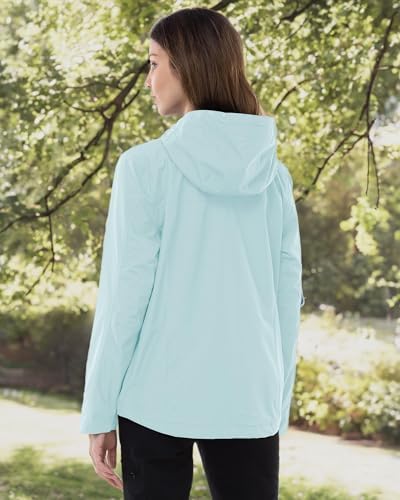
For wind, protect the exposed side and keep ventilation
Wind can make a mild reading feel cold at the chest, arms, ears, and hands, yet the body still produces heat. A thin wind-resistant front, breathable back, or vented shell may work better than adding insulation everywhere. Use a wind-ready outfit that avoids overdressing when gusts, route direction, rain, and effort complicate the forecast.



Prevent friction before adding more products
Chafing develops where moisture and repeated contact make skin, fabric, seams, straps, or nearby skin rub over the same area. It often appears at the inner thighs, nipples, underarms, bra band, waistband, or beneath carrying straps. The solution is not to become tougher. It is to change the contact.
Start with the garment. Smooth folded fabric, check where the seam lands, and choose coverage that stays over the full rubbing zone. A shirt that swings when wet can repeatedly cross the chest, while a very tight shirt can press a rough seam into one spot. The detailed approach to preventing nipple chafing while running begins with fabric and fit before comparing covers, tape, or lubricant.
At the legs, shorts that roll or end directly on the contact zone can create a narrow line of irritation. A stable liner or longer close-fitting layer may help when it remains smooth. Stopping thigh chafing before the next run requires checking the exact combination of underwear, liner, outer shorts, seams, moisture, and route length.
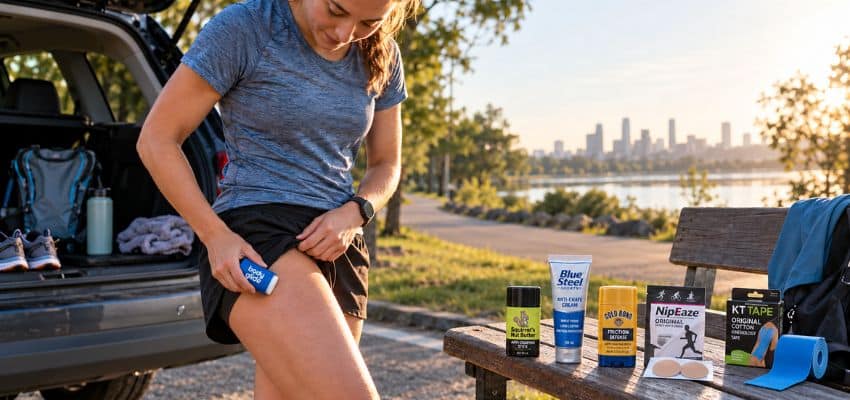
A barrier product can reduce drag on intact skin when the outfit is already sensible but the conditions – perhaps heat, rain, or a longer duration – raise the friction. The useful differences among anti-chafing products that stay put on longer runs include application, durability, skin sensitivity, and whether protection must cover one precise spot or a broader area.

Open, bleeding, blistered, or painful skin needs time and appropriate care. Stop the friction instead of covering the area and continuing the same run. Seek medical advice for spreading redness, warmth, swelling, drainage, worsening pain, fever, or a wound that is not improving.

Buy the next piece only when a run identifies the need
After several runs, the next purchase should be able to finish a sentence: “I need this because…” Perhaps one pair of shorts rides up, your only sports bra takes too long to dry, your hands become painfully cold before your torso warms, or a dark route needs better visibility. A real problem creates a useful shopping list. Anxiety creates a cart.
- Replace a piece that repeatedly rubs, slips, or restricts movement.
- Add a duplicate only when laundry prevents you from using a proven outfit.
- Add weather protection for conditions you actually encounter, not for a climate that lives mainly in advertisements.
- Prefer adjustable pieces – a zip, removable gloves, a light shell – when temperature and effort will change during the run.
Clothing is only one part of a beginner setup. Running gear for beginners: what you need and what can wait places apparel beside shoes, visibility, carrying options, and other practical choices without pretending that every accessory is essential.
For many beginners, two proven tops, two bottoms, suitable socks, and the support layers personally needed are enough to establish a routine. Weather pieces can serve several outfits. Add quantity only when frequency, laundry, or a clearly identified comfort problem asks for it.
Care for the clothes that already work
After a sweaty run, let damp clothing dry if it cannot be washed soon rather than sealing it in a gym bag. Follow the care label, empty pockets, close fasteners that may catch other fabrics, and avoid using more detergent than needed. Product buildup can trap odor and change how a fabric feels against the skin.
High heat can damage elastic and some technical finishes, while a once-smooth shirt may eventually develop pilling, lifted graphics, hardened seams, or stretched fabric. Washing smelly running clothes without ruining them is partly about odor, but it is also about preserving the fit and surface that made the outfit comfortable in the first place.
Inspect clothes only when fully dry. Retire or repair pieces that repeatedly expose rough edges, lose their shape, or no longer stay where they should. Loyalty is admirable in friendship; it is less useful when a tired waistband spends every mile migrating south.

Create a personal outfit formula
No chart can know exactly how warm you run, where your skin is sensitive, or whether your route spends half its time in open wind. Your first outfit is a starting hypothesis. Each easy run can improve it without turning the closet into a laboratory.
Record five details that make the next choice easier
-
Conditions
Note temperature or feels-like reading, humidity, sun, wind, and rain in a few words.
-
Run
Record duration, easy or harder effort, and whether the route was sheltered or exposed.
-
Outfit
List the top, bottoms, support layer, socks, and any removable weather piece.
-
First discomfort
Write where you first felt hot, cold, damp, restricted, slipping, or rubbing – and approximately when it appeared.
-
One next change
Remove one layer, change one garment, adjust one fit point, or repeat the same successful combination. One change leaves a lesson you can trust.
After a few weeks, you may have a reliable formula for mild, hot, cool, wet, and windy days. That small record is more personal – and usually more useful – than a universal clothing chart.
Common beginner questions about running clothes
Can I begin in ordinary workout clothes?
Yes. For a short, mild-weather test run, use clothes you already own if they allow free movement, stay reasonably comfortable when damp, and do not have rough seams or unstable hems. Experience will show whether a specialized piece would solve a real problem.
Should beginners avoid cotton completely?
No fabric needs a courtroom ban. A light cotton shirt may be comfortable for a short, cool, dry run. Cotton absorbs moisture and dries slowly, however, so it can become heavy, clingy, cold, or abrasive during longer, wetter, or sweatier outings. Choose according to conditions and your own friction history.
Are shorts or leggings better?
Neither wins universally. Shorts offer ventilation; longer or close-fitting bottoms add coverage and may reduce skin-on-skin rubbing. The better choice stays in place, allows an easy stride, and suits the weather. Test the exact waistband, inseam, liner, and pocket load rather than choosing by category alone.
How many outfits does a beginner need?
Begin with one proven outfit and enough duplicates for your schedule and laundry routine—often two sets are practical. Add a light layer, rain or wind protection, gloves, or additional support only when local conditions and actual runs identify the need.
When should I replace running clothes?
Replace or repair a garment when stretched elastic, rough pilling, damaged seams, lifted graphics, thinning fabric, or a changed fit repeatedly affects comfort or coverage. Odor alone does not always mean the piece is finished; first correct washing, drying, and detergent buildup.
- Begin with one simple outfit that moves, stays reasonably light, and leaves your skin comfortable.
- Let weather, route, effort, and personal feedback decide which layer comes next.
- Buy a new piece to solve an identified problem – not to prove that you belong.
The right running clothes do not need to transform you into a different kind of person. They simply remove small obstacles: the waistband you keep pulling, the wet shirt that rubs, the jacket that traps too much heat, or the cold hands that make an easy run feel longer than it is. Start with what you own, test it kindly, and improve one piece at a time. When the outfit grows quiet and the run becomes the interesting part, the clothes have done their job.


